What happens to your art collection when you move to another country?
Moving an existing collection abroad is a personal-effects relocation, not a purchase-and-ship transaction: each piece needs its own inventory and ownership record, insurance confirmed specifically for transit, and customs treatment as used belongings rather than a new commercial sale, planned months — not days — ahead of the move itself.
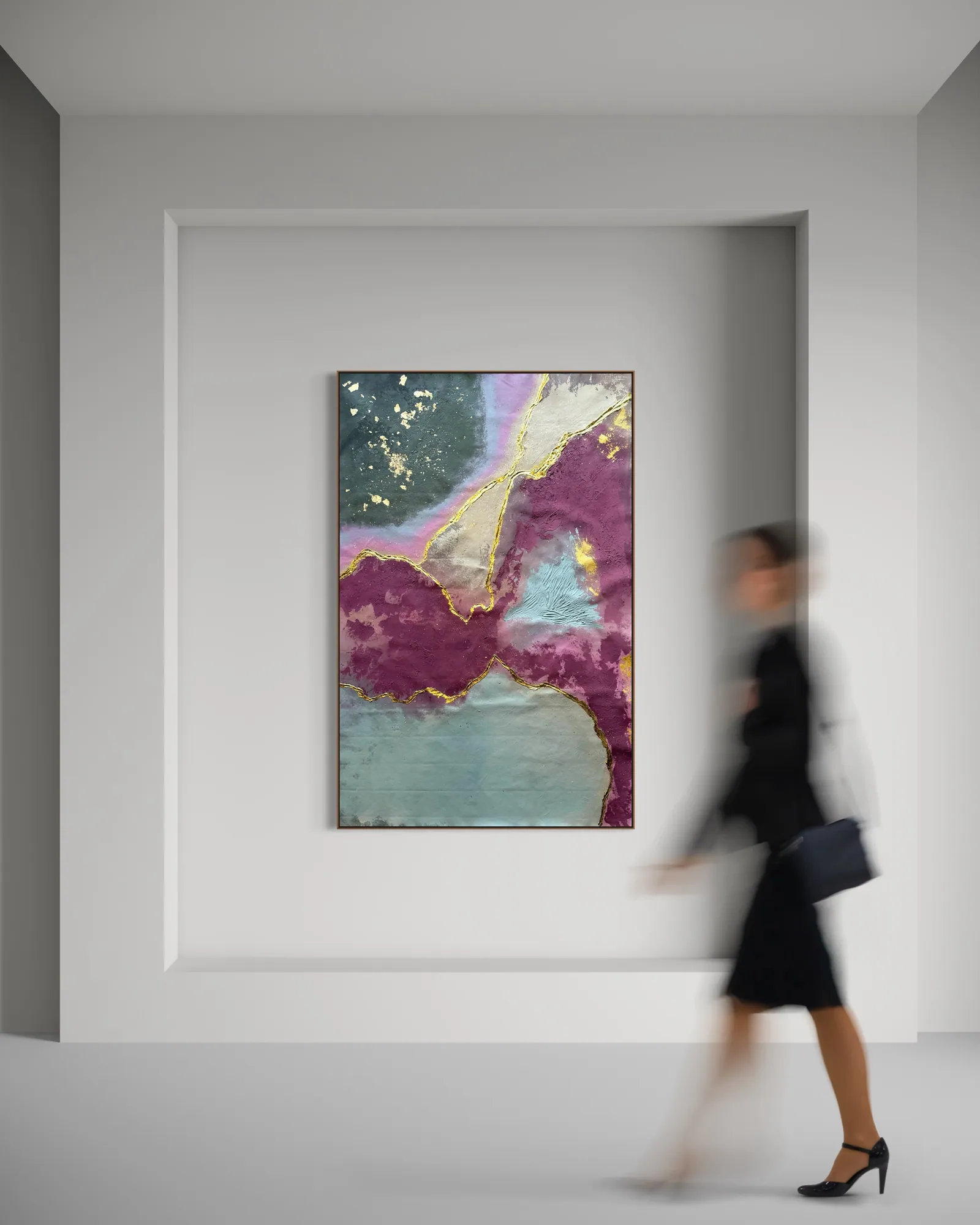
A different transaction: personal effects, not a new purchase
When a piece leaves this studio as a first sale, it travels as a commercial export: a sales invoice with a declared price, filed under the exporting country's standard trade rules. When that same piece — or any work already in a collection — crosses a border because its owner is moving house, the transaction on paper is different. Customs authorities in most countries treat it as used personal effects or household goods, not as merchandise being sold, and the documentation shifts accordingly.
In the United States, for example, used household goods are generally admitted duty-free if they have been in the owner's possession for at least a year before the move, and the shipment has to be shown as genuinely personal — not intended for resale. The proof isn't a sales receipt; it's an inventory, a passport, and often a specific personal-effects declaration filed alongside the mover's paperwork.
If the piece was originally acquired in Brazil and is being taken out of the country personally as part of a move, Brazil applies its own version of this distinction. Goods acquired in Brazil and carried out personally by the traveler get simplified, tax-exempt baggage treatment — but the US$2,000 threshold is a combined ceiling across everything in that "other goods" category, not an allowance per piece, and it still requires the original purchase invoice as proof. A single work might sit comfortably under that ceiling on its own; a collection of several pieces usually adds up past it, since the same US$2,000 has to cover all of them together. Once the combined value goes over the limit, or the invoice is missing, the excess is routed through standard export customs instead — the same Siscomex process used for a newly purchased work leaving Brazil, just entered from a different starting point.
The paperwork a move needs instead of a sales invoice
Replacing the commercial invoice is usually a detailed inventory: each piece listed with its description, medium, dimensions, and a declared value, prepared as part of the mover's packing list rather than as a point of sale. For a signed original, the Certificate of Authenticity issued at acquisition already carries most of what an inventory needs — title, year, medium, dimensions, and the studio's internal Archive ID — which is why keeping that document with the collection, not filed away separately, matters as much during a move as it did at purchase.
- Inventory / packing list — each work described and valued individually, prepared by the moving company.
- Proof of prior ownership or use — the Certificate of Authenticity, an earlier invoice, or comparable documentation, depending on destination.
- Destination-specific personal-effects form — in the United States, for example, CBP Form 3299, alongside passport and proof of the move itself.
None of this removes the need to check the destination country's own rules directly — personal-effects treatment varies by country, and sometimes by how long the goods have been owned — but the pattern holds: a move documents ownership and value, a sale documents a transaction.
Insurance: two different questions, not one policy
Moving an existing collection raises an insurance question that a first purchase doesn't: is the piece protected between the wall it's coming off and the wall it's going onto? The answer is often no, by default. Fine art coverage typically depends on "wall-to-wall" terms — covering packing, loading, carriage, unloading, and reinstallation — and a standard collector or homeowner policy doesn't necessarily extend that protection to a move automatically. It's worth confirming the transit terms with the insurer before the crate is built, not after.
The moving company's own liability coverage is a separate, and usually much smaller, safety net. It's typically calculated by weight rather than by the artwork's value, and caps are often around US$1,000 per item — a fraction of what an original painting is worth. Dedicated all-risk, "nail-to-nail" fine art transit insurance closes that gap, and typically costs somewhere around 1–2% of the piece's value for the move.
Timeline: fitting the art into the larger move
International moves generally start three to four months out — researching movers, sorting visas, beginning to decide what travels and what doesn't. The art-specific steps need a place inside that window, not a scramble at the end of it. A fine-art crater typically asks for at least two weeks' notice to assess each piece and plan a custom crate, and the build itself usually takes a further three to five business days once measurements are taken.
For a collection of several works, each with a different scale, surface, and fragility, that assessment is worth scheduling as soon as the move date is confirmed — well before the two-week minimum — so that crating, insurance confirmation, and paperwork can run in parallel with the rest of the household move instead of queuing up behind it.
From the studio
From the atelier
When a collector is thinking about a move, the question rarely starts as "I'm buying a painting." It's closer to "I'm moving abroad in a few months and I don't want my art to be the reason the move stalls." That's a different conversation from a first purchase, and it's shaped how I build the paperwork that leaves this studio with every piece.
Every work goes out with a signed Certificate of Authenticity carrying the exact dimensions, medium, and an Archive ID — the same document a collector would need years later as proof of ownership and valuation if a piece is packed as personal effects rather than shipped as a new sale. I trained as an architect before I trained as a painter, and I think of that certificate the way I'd think of as-built drawings: not decoration, but the record you reach for when a customs officer, an insurer, or a mover needs to understand what they're looking at without asking me directly.
I don't manage the logistics of a household move myself — that's a moving company's job, ideally one with fine-art experience. But when a collector tells me a move is coming, I make sure the documentation on my end is ready well before the crate is.
Frequently asked
Is moving an existing art collection treated the same as shipping a newly purchased painting?
No. A newly purchased piece leaves the studio as a commercial sale, with a commercial invoice showing artist, title, and declared sale price. A piece you already own and are moving with your household is personal effects — used goods being relocated, not sold. Customs authorities generally ask for an inventory and valuation rather than a sales invoice, and in some jurisdictions require proof the item has been in your possession for a period of time before it qualifies for the simplified personal-effects treatment.
Do you need new export or import paperwork for art you already owned before the move?
Yes, but different paperwork than a purchase needs. Instead of a commercial invoice, movers typically prepare a detailed inventory listing each piece with its description and value, alongside your passport, proof of the move, and any destination-specific personal-effects form — in the United States, for example, form CBP 3299. If the piece was acquired in Brazil and is carried out personally, Brazil's own baggage rules allow simplified, tax-exempt treatment, but the US$2,000 threshold is a combined ceiling across all such goods the traveler carries out — not an allowance per piece. A collection of more than one or two works typically adds up past that combined total on its own; once it does, the amount above the ceiling moves through standard export customs instead.
Should insurance be arranged separately for the move, on top of your regular collector policy?
Usually, yes. A mover's own liability coverage is typically calculated by weight, not artwork value, and is often capped around US$1,000 per item — nowhere near enough for an original painting. A standard collector or homeowner policy may not automatically extend to transit either; many require a specific "wall-to-wall" endorsement covering packing, loading, and reinstallation. The safest approach is confirming transit terms with your insurer before the move and, if needed, adding dedicated all-risk coverage, which typically costs around 1–2% of the artwork's value.
How far in advance should crating and shipping be planned around an international move?
Earlier than most people expect. International moves generally start three to four months ahead — researching movers, visas, and what travels — and the art-specific steps need to sit inside that window, not after it. A fine-art crater typically wants at least two weeks' notice to assess each piece and build a custom crate, with construction itself taking a further three to five business days once measurements are taken. Leaving crating until the final week of a move is the most common avoidable mistake.
Does it make sense to sell part of a collection before an international move instead of shipping it?
Sometimes, and it's a reasonable question to ask rather than assume. General relocation guidance applies a simple test to ordinary belongings — if shipping costs more than replacing the item, sell it — but treats original art, antiques, and collectibles as a deliberate exception, worth moving even when replacement would be cheaper. The decision is more about what genuinely belongs in the next home than about cost alone, and it's worth making before crates are built, not after.
Moving your collection abroad?
Tell us which piece, and where it's going — we'll have the documentation ready on our end before the crate is.
Sources
- iContainers — 2026-09-25
- Receita Federal do Brasil — 2026-09-26
- Liberty Insurance — 2026-09-25
- Colorado Art Services — 2026-09-25
- Atlas International (Atlas Van Lines) — 2026-09-25
- Asiatic International Relocation — 2026-09-25
- MoveAdvisor — 2026-09-25
Published on