Shipping a large painting to a second home: crating, delivery and an empty house
Shipping a large painting to a second home comes down to three things arranged before pickup: an ISPM-15-compliant crate built to the canvas's exact size, one named person confirmed to receive and sign for it, and transit insurance tied to the work's declared value — not its shipping weight or an estimate.
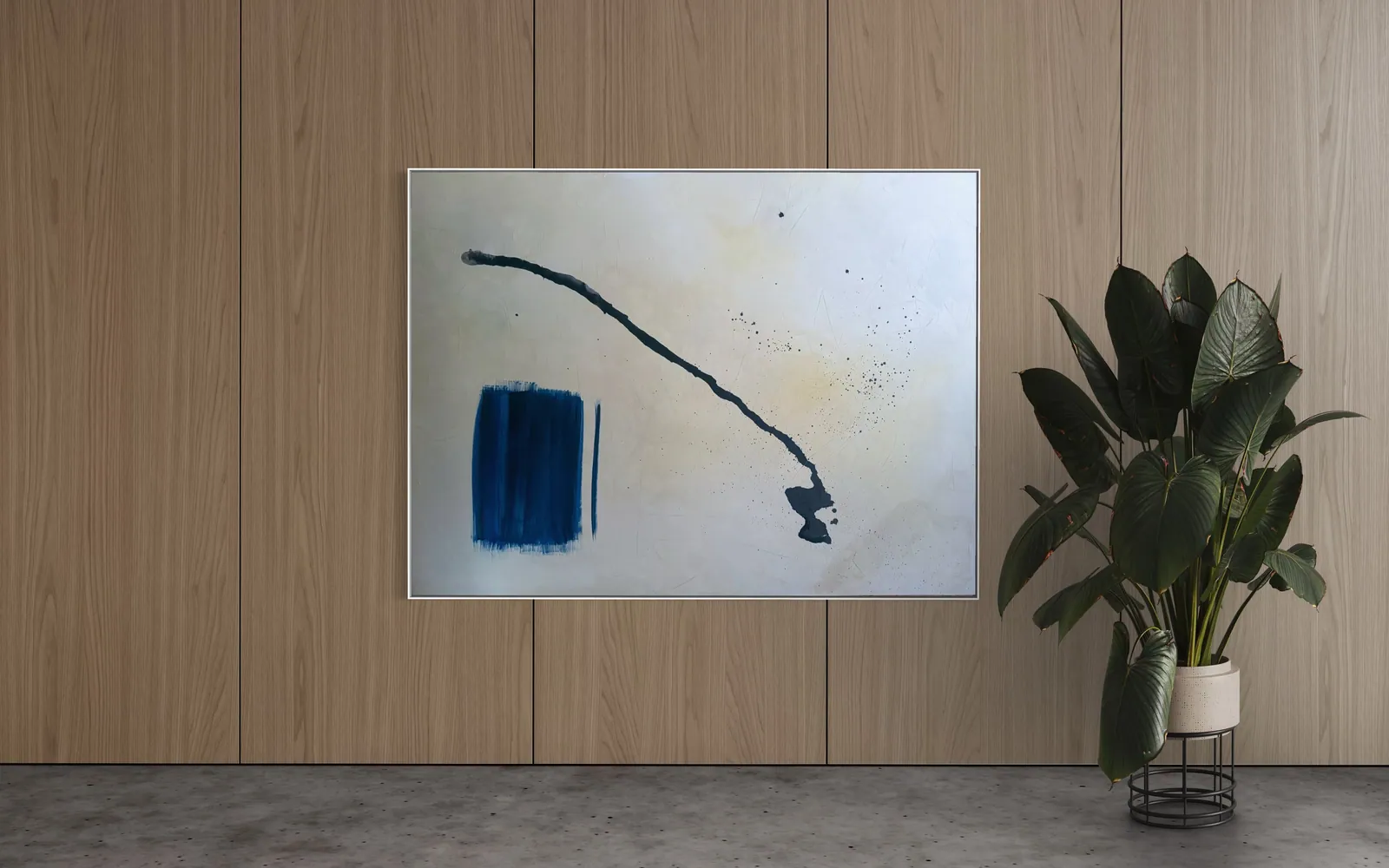
The crate: ISPM-15 wood and a build sized to a large canvas
International shipments that use solid wood packaging — pallets, crates, dunnage — normally have to comply with ISPM-15, the international standard for wood packaging material adopted under the International Plant Protection Convention. Under ISPM-15, the wood is either heat-treated until its core reaches 56°C for at least 30 minutes, or fumigated with methyl bromide, and the finished panel is stamped with the IPPC mark, a two-letter country code, and a treatment code (HT or MB). The standard applies to solid wood thicker than 6 mm; it does not apply to plywood, OSB, particle board, or plastic pallets, which is why some fine-art crate builders default to engineered panels for the crate shell and reserve stamped solid wood for internal bracing or skids.
For a large canvas — anything over roughly a meter on the long side — the crate is usually custom-built rather than pulled off a shelf: a wood shell sized to the exact dimensions of the stretched canvas plus a margin for padding, foam or corner blocks holding the work away from the crate walls, and a closed, documented structure rather than a soft-wrapped or corrugated case, which several fine-art shippers reserve for smaller or lower-value pieces. Ask the shipper in writing whether the crate uses ISPM-15-stamped wood and what treatment code appears on the stamp — the paperwork matters as much as the physical stamp if the shipment is inspected at the border.
Who receives the crate when the house is empty
A second home that sits unoccupied for weeks or months is the one part of this shipment a carrier cannot solve for you — someone still has to be there, in person, to accept and sign for a crate this size. White-glove art delivery, the service tier most fine-art carriers offer for large or high-value pieces, typically includes bringing the crate inside, unpacking it, and removing the packing materials on the spot, which by definition requires a scheduled appointment with someone present, not a doorstep drop.
If you will not be there yourself, name one person in advance — a caretaker, property manager, decorator, or staging company already on-site — and give the carrier their name and phone number as the delivery contact, not just the address. Confirm with them that the crate can be inspected and signed for as received in good condition, or with noted damage, at the door, since that signature is usually what opens or closes the insurance claim window. If no one can commit to a delivery window at all, ask whether the carrier can hold the crate at a local depot for signature-release pickup instead of leaving it unattended.
Insurance and transit terms worth confirming before the truck leaves
Specialized fine-art transit insurance is usually written on an all-risk, wall-to-wall basis — coverage that runs from the moment the work leaves its current location until it is installed at the destination, rather than a generic freight policy priced by weight. Cargo coverage of this kind is normally tied to the declared value you and the carrier agree on, not to an appraisal or an aspirational resale figure, and some carriers separate full cargo coverage based on declared value from a cheaper, limited-liability tier that only covers a lost shipment, not damage in transit.
Before the crate ships, get in writing: the transit limit for this specific shipment (the maximum the policy pays out), whether the policy covers international transit or only domestic legs, and what is excluded — typically wear and tear, inherent vice (a structural flaw in the materials themselves), and war or seizure risk. Ask specifically whether any layover — a warehouse, a depot, a connecting flight — is covered under the same policy or needs to be flagged separately, and complete a written condition report at both pickup and delivery; that report is what establishes the work's condition at the exact moment insurance responsibility changes hands.
Customs and import basics for an original painting
Duties and import taxes at the destination are the buyer's responsibility, and the paperwork that travels with the crate does most of the work of avoiding a hold-up. Customs authorities generally want an invoice that identifies the artist by name, the work's title, medium, year, and the actual purchase price — the transaction value agreed with the studio, not an insurance or appraisal figure, and not a vague description like art piece or painting. In the United States, for instance, Customs and Border Protection requires declaring the true transaction value rather than the insured value, and original paintings and hand-made works typically qualify for duty-free treatment under the Harmonized Tariff Schedule — though the exact classification depends on the specifics of the piece, so it is worth confirming with a customs broker rather than assuming.
Other jurisdictions apply their own thresholds, VAT or GST treatment, and documentation rules, which is why a general assumption is riskier than a five-minute call to your own country's customs authority or a broker who handles art imports before the crate leaves Brazil. Keep a copy of the studio's invoice and the Certificate of Authenticity with the shipment documents — both name the piece, the artist, and the value, which is exactly what a customs officer checks the paperwork against.
From the studio
From the studio
When someone tells me the piece is going to a house they only visit twice a year, the conversation changes before we talk about the crate at all. I ask who will actually open the door — a caretaker, a decorator already scheduled to be there, a neighbor with a key — because a large canvas cannot sit on a porch, and I would rather delay a shipment by two weeks than send it to an address with no one confirmed to receive it.
For international pieces I always ask for the destination country before I quote anything, because the crate, the paperwork, and the invoice wording all depend on where the work is landing, not just the size of the canvas. And once a crate does arrive, I ask the buyer not to leave it sealed longer than necessary: wood and foam that traveled through a hold or a truck can carry moisture the canvas has not felt before, and a painting settles into a room better when it is unpacked and allowed to acclimate rather than left boxed in a hallway.
Frequently asked
Does the crate need ISPM-15-treated wood for international shipping?
If the crate uses solid wood, as opposed to plywood or particle board, then yes, it generally needs to comply with ISPM-15, the international wood packaging standard: heat-treated or fumigated, and stamped with the IPPC mark, a country code, and a treatment code. Plywood, OSB, and particle board are exempt from the standard entirely, which is why some crate builders use engineered panels for the shell and reserve treated solid wood only for internal bracing.
Who should receive the crate if the second home will be empty?
Name one specific person before the shipment leaves — a caretaker, property manager, decorator, or staging company already on-site — and give the carrier their phone number as the delivery contact, not just the street address. White-glove art delivery is normally scheduled by appointment and includes unpacking on site, which only works if someone is there to let the crew in, inspect the piece, and sign for it in good condition.
Is transit insurance included, or do I need to arrange it separately?
Ask directly, since practice varies by carrier. Some offer full cargo coverage based on the work's declared value as one tier and a cheaper, more limited option that only covers a lost shipment as another. Fine-art transit insurance is typically written on an all-risk, wall-to-wall basis running from pickup to delivery, but the transit limit, geographic scope, and exclusions — wear and tear, inherent vice, war risk — should be confirmed in writing before the crate ships, not assumed.
Will I have to pay customs duties or import tax on the painting?
Almost certainly, and that cost is the buyer's responsibility, not the studio's. The rate and any exemption depend entirely on your own country's customs rules — in the United States, for example, original paintings often qualify for duty-free treatment, but the classification depends on specifics best confirmed with a broker. What helps everywhere is an invoice naming the artist, the work's title, medium, year, and actual purchase price, rather than a vague description.
How long can the crate stay sealed once it arrives at the house?
Not longer than necessary. A crate that has traveled through a truck, a warehouse, or a cargo hold can carry humidity and temperature swings the canvas has not experienced before, so the sooner it is opened, inspected against the condition report, and allowed to acclimate in the room, the better. Leaving a sealed crate in a hallway or garage for weeks works against the packing, not with it.
Can delivery be scheduled ahead of a date we choose, rather than whenever the carrier is passing through?
Yes — for a piece of this size, delivery is normally arranged as a scheduled appointment rather than a standard drop, precisely because someone needs to be present to receive and sign for it. Confirm the delivery window directly with the carrier or the studio once the crate is ready to ship, and build in a buffer, since international transit times vary by destination and are not guaranteed to the day.
Ask about shipping to your address before you commit
Tell the studio the destination and whether the house will be occupied at delivery — Alyne will quote the crate, the transit insurance, and a realistic delivery window for your country.
Sources
- Wikipedia (ISPM 15 / IPPC standard) — 2026-09-12
- Craters & Freighters — 2026-09-12
- Art Insurance Now — 2026-09-12
- Clearit (customs brokerage) — 2026-09-12
Published on