Shipping original art internationally from Brazil
Shipping an original artwork abroad from Brazil runs on a commercial invoice, packing list, and Certificate of Authenticity filed under Brazil's DU-E export declaration — plus a packing method, crated flat or rolled in a tube, chosen for the piece's size, surface, and destination, and confirmed in the shipping quote before it leaves the studio.
The paperwork that travels with the piece
Every artwork leaving Brazil for a buyer abroad goes out under a formal export declaration. Since Brazil unified its export process, exporters file a single online declaration — the DU-E, Declaração Única de Exportação — through Siscomex, the country's foreign trade platform, built on the World Customs Organization's own data model and populated directly from the commercial invoice. That invoice is the anchor document, and for an original artwork it carries the same level of detail a registrar would ask for: artist name, title, year, medium, exact dimensions, and a declared value that matches the actual sale price.
- Commercial invoice — artist, title, year, medium, dimensions, declared value, buyer and studio details.
- Packing list — what's inside the crate or tube, described plainly enough for customs to match it to the invoice.
- Certificate of Authenticity — the signed document already included with every acquisition, which also serves customs as evidence the piece is an original, not a print or reproduction.
None of this is generated after the sale. It's assembled as part of preparing the shipment, once destination and packing method are confirmed.
How customs classifies an original painting — and who pays the duty
Original, hand-executed paintings fall under Harmonized System Chapter 97 — the chapter used worldwide for works of art, collectors' pieces, and antiques — specifically heading 9701. That classification exists to separate genuine original art from mass-produced goods: printed reproductions and manufactured decorative items are classified, and taxed, elsewhere. In the United States, for example, an original painting correctly entered under heading 9701 is duty-free, though a Merchandise Processing Fee still applies to formal entries. Other destinations set their own rates under the same HS heading, so the classification is a starting point, not a guarantee — it's worth confirming the exact treatment for original art with customs in the destination country before ordering.
Duty, where it applies, is normally the buyer's responsibility rather than the studio's. In most international shipments the buyer, as the receiving party, is also the Importer of Record — the party who clears the piece through customs at destination and pays whatever duties or taxes apply there — unless the shipment is arranged under Delivered Duty Paid terms, where those costs are built into the price upfront. Which arrangement applies is part of the shipping quote, discussed before the piece leaves the studio.
What doesn't apply here: ATA Carnets and CITES
Two questions come up often enough with international buyers to answer directly.
The first is the ATA Carnet — the customs document that lets goods travel abroad temporarily, duty-free, for exhibitions or fairs, and come home again. It wouldn't apply to a purchased artwork leaving Brazil for good in any case, since a Carnet exists specifically for goods that return; and as of 2022, Brazil withdrew from the ATA Carnet system entirely, so the document isn't available here even for temporary export.
The second is CITES, the international treaty restricting trade in specimens of endangered species. It governs materials like ivory, tortoiseshell, certain rosewoods, and coral — none of which appear in these works. Every piece is acrylic, mixed media, canvas, gold leaf, and metallic or mineral pigment: materials outside CITES's scope. No CITES permit is part of shipping or receiving one of these pieces.
Crated flat or rolled in a tube
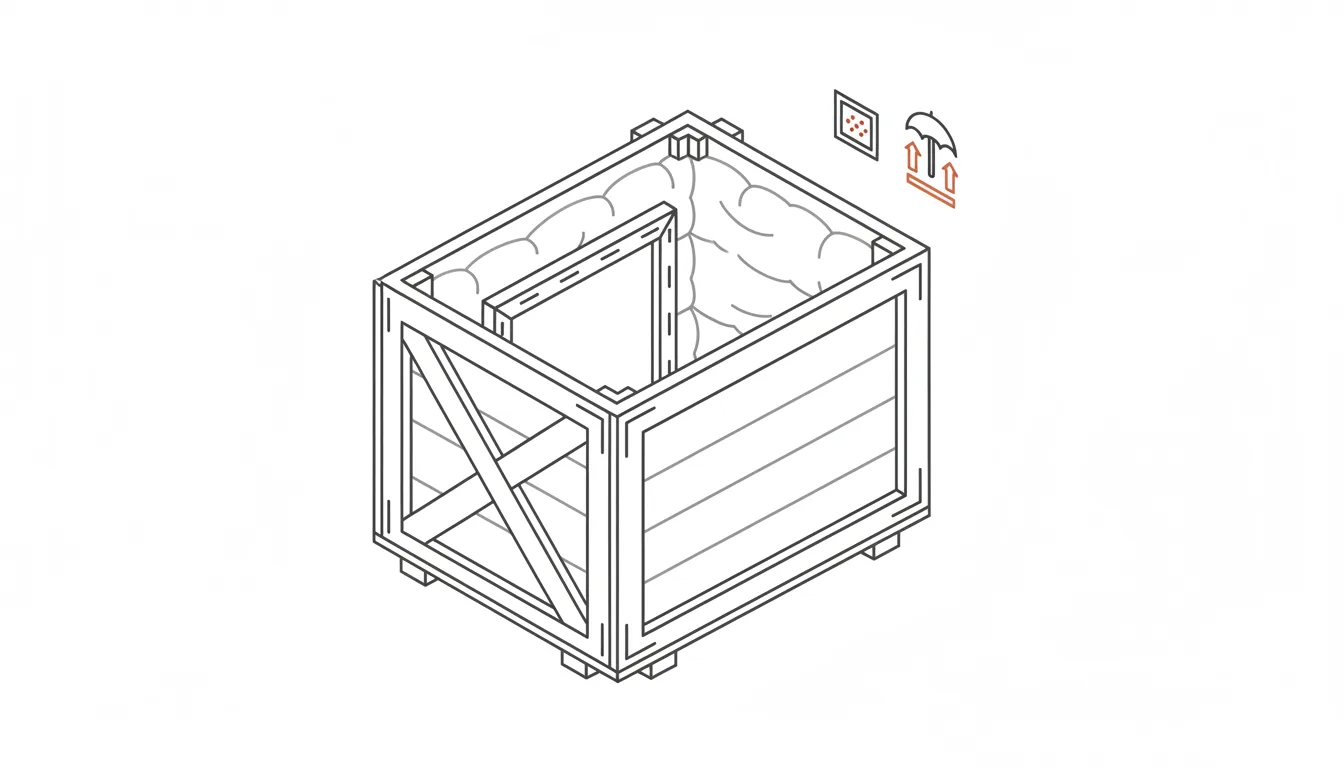
Both methods are legitimate for an international shipment. Which one applies depends on the piece's size, its surface, and the destination — not on a fixed rule. A rigid wooden crate, built to the exact dimensions of the stretched canvas, is the safer default for large-format or heavily textured work: anything with sculpted relief, raised paste, or gold leaf travels better flat, because a rolled tube puts direct pressure on the surface at exactly the point where the texture is thickest.
Rolling in a protective tube is a real option for works with a thinner, fully cured acrylic film — it's lighter and less expensive to ship internationally by courier, and the canvas is re-stretched on arrival. The condition that has to be met before rolling is full cure: an acrylic film that hasn't finished curing can crack when unrolled, particularly in a cold cargo hold, and is far harder to flatten back into shape. Whichever method fits a given piece, it's specified in the shipping quote before the artwork leaves the studio.
From the studio
From the atelier
Every international inquiry starts with the same two questions from me: where is it going, and what does the surface actually look like up close — because those two answers decide how a piece travels. I trained as an architect before I trained as a painter, and packaging isn't an afterthought to me; it's a structural problem, the same kind of question as how a wall is meant to carry weight.
For the works with real surface — sculpted texture paste, gold leaf, raised relief, the pieces in Matter & Silence and Black & Gold especially — I ask for a crate even when it costs more, because I know exactly where the pressure would land on a rolled canvas, and it's always at the thickest part of the texture. For flatter, more purely acrylic surfaces, rolling is genuinely on the table, but only once the paint has fully cured — and the layered surfaces I build cure slower than people expect, sometimes weeks longer than a single thin coat would.
I haven't shipped a piece internationally yet, so today an international shipment is quoted fresh, piece by piece, once I know the destination and have looked closely at the surface in question. That's not a policy I'm reciting back; it's the honest answer to how it would actually happen.
Frequently asked
What documents does the atelier provide for an international shipment?
Every international acquisition ships with a commercial invoice detailing the artist, title, year, medium, dimensions and declared value, a packing list, and the signed Certificate of Authenticity already included with every acquisition. The export itself is filed under Brazil's DU-E declaration through Siscomex. These are the documents customs authorities use to release the piece at both ends of the trip.
Do I need an ATA Carnet to buy a painting from Brazil?
No. An ATA Carnet is for goods that travel abroad temporarily and come back — exhibitions, fairs, professional equipment — not for an artwork purchased to keep permanently. It wouldn't apply to a sale in any case, and as of 2022 Brazil withdrew from the ATA Carnet system entirely, so the document isn't available here even for temporary export.
Are these artworks subject to CITES restrictions?
No. CITES regulates international trade in materials from endangered species — ivory, tortoiseshell, certain rosewoods, coral, exotic leather. These works are made with acrylic, mixed media, canvas, gold leaf, and metallic or mineral pigment, none of which fall under CITES. No CITES permit is required to ship or receive one of these pieces.
Will my artwork ship crated flat or rolled in a tube?
Both are legitimate options for international shipping, and the choice depends on the piece's size, surface, and destination. Large-format or heavily textured works — anything with sculpted relief or gold leaf — generally travel better crated flat. Thinner, fully cured acrylic works can ship rolled in a protective tube and be re-stretched on arrival. The atelier confirms which method applies before the piece leaves the studio.
Who pays import duties and taxes on an international acquisition?
Unless the shipment is arranged as Delivered Duty Paid, import duties and taxes at the destination are typically the buyer's responsibility, since the buyer is usually the Importer of Record who clears the piece through customs there. Original hand-executed paintings are classified under HS heading 9701, which in the United States, for example, is duty-free — but each country applies its own tariff rules, so it's worth confirming locally before ordering.
How is the artwork's value declared for customs?
The declared value on the commercial invoice matches the actual acquisition price agreed with the studio. Customs authorities in both Brazil and the destination country use that figure, together with the piece's HS classification, to assess any applicable duties or fees. There is no separate 'customs value' distinct from what the buyer actually paid for the work.
Considering an acquisition from outside Brazil?
Tell us the destination and which piece you're drawn to, and we'll put together the shipping method and documentation before you decide.
Sources
- World Customs Organization — WCO News Magazine — 2026-08-01
- BorderBuddy — 2026-08-01
- International Trade Administration, U.S. Department of Commerce — 2026-08-01
- UNION Fine Art Shipping — 2026-08-01
- Just Paint — Golden Artist Colors — 2026-08-01
- DTS One — 2026-08-01
- Ship4wd — 2026-08-01
Published on