Art insurance for collectors: how it works
Insuring an original painting usually means moving past a standard homeowners policy, which typically caps fine art at a few thousand dollars. Collectors add a scheduled rider or a stand-alone fine-art policy, backed by a description, photographs, and a purchase invoice or appraisal — the file an insurer expects, gallery purchase or not.
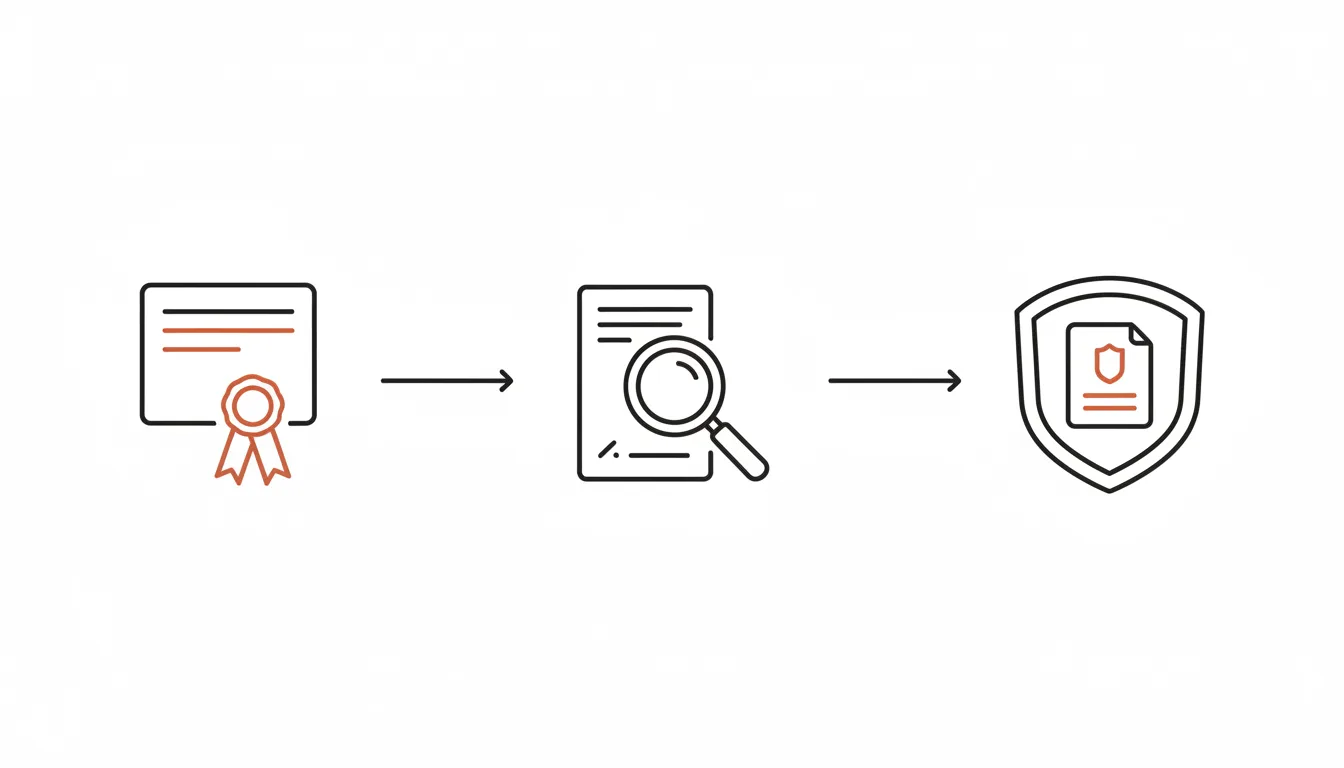
Why a painting outgrows a standard homeowners policy
Most homeowners and renters policies cover personal property only up to modest per-category sublimits, and fine art usually falls into the most restrictive one. A policy with $100,000 in overall personal-property coverage can still cap art, jewelry, and collectibles combined at $2,000 or less — a fraction of what a single painting can be worth. In some markets outside the United States, standard household or contents insurance excludes artworks and collectibles from coverage entirely, treating them as a separate category from everyday furniture and electronics.
The gap isn't only about the dollar figure. Standard policies are usually written around named perils — fire, theft, specific kinds of water damage — and commonly exclude the risks that actually threaten a painting in daily life: accidental damage while rehanging it, breakage in transit to a new home, or "mysterious disappearance," where a piece is simply missing with no evidence of theft or a covered peril.
What a scheduled fine-art rider actually asks for
To close that gap, collectors typically add a scheduled personal-property rider to an existing homeowners policy, or take out a stand-alone fine-art policy. Both work the same way: each piece is listed individually, insured at an agreed value, and — unlike unscheduled property — paid out at that full value if something happens, without a depreciation deduction.
Getting a piece onto that schedule usually means supplying a professional appraisal, ideally from a certified appraiser working to USPAP standards (the appraisal framework used in the US), using a Retail Replacement Value basis — what it would cost to replace the piece today, not what it originally sold for. Insurers generally ask that the appraisal be refreshed every three to five years, since a valuation only reflects the market at the moment it was written. Premiums for this kind of coverage typically run 1% to 5% of the appraised value per year, and cost estimates for smaller policies have cited roughly $100–200 annually for each $10,000 of insured value.
The paperwork an insurer wants — gallery purchase or straight from the studio
Insurers don't require that a piece pass through a gallery or auction house before it can be scheduled. What they ask for instead is a documentation trail: a description of the work, photographs from multiple angles, a purchase invoice or receipt, and — where one exists — a certificate of authenticity or a statement from the artist confirming the sale. None of that changes when the seller is the artist's own studio rather than a dealer; if anything, buying directly means the collector is the one responsible for keeping that file complete, since there's no gallery paperwork trail to fall back on later.
That same file — photos, receipts, exhibition history, and comparable sales — is also what an insurer leans on to document value in the first place, whether the appraisal happens at purchase or years later after the artist's market has moved.
A certificate of authenticity and an appraisal answer different questions
The two documents get confused often enough that it's worth stating plainly: a certificate of authenticity establishes who made a work; an appraisal estimates what it's worth. They serve different purposes, and one doesn't substitute for the other. Insurance coverage is set against a declared or appraised value — not against the existence of a certificate — and insurers generally don't treat a certificate on its own as proof of authenticity, or take on responsibility for authorship disputes that surface later.
In practice, the certificate is one input an appraiser draws on, alongside photographs, technical data, and sale records, to reach a valuation. For a lower-value piece, a purchase invoice plus a certificate may be enough to schedule it. Past a certain value, insurers generally still ask for a separate, independent appraisal before setting the insured amount.
Keeping the insured value current as an artist's market moves
A scheduled value is fixed at the moment it's agreed, not indexed to the market. If a piece is never revisited, a collector can end up underinsured years later without realizing it — the policy still pays the old number, and a shortfall at claim time is typically applied proportionally, not made up after the fact. The usual guidance is to have the appraisal reviewed every few years, or sooner after a clear shift in the artist's market, and to update the schedule to match.
For a piece by an artist earlier in her career — without a long auction record to draw on — that starting valuation is normally built from cost and comparables rather than a market track record: materials and framing, the time the work represents, and prices for comparable pieces by artists at a similar stage. It's a starting number meant to be revisited as documentation accumulates, not a projection of where it's headed.
From the studio
From the atelier
Every acquisition that leaves this studio goes out with three documents already in hand: the signed Certificate of Authenticity carrying the piece's internal Archive ID and full technical data, the Artwork Acquisition Agreement that records the transfer of ownership, and the fiscal invoice or receipt issued in the studio's name. I didn't design that set with insurance in mind — it exists so a collector always has clear proof of what they own and where it came from — but it happens to cover most of the file an insurer asks for when a piece is scheduled: description, provenance, proof of purchase, authorship.
What it isn't is an appraisal. The certificate tells an insurer what the work is and confirms I made it; it doesn't set a dollar value, and I don't appraise my own work for insurance purposes — that's a separate, independent step for the collector, the same as it would be with any working artist. If someone acquiring a piece needs anything from this file for that process, I send it directly.
Frequently asked
Can you insure art bought directly from an independent artist?
Yes. Insurers don't require that a painting come from a gallery or auction house — what they lean on instead is documentation: a bill of sale or invoice, photographs, and a description of the work, plus a certificate of authenticity or artist's statement when the piece is bought directly from the artist's studio. That paper trail — receipts, photos, exhibition history — is also what an insurer leans on to document and later reassess the work's value.
What documentation does an insurer require for a painting?
At minimum: a description of the work (title, medium, dimensions), photographs, and proof of value — a purchase invoice, receipt, or professional appraisal. For higher-value pieces, insurers typically want a full appraisal from a certified, USPAP-compliant appraiser, refreshed roughly every three to five years, along with a condition report noting any existing damage. Provenance records, documenting the chain of ownership, round out the file.
Does homeowner's insurance already cover art, or do you need a separate policy?
Standard homeowners or renters policies do cover art to some degree, but the limit is usually low and shared across a whole property category rather than set per piece — often around $2,000 or less even on a policy with $100,000 of overall personal-property coverage. In some markets, standard household or contents policies exclude fine art from coverage altogether. For a collection of any real value, the usual fix is a scheduled personal-property rider added to the existing policy, or a stand-alone fine-art policy — both insure named pieces at an agreed value and typically also cover risks a standard policy excludes, like accidental damage or loss in transit.
Does a certificate of authenticity replace a formal appraisal for insurance?
No — they answer different questions. A certificate of authenticity documents who made the work; an appraisal estimates what it's worth. Insurers base coverage on a declared or appraised value, not on the certificate itself, and a certificate alone doesn't establish that value. In practice the certificate supports the appraisal, as one of the records an appraiser reviews, but for anything beyond a modest sum, a separate valuation is still the document insurers ask for.
What happens to insurance value if the artist's market position changes?
A scheduled or agreed value in a policy doesn't update itself — it stays fixed until the collector requests a change, which means a piece that has become more sought-after since it was insured can end up underinsured at the very moment a claim is filed. The standard guidance is to have the appraisal, or for an early-career artist the original documentation of price, materials, and comparable sales, reviewed every few years, or sooner after a clear shift in the artist's market, and to update the policy's scheduled amount to match.
Have questions about insuring a piece from Perfeito Studio?
Send us the work you're considering and we'll confirm the documentation — invoice, Acquisition Agreement, and Certificate of Authenticity — you'll have on hand for your insurer.
Sources
- InsuredBetter — 2026-08-01
- FirstMark Insurance Group — 2026-08-01
- The Basler Registrar — 2026-08-01
- MyArtBroker — 2026-08-01
- Art Insurance Now (Protecting Art Nationwide) — 2026-08-01
- VW Art — 2026-08-01
Published on