Journal · Technique & materials
What is alla prima painting?
Alla prima — Italian for “at first attempt” — is the technique of painting wet-on-wet, applying fresh paint over paint that hasn’t yet dried so a work can be completed in a single sitting. It contrasts with traditional layered oil painting, where each coat is left to dry, sometimes for weeks, before the next goes on.
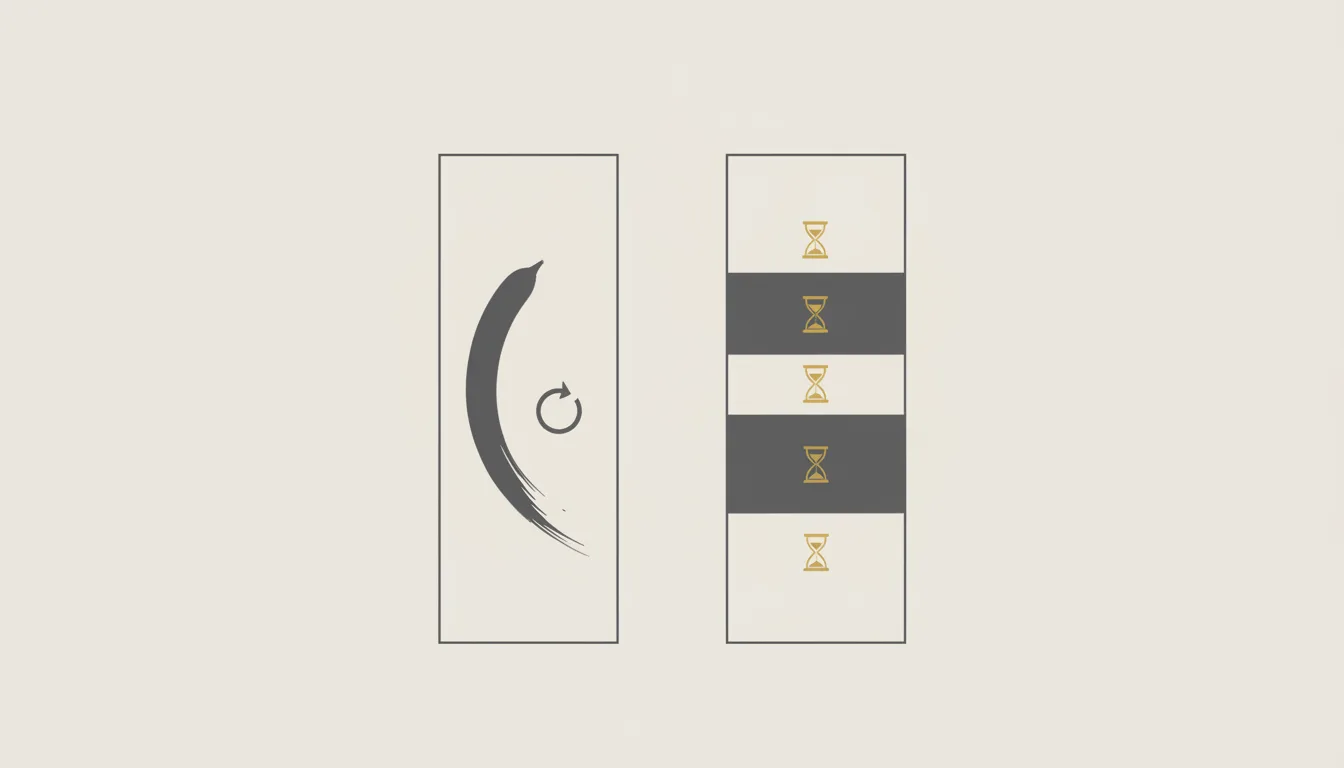
What “wet-on-wet” actually means
The term comes straight from Italian: alla prima means “at first attempt.” Wikipedia’s entry on the technique defines it as “a painting technique in which layers of wet paint are applied to previously administered layers of wet paint,” adding that it is “used mostly in oil painting” and “requires a fast way of working, because the work has to be finished before the first layers have dried.” The alternate names for the same approach — wet-on-wet, direct painting, and the French au premier coup — all point at the same core idea: paint meets paint while both are still workable.
How it differs from traditional layered painting
Classical layered oil painting works the opposite way. “Traditionally, a new layer of oil-based paint is applied to most parts of a painting only after allowing a previous layer to dry completely,” Wikipedia’s entry notes, and “this drying process can take from several days to several weeks, depending on the thickness of the paint.” Alla prima removes that wait: the work “can be carried out in one or more sessions,” and “it is common for such a work to be finished in only one session or ‘sitting.’” The trade-off is real — without a drying interval to step back and reconsider, color, value, and edge all have to be resolved close to the moment they’re painted.
Artists associated with the technique
Wikipedia’s entry on the technique singles out Diego Velázquez’s The Jester Calabacillas (1637–39) as “a prime example of the wet-on-wet technique,” and notes that Frans Hals’s Jasper Schade van Westrum (1645) was “painted mostly wet-on-wet,” with Rembrandt’s Portrait of Jan Six (1654) described as having “numerous uses of the wet-on-wet method.” The art resource Art in Context lists a similar group — Velázquez, Hals, Édouard Manet, Vincent van Gogh, and John Singer Sargent — among the “Famous Artists Who Used Alla Prima Technique,” citing Hals’s Malle Babbe (1633–1635), Velázquez’s El Niño de Vallecas (1643–1645), Manet’s Self Portrait with Palette (1879), Van Gogh’s Wheatfield with Crows (1890), and Sargent’s Group with Parasols (Siesta) (1904).
Wikipedia also traces the technique’s spread after the mid-19th century, once “commercially produced paints in small collapsible tubes” made rapid, on-the-spot painting practical: Impressionists such as Claude Monet, post-Impressionist Van Gogh, realists including Sargent, Robert Henri, and George Bellows, Expressionists Chaïm Soutine and Yitzhak Frenkel, and Abstract Expressionist Willem de Kooning “have in different ways employed this technique.” Television painter Bob Ross used it on The Joy of Painting to complete full paintings within a single episode, a method he learned from his mentor, William “Bill” Alexander.
Painting alla prima in acrylic or watercolor
Alla prima is most associated with oil paint, whose slow drying window gives a painter time to keep reworking wet paint into wet paint. Acrylic can be used too, but its fast drying is the central obstacle: the guide Art in Context notes that “acrylic paints are well-known for their fast-drying capabilities,” so painters working alla prima in acrylic typically add a slow-drying medium, apply the paint in thick layers, or simply work fast. Watercolor is workable as well, though Wikipedia’s entry cautions that the medium “requires a certain finesse in embracing unpredictability,” since translucent watercolor paint “will bloom in unpredictable ways” as wet washes meet.
From the studio
The studio’s eye
People occasionally ask if a piece like Fire of Devotion was painted alla prima — it carries that same charge of gesture caught mid-motion: white streaks cutting diagonally across a sustained red field, as if laid down in one unbroken pass. I’d rather answer honestly than borrow a label that fits the mood and not the method. Alla prima describes a single sitting — wet paint meeting wet paint before either has a chance to set. Fire of Devotion, like most of the Heart of Chaos series, is acrylic on canvas built over more than one session: I return to the surface, let a pass settle, and decide the next move with the whole field already in view, rather than racing a drying clock.
What reads as instantaneous in the finished 100 × 150 cm canvas is really the sum of several sessions of gesture — the immediacy lives in each individual pass, not in the timeline of the whole piece. In other works, where I add texture paste or gold leaf, the layering is even more literal: each material has to be given its own time to hold before the next goes on. So the feeling of spontaneity in Fire of Devotion is real. The wet-on-wet method behind it, in the classical sense the term describes, isn’t.
Frequently asked
Is alla prima the same as direct painting?
Largely, yes. Wikipedia's entry on the technique lists “direct painting” as another name for alla prima, alongside “wet-on-wet” and the French “au premier coup.” The art guide Art in Context describes alla prima as “a form of direct painting,” meaning color is applied to the canvas as it is perceived from the subject, without a separate underpainting built up first. In everyday use among painters, the two terms are treated as interchangeable ways of describing the same wet-on-wet, single-sitting approach.
Can alla prima be done with acrylic, or only oil?
Alla prima is most associated with oil paint, because oil's slow drying time gives a painter hours or days of working time before a layer sets. Acrylic can be used too, but its fast drying is the challenge: painters working alla prima in acrylic typically add a slow-drying medium, apply the paint in thick layers, or simply work quickly, according to the art guide Art in Context. Watercolor is also workable, though its translucent washes behave less predictably when wet meets wet.
Which famous artists are known for painting alla prima?
Painting reference sources name several. Wikipedia's entry on the technique cites Diego Velázquez's The Jester Calabacillas (1637–39) as “a prime example” and notes wet-on-wet passages in works by Frans Hals and Rembrandt. The guide Art in Context lists Velázquez, Hals, Édouard Manet, Vincent van Gogh, and John Singer Sargent among artists who used the technique, each alongside a specific work. Wikipedia also credits Impressionists such as Claude Monet and, later, Willem de Kooning and television painter Bob Ross with the same wet-on-wet approach.
Is alla prima faster than layered painting?
In terms of sittings, yes. Traditional layered oil painting applies a new coat only once the previous one has dried — a process that can take, according to Wikipedia's entry on the technique, “several days to several weeks” per layer. Alla prima skips those waits: the work is carried out in one or more sessions, and it's common for a piece to be finished in a single sitting. The trade-off is that the painter has to resolve color, tone, and form quickly, with no drying interval to step back and reconsider a passage.
Does alla prima work for large-format abstract painting?
The technique itself isn't tied to a scale or a style — it's defined by timing, wet paint meeting wet paint before either dries, not by subject matter or canvas size. The practical constraint scales up along with the canvas: covering a larger surface before the paint begins to set typically calls for bigger tools, a slower-drying medium, or breaking the “single sitting” rule that defines the technique in its strictest, classical sense.
Sources
- Wikipedia — 2026-08-24
- Wikipedia — 2026-08-24
- Wikipedia — 2026-08-24
- Wikipedia — 2026-08-24
- Wikipedia — 2026-08-24
- Art in Context — 2026-08-24
- Art in Context — 2026-08-24
Curious how a piece like Fire of Devotion builds its gesture?
Every work's technical sheet lists its exact materials and process — ask on WhatsApp if you're curious how a specific piece was built.
Talk to the studio on WhatsApp
Published on