Journal · Technique & materials
What is glazing in painting?
Glazing is the technique of applying a thin, transparent layer of paint over a dried layer beneath it, letting light pass through and bounce back off the opaque color below rather than mixing the two on a palette. The result is an optical blend — deeper and more luminous than any color mixed by hand.
What glazing means, exactly
Glazing is the practice of brushing a thin, transparent or semi-transparent layer of paint over a layer that has already dried, so the color underneath keeps showing through the new one instead of being covered by it. A glaze carries very little pigment relative to its binding medium — that low pigment load is what keeps it clear rather than opaque. Because the layer is thin and transparent, light passes through it, strikes the opaque paint underneath, and returns to the eye — closer to looking through a sheet of tinted glass than to looking at an ordinary painted surface.
Layering two or three transparent glazes over one another produces a color that neither layer would produce on its own, and that mixing the same pigments together on a palette would not reproduce the same way. That is the defining trait of glazing: the final color is built by the eye, combining what it sees through successive layers, rather than by the hand, combining pigments before they ever touch the canvas.
Glazing versus varnish: two different jobs, easy to confuse
Glazing and varnish are often mixed up because both involve a clear layer sitting over paint, but they do different work at different moments. Varnish comes last: a clear, removable protective coating applied only once an oil painting is completely dry — a wait a major art-materials manufacturer's own technical guidance puts at a minimum of six months for oil. Its job is protection and finish, shielding the paint film from dust and grime and giving it a chosen gloss, matte, or satin sheen; because it is removable, a painting can later be cleaned and revarnished without disturbing the paint underneath.
Glazing does the opposite kind of work, earlier in the process. It is applied while the painting is still being built, between layers of color rather than after the last one, and it changes how the underlying tone reads instead of protecting anything. A varnished surface is a single final layer sitting on top of a finished image; a glazed painting can carry several glazes, each one part of the image itself — with a varnish, if the piece receives one at all, still to come.
Does it work in acrylic, or only oil?
The technique works in oil, acrylic, and watercolor alike, but the working rhythm differs in each. In oil, glazes follow the same "fat over lean" sequencing that governs oil painting generally — each glaze needs more oil than the layer beneath it, or the film risks cracking — and a single glaze can take days to dry fully before the next one goes on, since oil dries slowly by oxidation rather than evaporation.
In acrylic, glazing means mixing paint with an acrylic medium rather than diluting it with water, which keeps the paint film intact instead of thinning it into a stain. Acrylic dries by evaporation in minutes to a few hours, so a glazed acrylic painting can carry several layers within a single working session — with one practical catch: acrylic dries a shade darker, and a glaze specifically dries more transparent, than it looks while still wet, which changes how a painter has to judge color mid-layer.
Watercolor gets to a similar result by a different route: technical guidance on the medium treats watercolor glazing less as a distinct material and more as an action — layering multiple washes, each one left to dry fully before the next goes down, with the paper itself, rather than an opaque paint layer, providing the light-reflecting base underneath.
How many layers, and does glazing add texture?
There is no fixed count. Technical guidance on the material treats glazing as a repeatable layering process rather than a technique defined by a specific number of passes — a painter builds up as many transparent layers as the desired depth and luminosity call for, judging each one by eye before deciding whether another is needed. That can mean two or three glazes for a subtle shift in tone, or considerably more, spread across several working sessions, for a passage built up slowly toward maximum glow.
With fluid glazing mediums, a glaze reliably stays close to flat rather than adding texture — the depth it creates is optical, from light passing through stacked transparent layers, not physical relief a finger could feel. Gel-based glazing mediums are the exception: unlike fluid mediums, they can hold some texture from the brush or applicator, so the flat, purely optical result depends on which medium carries the glaze. Painters who want both effects on the same canvas reserve glazing for some passages and apply thicker, textured paint — impasto, for instance — elsewhere, letting the two do different jobs rather than asking glazing to do both at once.
From the studio
The atelier's note: the closest the collection comes to glazing
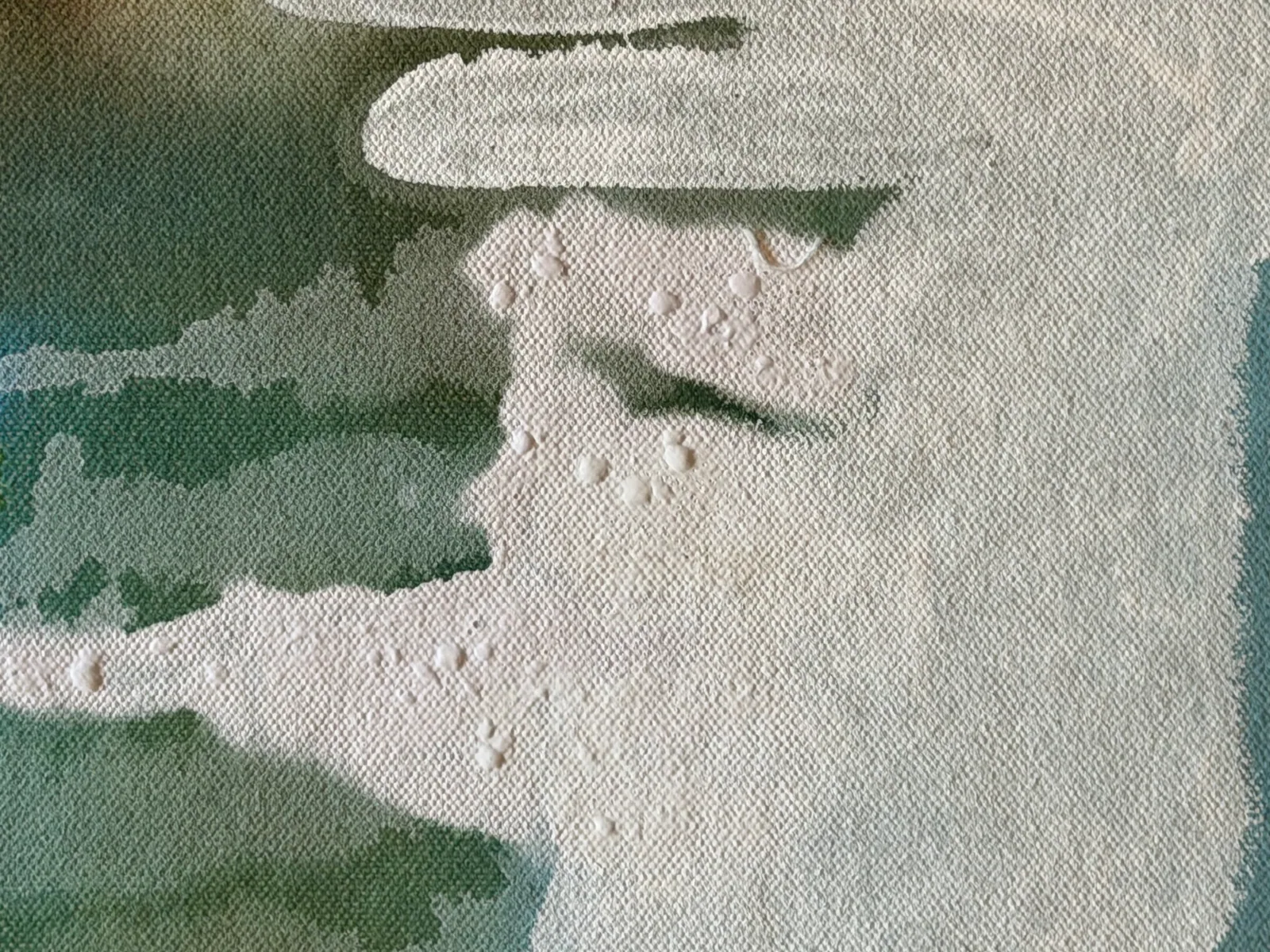
Nothing in my practice is glazing in the strict technical sense — I don't build a canvas through the slow "fat over lean" oil sequence, session after session, the way the term is classically defined. But Prism Garden, from the Luminous Rebirth series, is the piece in the archive that behaves the most like it. I worked that canvas in washes: acrylic diluted until it moved almost on its own, laid down thin enough that each pass lets the one underneath keep showing through, rather than built up in the mass and relief I use for pieces in Matter & Silence or Black & Gold.
What makes it feel closer to glazing than to anything else I do is the order of decisions. I don't mix the final color on the palette and apply it once — I let translucent layers of lime green, citrine, and petroleum blue settle on top of one another and let the color arrive optically, the way it does in true glazing, even without ever following the oil painter's fat-over-lean rule to get there. It works in acrylic precisely because the medium dries in minutes rather than weeks: I can stack a dozen thin passes in one afternoon in the studio and watch the color change in real time, instead of waiting days between each decision.
Frequently asked
What is glazing in painting, in simple terms?
Glazing is applying a thin, transparent layer of paint over a layer that has already dried, so the color underneath continues to show through the new one instead of being hidden by it. The two colors combine optically, in the eye of the viewer, rather than physically on a palette — a glaze typically carries very little pigment relative to a large amount of binding medium, which is what keeps it clear enough for light to pass through, reflect off the opaque paint beneath, and return to the eye.
Is glazing the same as varnish?
No, though both involve a clear layer over paint. Glazing happens during the painting process, applied between layers of color before any varnish, to change how the tones underneath read. Varnish comes last, once the painting is fully dry (a wait of at least six months for oil, according to a major art-materials manufacturer's own guidance), and its job is protection and finish rather than color: it shields the paint film and gives it a chosen sheen, and unlike a glaze, it can be removed and reapplied later without disturbing the paint.
Does glazing work with acrylic paint or only oil?
It works in both, on different schedules. Oil glazes follow the traditional "fat over lean" sequence, where each layer needs more oil than the one beneath it, and a single glaze can take days to dry before the next goes on. Acrylic glazing means mixing paint with an acrylic medium rather than water, and because acrylic dries in minutes to a few hours, several glazes can go on within one working session — with the caveat that acrylic dries a shade darker and more transparent than it looks while wet, so judging the color takes some practice.
How many glazing layers does a typical painting use?
There is no set number. Technical guidance on the material describes glazing as a repeatable layering process rather than a technique tied to a specific count — a painter applies as many transparent layers as the desired depth and luminosity require, judging each one by eye before deciding whether to add another. That can mean two or three glazes for a subtle shift in tone, or considerably more across several working sessions for a passage built up slowly for maximum glow.
Does glazing add texture or only color depth?
Mostly color depth and luminosity, not texture — with one exception. A glaze made with a fluid medium carries far more binding medium than pigment and stays close to flat, so the depth it creates is optical rather than physical. A glaze made with a gel medium, though, can hold some texture from the brush or applicator. Painters who want a purely flat glaze choose a fluid medium; painters who want both effects in the same picture combine a gel glaze with thicker, textured paint — like impasto — elsewhere on the canvas.
Sources
- Wikipedia — 2026-08-20
- Just Paint (Golden Artist Colors) — 2026-08-20
- Winsor & Newton — 2026-08-20
- Perfeito Studio — internal collection record — 2026-08-20
- Just Paint (Golden Artist Colors) — 2026-08-20
Curious how this reads in person?
Prism Garden ships internationally, packaged and insured, directly from the studio in Brasília — no gallery in between. Every acquisition includes a signed Certificate of Authenticity with the piece's Archive ID, technical sheet, and image, plus the artist's dossier. Write to us for high-resolution detail photographs before deciding.
Talk to the studio on WhatsApp
Published on