Journal · Technique & materials
Mixed media painting techniques, explained
Mixed media on canvas means a painting built from more than one material — typically acrylic paint combined with elements like gold leaf, metallic pigment, or sculpted texture paste — rather than a single medium such as oil or acrylic alone. The label describes construction, not quality; durability and care depend on which materials are actually combined.
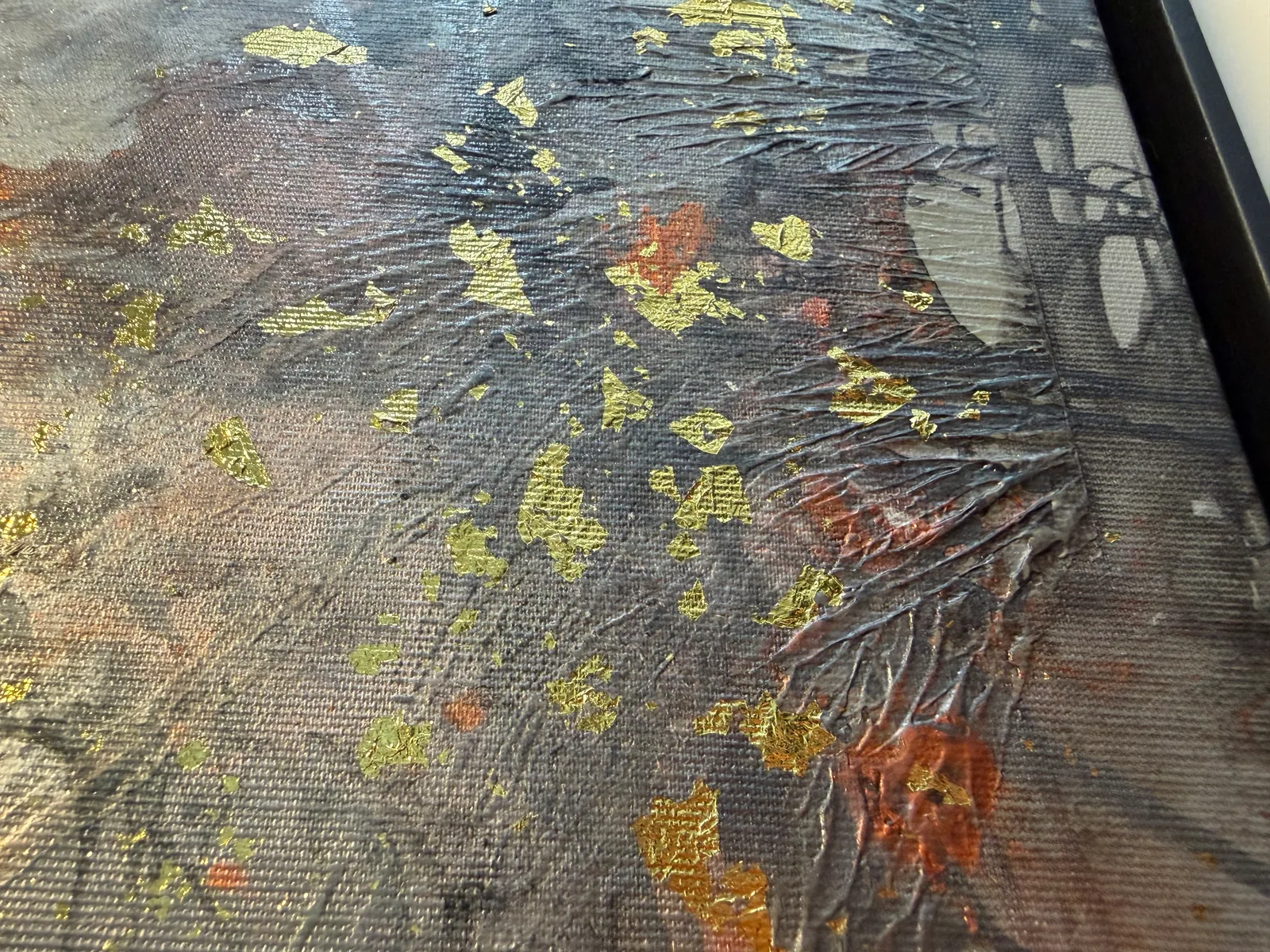
What "mixed media on canvas" actually describes
The term describes construction, not a fixed formula. Mixed media refers to artworks composed from a combination of different materials — a way of working that became widespread in art starting around 1912, with the cubist collages and constructions of Pablo Picasso and Georges Braque. Since then the term has stayed deliberately open: a painting can combine any materials at all, so long as more than one is present.
In practice, on a contemporary studio's technical sheet, "mixed media on canvas" usually signals that the artist layered acrylic paint with at least one non-paint material — gold leaf, metallic pigment or fragments, sculpted texture paste, or found elements. Origin of Light (Heart of Chaos series, 2025, 60 × 80 cm) is a working example: its technical sheet lists it as mixed media with acrylic and gold leaf on canvas, priced at R$ 3,300 — the gold leaf is not decorative trim added after the fact, it is worked into the composition alongside the acrylic passages.
How a mixed-media surface is actually built
A single-medium painting — oil alone, or acrylic alone — is one continuous material from the first layer to the last. A mixed-media surface is assembled in stages, and each stage can introduce a different material with different working properties.
- Ground layers — acrylic pigment applied gesturally, building the base tonal structure of the composition.
- Non-paint elements introduced selectively — gold leaf pressed into size at specific points, metallic dust or fragments worked into wet passages, or texture paste built up in relief before pigment is applied over or around it.
- Finishing — a combination of matte and high-gloss areas, only possible because more than one material is present to hold each finish differently.
Alyne Perfeito's studio practice works across mineral pigments, metallic dust, gold leaf, acrylic and sculpted texture paste — the specific combination changes from piece to piece and from series to series, which is why the medium line on each work's technical sheet is worth reading rather than assuming.
Durability: composite materials, not automatically weaker or stronger
Combining materials does not make a painting more fragile by default, but it does change what it is fragile to. Conservation guidance on composite objects — pieces built from more than one material — notes that different materials shrink and expand at different rates as humidity changes, and the expansion of one material can force stress into another, creating tension that accumulates over time. The generally recommended range for collections holding mixed materials is roughly 40–70% relative humidity, with stability across that range mattering more than hitting an exact number.
What this means in practice for a mixed-media painting: the acrylic paint film, the canvas, and any applied gold leaf or texture paste do not all respond to a damp or overly dry room in the same way. The piece isn't inherently less durable than a single-medium canvas — but its care instructions matter more, because the vulnerable point is wherever two different materials meet, not the painting as a whole. Perfeito Studio issues conservation guidance with every acquisition for exactly this reason: hang away from direct sunlight, humidity, and forced-air vents, in a dry and stable environment.
Framing, shipping and varnish: what actually changes
Two practical questions come up once a mixed-media piece is ready to travel or hang.
Shipping. A flat, single-medium canvas can usually follow a standard packing routine. A mixed-media piece with raised or textured passages cannot — professional shippers describe assessing each mixed-media work individually, since paper, fabric, wax, or raised elements call for cushioning strategies (foam around edges, frames, and textured surfaces; non-abrasive interleaving directly against the paint surface) that a flat painting does not need, and delicate or oversized works are more likely to need custom crating rather than a standardized box.
Varnish. Varnishing a single-medium oil painting is fairly settled practice. Varnishing a mixed-media piece is not — technical guidance from paint manufacturers is explicit that the most sensitive material present in the piece dictates whether, how, and with which varnish it can safely be coated, rather than one blanket rule applying across the whole surface. That is one reason gold leaf and heavily textured passages are treated with more caution than a uniform acrylic or oil surface.
Perfeito Studio ships its works unframed and ready to hang, with professional packaging included in every acquisition; framing or float-mount can be arranged separately at the collector's request.
From the studio
From the studio
Gold leaf is not something I add at the end to make a piece look finished — it goes in while the acrylic is still being built up, pressed into specific passages the same way I'd place a final gesture. In Origin of Light, the gold sits where the darker gray tones start to break, so it reads as light pushing through rather than ornament sitting on top. I use the same logic in the Black & Gold series — in Golden Passage, texture paste goes down first to give the surface actual relief, then gold leaf is worked into the raised areas so the material itself carries the contrast between restraint and intensity, not just the color.
I think about the durability side the same way a conservator would rather than the way a decorator would: I don't varnish over gold leaf the way I might seal an acrylic-only piece, because the two materials don't age the same way. That's a technical decision, not an aesthetic one — and it's exactly the kind of detail I put on a work's technical sheet rather than leave for a buyer to guess at.
Frequently asked
What does 'mixed media on canvas' mean on a price tag?
It means the piece combines acrylic paint with at least one other material rather than being built from a single medium. On a Perfeito Studio technical sheet, this line is specific rather than vague — Origin of Light, for example, is listed as mixed media with acrylic and gold leaf on canvas, and Golden Passage as mixed media, texture paste, and gold leaf on canvas. Reading the exact combination matters more than the label itself, since "mixed media" can describe very different material choices from one piece to the next.
Is mixed media more durable than a single-medium painting?
Not inherently — it is differently fragile rather than more or less durable overall. Conservation guidance on composite objects notes that different materials expand and contract at different rates as humidity shifts, which can create tension where two materials meet. A mixed-media piece and a single-medium canvas both need a stable, dry environment away from direct sun and humidity; the difference is that a mixed-media surface has more than one material to keep stable at once, which is why care instructions are included with every acquisition.
Does mixed media affect how a painting should be shipped?
Yes. A flat, single-medium canvas can usually travel in a fairly standard box. A piece with gold leaf, texture paste, or other raised elements needs a case-by-case assessment: non-abrasive material directly against the surface, foam cushioning around textured areas and frames, and custom crating for delicate or large works rather than a one-size-fits-all package. Perfeito Studio includes professional packaging with every acquisition and quotes shipping per destination, factoring in the specific materials of the piece being sent.
Can mixed media paintings be varnished like oil paintings?
Not automatically. Varnishing a single-medium oil painting follows fairly settled practice, but for a mixed-media piece, technical guidance from paint manufacturers is clear that the most sensitive material present — not a single default rule — determines whether, how, and with which varnish it can be coated. Gold leaf in particular is treated with more caution than a uniform paint surface. This is a technical decision the studio documents per piece rather than applying the same routine to every work.
Is every Perfeito Studio piece mixed media?
No. The catalog includes pieces described simply as acrylic on canvas, others as sculpted texture on canvas, and others as full mixed media combining acrylic with gold leaf, metallic fragments, or texture paste. The exact medium is listed on each work's own page and technical sheet — it's worth checking per piece rather than assuming every work in a given series uses the same materials.
Does combining materials make a piece more expensive?
Not by a fixed formula — pricing at Perfeito Studio reflects scale, series, and the work itself rather than a per-material surcharge. Within the current catalog, both acrylic-only and mixed-media pieces appear across a range of prices; a heavily worked mixed-media piece is not automatically priced above a large acrylic-only canvas. Each work's price and materials are listed together on its own page, which is the only reliable way to compare two specific pieces.
Ask the studio what's actually in a piece
Every work ships with a technical sheet listing exact materials and dimensions — ask on WhatsApp before you decide.
Sources
- Tate — 2026-07-29
- Museums Galleries Scotland — 2026-07-29
- Just Paint (Golden Artist Colors) — 2026-07-29
- Fine Art Shippers — 2026-07-29
- Art Centron — 2026-07-29
Published on