Journal · Technique & materials
What is gesso, and how is a canvas prepared before painting
Gesso is a primer that seals raw canvas and gives it a smooth, evenly absorbent surface before paint is applied. Modern acrylic gesso is a water-based mixture of an acrylic polymer binder, chalk or calcium carbonate, and pigment. Skip it, and paint sinks unevenly into the fibers — and, over years, can weaken the canvas itself.
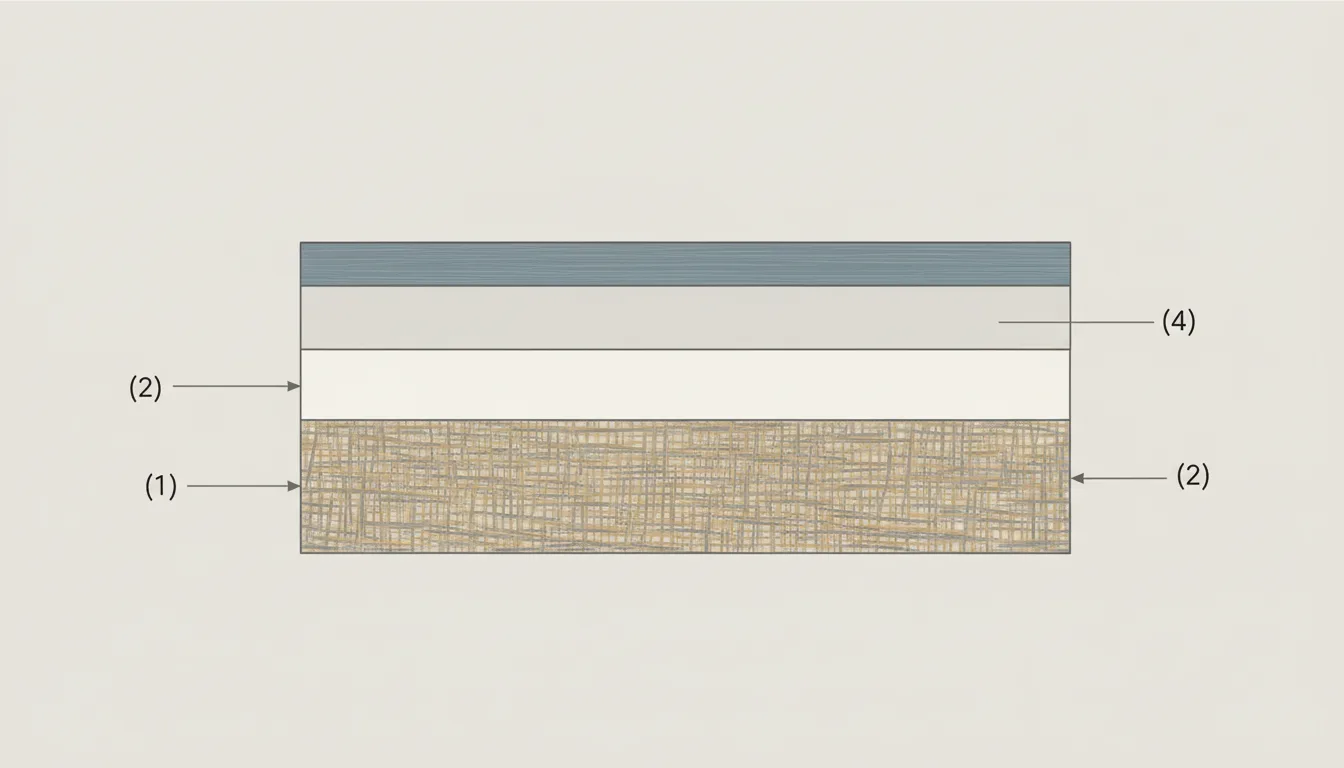
Why raw canvas can't go straight to paint
Two different problems show up if paint is applied directly to unprimed canvas, and they come from two different sources of guidance. Golden Artist Colors identifies a mechanism it calls Support Induced Discoloration (SID): raw canvas carries water-soluble impurities that, without a barrier layer, get extracted during the drying process and deposited into the acrylic film above them, causing yellowing or discoloration. Golden's technical guidance calls proper preparation of a support "essential for producing long-lasting artwork."
Winsor & Newton frames the risk differently, in terms of the canvas fabric itself: "If you don't prime or gesso your canvas it is likely to rot over time when directly in contact with your paint." Their guide to sizing and priming adds that a properly sealed surface "prevents paint from being absorbed, keeping colours vibrant" and "protects the canvas from rotting and yellowing." Two separate concerns, then — discoloration from within the canvas, and fiber degradation from paint sitting directly on unprotected cloth — both solved by the same first step.
What gesso is actually made of
Winsor & Newton's own definition is direct: "Gesso is a white paint mixture consisting of a binder mixed with chalk, gypsum, pigment, or a combination of all three." That's the general description across gesso formulations sold today.
Golden's technical data for its Acrylic Gesso is more specific about the modern, canvas-oriented version: the resin is a methylmethacrylate/butylacrylate copolymer dispersion polymer, the vehicle is water, and the pigment is titanium white (PW6) in the white version or a carbon/iron-oxide black (PBk7 and PBk11) in the black version. In plain terms: an acrylic polymer binder carrying a chalk-like white or black pigment, suspended in water — a water-based formulation designed specifically for the flexing and stretching a canvas support goes through.
How many coats, and how they're applied
The two manufacturers don't publish identical numbers, and it's worth keeping their guidance separate rather than averaging it. Winsor & Newton's canvas guide states: "For acrylic paintings, one or two coats of acrylic gesso are usually sufficient, while oil colour typically requires two to four coats," and elsewhere gives "about three coats" as a general average. They also note that "many artists choose to lightly sand the dry gesso between coats for added refinement, allowing at least an hour between each layer," and recommend waiting a minimum of 24 hours after the final coat before painting.
Golden's technical chart doesn't specify a coat count for acrylic paint over gesso, but is explicit for oil and alkyd: 3 or more coats of Acrylic Gesso, with the final layer left to dry "a minimum of 3 days, and an ideal of 2 weeks, to allow for maximum adhesion" before oil paint goes on top. Golden's page doesn't mention sanding between coats at all — it only notes, separately, that its Sandable Hard Gesso variant "contains solids that facilitate sanding," without instructing that sanding is a required step.
Does the same gesso work for acrylic and for oil paint
Yes, according to both manufacturers, though the surrounding process changes. Golden states plainly that its Acrylic Gesso is "suitable for acrylic and oil paints (and many other media)," and elsewhere lists acrylic, watercolor, gouache, casein, alkyd, and oil as compatible paint types over the same ground. Winsor & Newton's figures show the practical difference: acrylic painting needs less preparation (one to two coats) than oil painting (two to four coats), and oil painting specifically requires the longer cure time before the first oil layer goes down — Golden's 3-day-minimum, 2-week-ideal window exists for exactly this reason. The gesso itself doesn't change between media; what changes is the number of coats, the waiting time, and — in traditional oil-painting practice — an additional sizing step some painters apply before priming, which this comparison doesn't cover in detail.
From the studio
In the studio: preparing the canvas before the relief goes on
Canvas preparation matters most to me on the pieces that carry weight on top of it. On Echo of Silence, from Matter & Silence, I build sculpted texture directly onto the canvas in concentric reliefs — the ground underneath has to hold that structural layer without flexing, cracking at the ridges, or letting the texture paste separate from the fabric months later. A canvas that hasn't taken enough gesso, or wasn't given time to cure properly between coats, telegraphs every weakness the moment I put a heavier material on top of it. I apply the same logic across the Terra & Ether pieces, where I build acrylic and metallic fragments in layers: the ground is the part no one sees in the finished work, but it's the part that decides whether the piece is still stable on a wall in twenty years.
Frequently asked
What is gesso made of?
Gesso is a white primer mixture of a binder combined with chalk, gypsum, and/or pigment. The version used on stretched canvas today is acrylic gesso — its binder is a water-based acrylic polymer dispersion, carrying a white pigment (typically titanium white) or a black pigment. It dries to a flexible film that can move with the canvas as it flexes.
Why can't you paint directly on raw, unprimed canvas?
Two separate problems can occur. Golden Artist Colors documents Support Induced Discoloration, where water-soluble impurities in raw canvas leach into an acrylic paint film during drying and cause yellowing. Winsor & Newton points to a different risk: canvas fibers left in direct, prolonged contact with paint are likely to rot over time. Gesso acts as the barrier layer that prevents both.
How many coats of gesso does a canvas typically need?
It depends on the paint that will go on top. Winsor & Newton recommends one to two coats for acrylic painting and two to four coats for oil painting, with about three coats as a general average. Golden Artist Colors specifies at least three coats of Acrylic Gesso when priming for oil or alkyd paint, with the final coat left to dry for a minimum of three days, ideally two weeks, before oil paint is applied.
Does canvas preparation affect how long a painting lasts?
Yes. Golden calls proper support preparation essential for producing long-lasting artwork, since an unprepared canvas can discolor acrylic paint films from within. Winsor & Newton adds that priming protects the canvas from rotting and yellowing over time and keeps colors from dulling as paint sinks unevenly into unprotected fibers. Preparation is a durability decision, not just an aesthetic one.
Is gesso only used for acrylic, or also for oil painting?
Both. Golden Artist Colors states its Acrylic Gesso is suitable for acrylic and oil paints, among other media. The difference is in the process: oil painting requires more coats (typically two to four, versus one to two for acrylic) and a longer drying window before the first oil layer — Golden specifies three days minimum, two weeks ideal — to allow proper adhesion.
See how the studio's textured works are built
Echo of Silence and the sculpted pieces in Matter & Silence rely on a properly prepared canvas to carry their relief. Ask the studio for detail photographs of the surface before deciding.
Sources
- Golden Artist Colors — 2026-08-02
- Golden Artist Colors — 2026-08-02
- Winsor & Newton — 2026-08-02
- Winsor & Newton — 2026-08-02
Published on