Original painting vs. decorative print from a store: what's the difference?
A store's decorative print is a machine-made reproduction of a digital file, produced in volume so its setup cost spreads across thousands of copies. An original painting is a single physical object built by hand — its price reflects labor, material, and the fact that only one of it exists, not a markup on the same object.
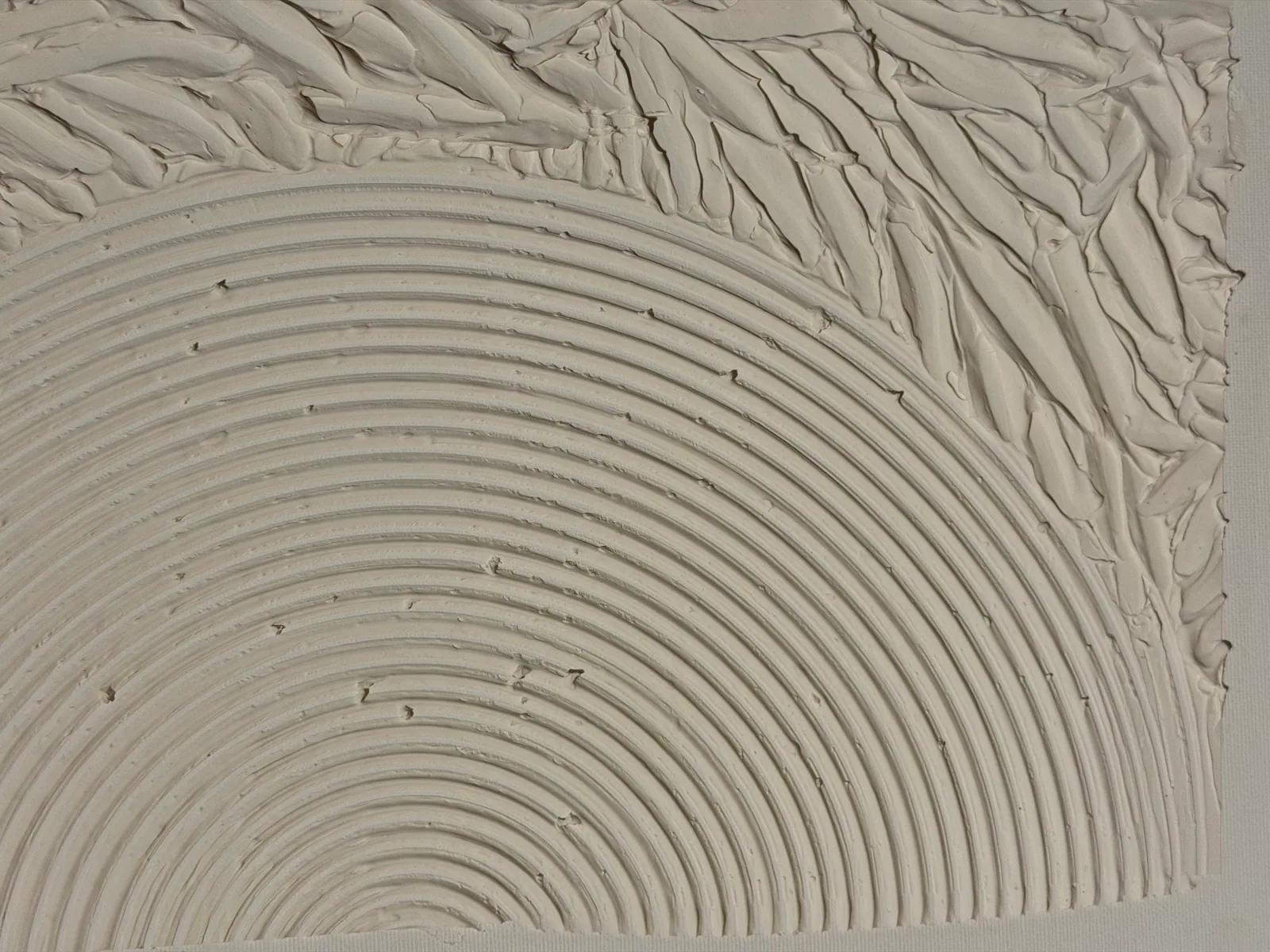
A store print and an original painting are not two grades of the same object
The confusion starts with a word: "quadro" or "painting" gets used loosely for both. A decorative print sold at a home-decor store is a manufactured object — an image, existing as a digital file, reproduced onto paper or canvas and mounted into a frame. An original painting is a single physical artifact: paint, texture paste, or gold leaf applied by hand, directly onto that one canvas, with no file behind it that could be printed again.
That is the actual dividing line, and it has nothing to do with taste. A print can be well-made and an original can be clumsy. What separates them is whether the object in front of you is the one thing the artist touched, or a copy of an image that exists, as itself, somewhere else — often nowhere but a server.
How a decorative print gets to a store shelf that cheap
Most decorative prints sold at scale are produced the same core way fine-art reproductions are: a source image is digitized once, then output by inkjet printers using the CMYK color model, sometimes with extra ink channels for gradation — the same underlying technology behind giclée reproduction, just run at decor-market volume and price rather than fine-art volume and price.
The reason the unit price is so low is structural, not a sign of low quality: economies of scale mean the cost per unit falls as the print run grows, because fixed costs — plate setup, color calibration, machine time — get spread across thousands of identical copies rather than one. In offset printing specifically, nearly all the expense sits in the setup stage; once the press is calibrated and running, each additional copy adds only a few cents in paper and ink, which is why the method only becomes economical at high volume, roughly 250 to 500 units or more. A print run of a few thousand identical canvases absorbs its setup cost so completely that the price per piece can drop well below what an hour of an artist's studio labor alone would cost.
Why the price gap is structural, not a discount
An original painting's price is not the print's price with a markup added — it is priced from an entirely different set of inputs: the hours spent building and reworking the surface, the cost of materials that a machine never touches (mineral pigment, gold leaf, sculpted texture paste), the fact that the piece is one of one, and the documentation that comes with it. At Perfeito Studio, that documentation is a signed Certificate of Authenticity, an artist dossier, and an internal Archive ID tracing the piece back to the artist's own studio records — none of which a manufactured print carries, because there is nothing singular to trace.
Buying an original directly from a working artist's studio, without a gallery's resale layer on top, also changes the math: within contemporary Brazilian art specifically, a piece from an artist still building her market — like the current body of work at Perfeito Studio, ranging from R$ 2,400 to R$ 8,800 — sits closer to a decorative print's price than most people expect, precisely because there is no gallery markup and no licensing chain involved. International buyers can request an approximate currency reference on inquiry; the studio's own reference price is always the BRL figure.
Can you actually tell the difference from across the room?
Often, no — and that is worth admitting rather than glossing over. From a normal viewing distance, a well-printed decorative piece and an original painting can read as similarly composed, similarly colored objects. The silhouette and the palette are not where the difference shows.
Up close, it stops being close. A print's surface is flat regardless of what the image depicts — any texture you see is printed, not built. An original in mixed media or sculpted relief casts real shadow under raking light, because pigment and texture paste sit above the canvas at different heights. The edge of a stretched original often shows the paint continuing around the sides or marks from the working process; a printed canvas usually has a clean, uniform wrap because it is the same flat image repeated to the border. And the verso tells the rest: a stretcher bar and, often, a handwritten signature and date on an original; mounting hardware and a printed label on a manufactured piece.
Replacing store prints gradually, without pretending it's the same purchase
It is a reasonable strategy, and a common one among people building a first collection: keep the decorative prints that still work for the space, and replace them one at a time as an original becomes affordable — rather than waiting to furnish an entire home in originals at once. Both purchases are legitimate; they are just not interchangeable. A decorative print fills a wall honestly, at a price that matches what it is. An original is acquired for the object itself: the one physical thing the artist made, documented and traceable, in a body of work that keeps growing.
What does not hold up is treating the swap as an upgrade path where the original is simply a nicer version of the print. It is a different category of purchase, made for a different reason — provenance and singularity, not just an image on the wall.
From the studio
From the studio
Echo of Silence — the piece photographed in detail above — is built from concentric reliefs and organic folds worked directly into the surface with texture paste, one ring pressed and shaped before the next goes on. I chose to photograph that surface up close, rather than only the framed piece on a wall, because it is the part a printed reproduction cannot carry at any resolution: the shadow each ridge casts changes with the light in the room, and it changes again as you walk past it.
I am not against decorative prints — plenty of walls are better served by an honest, well-made one, and I say so directly when someone asks me instead of steering them toward a sale. What I want people to leave with is the distinction itself: a print reproduces what a piece looks like in one lighting condition, frozen. An original like this one keeps responding to the room it's actually in. That is what the price is paying for, not a better picture of the same thing.
Frequently asked
Why is a store print so much cheaper than an original painting?
Because it is a different kind of object, made a different way. A store print is manufactured: a digital image reproduced by inkjet or offset printing across a large run, which spreads the setup cost over thousands of identical copies, leaving very little of that original cost in each unit. An original painting is a single physical piece built by hand, priced from labor, materials, and the fact that only one exists — inputs a mass-produced print never carries.
Is a decorative print handmade or just a reproduction?
Almost always a reproduction. The image existed first as a digital file, then was output mechanically onto paper or canvas by an inkjet or offset press, using the same core printing technology as fine-art giclée reproduction, just at decor-market scale. No brush touches the specific copy you buy; the same file could be printed again identically, which is the opposite of what defines an original.
Does an original painting hold or gain value while a print doesn't?
No honest seller can promise that. Resale value depends on how an artist's career develops and how buyer taste shifts, and nobody can guarantee either in advance. What can be said reliably is that an original is documented and singular — signed, with a Certificate of Authenticity and an Archive ID — while a store print is one of an open, unlimited run with no claim to scarcity at all. Buy an original for the object and its documentation, not as a financial bet.
Can you tell the difference from across the room?
Often not — colour and composition can look similar from normal viewing distance. The difference shows up close: a print's surface stays flat no matter what it depicts, while an original in mixed media or sculpted relief casts real shadow under angled light, because the paint and texture physically sit above the canvas. The edge of the stretched canvas and the signature on the verso are the most reliable tells.
Is it worth gradually replacing store prints with original art?
It's a reasonable, common approach — keep what still works and swap in an original as one becomes affordable, rather than waiting to furnish a whole space in originals at once. Just treat it as adding a different category of object, not upgrading the print to a better version of itself. The original is acquired for its documentation and singularity, not because it is a sharper picture of the same image.
Sources
- Wikipedia — 2026-08-17
- Wikipedia — 2026-08-17
- PrintingForLess.com — 2026-08-17
Considering an original instead of another print?
Every piece at Perfeito Studio is a signed, one-of-one original with a Certificate of Authenticity and Archive ID. Talk directly with the studio about a specific work, including international shipping.
Talk to the studio on WhatsApp
Published on