Is original art worth the price? What you're actually paying for
An original painting's price is not just canvas size — it is hours of manual labor, material cost, one-of-a-kind status, and the documentation that makes it traceable, none of which a print or reproduction carries. Whether that is worth it depends on whether you want the only version of that work, backed by a signed certificate, rather than a copy.
The four things priced into an original painting
When a price feels high for "just a canvas," it usually means only the material cost is visible. Four things are actually priced in: labor time (the hours spent building layers, letting texture cure, and reworking a passage until it holds); material cost (mineral pigment, metallic fragments, gold leaf, and texture paste run well above a tube of student-grade acrylic); uniqueness (a one-of-a-kind object, not one copy among many); and documentation (a certificate of authenticity, a work dossier, and a traceable Archive ID that a print or reproduction never comes with). Strip any one of those four away and the object in front of you is something else, not a cheaper version of the same thing.
Why the same size costs different amounts from different artists
Two paintings of identical size, technique, and even subject can carry very different prices, and size alone does not explain the gap. An artist's trajectory, meaning her sales history, exhibition record, and how long she has been building a body of work, is a real pricing factor in the art market, separate from the physical object itself. An artist earlier in her career typically prices lower than someone with decades of sales behind her; that is a statement about market position, not about the quality of a specific canvas. It is also why buying directly from an artist's own studio, without a gallery's resale markup layered on top, tends to put the same level of craftsmanship within a more accessible range.
Original versus print: why the gap is structural, not arbitrary
A print or giclée reproduction of a painting costs a fraction of the original because almost none of the four factors above apply to it. It is manufactured, not hand-built: the labor is a print run, not weeks of layering. The material is paper or canvas plus ink, not mineral pigment and gold leaf worked by hand. It is not unique, it exists in an edition of however many copies were printed. And it carries no Archive ID tracing it back to a single physical object the artist touched. The lower price of a print is not the original "marked down", it reflects a genuinely different object with a different production process.
Does an original ever lose value?
It can, and there is no honest way to promise otherwise. What a studio can control is what it puts into the piece and what it documents about it, the labor, the materials, the authenticity trail, so that whatever happens to resale value, the object itself is exactly what it claims to be. The price in this article covers what you are buying today, not a forecast of what it will be worth later.
From the studio
From the studio
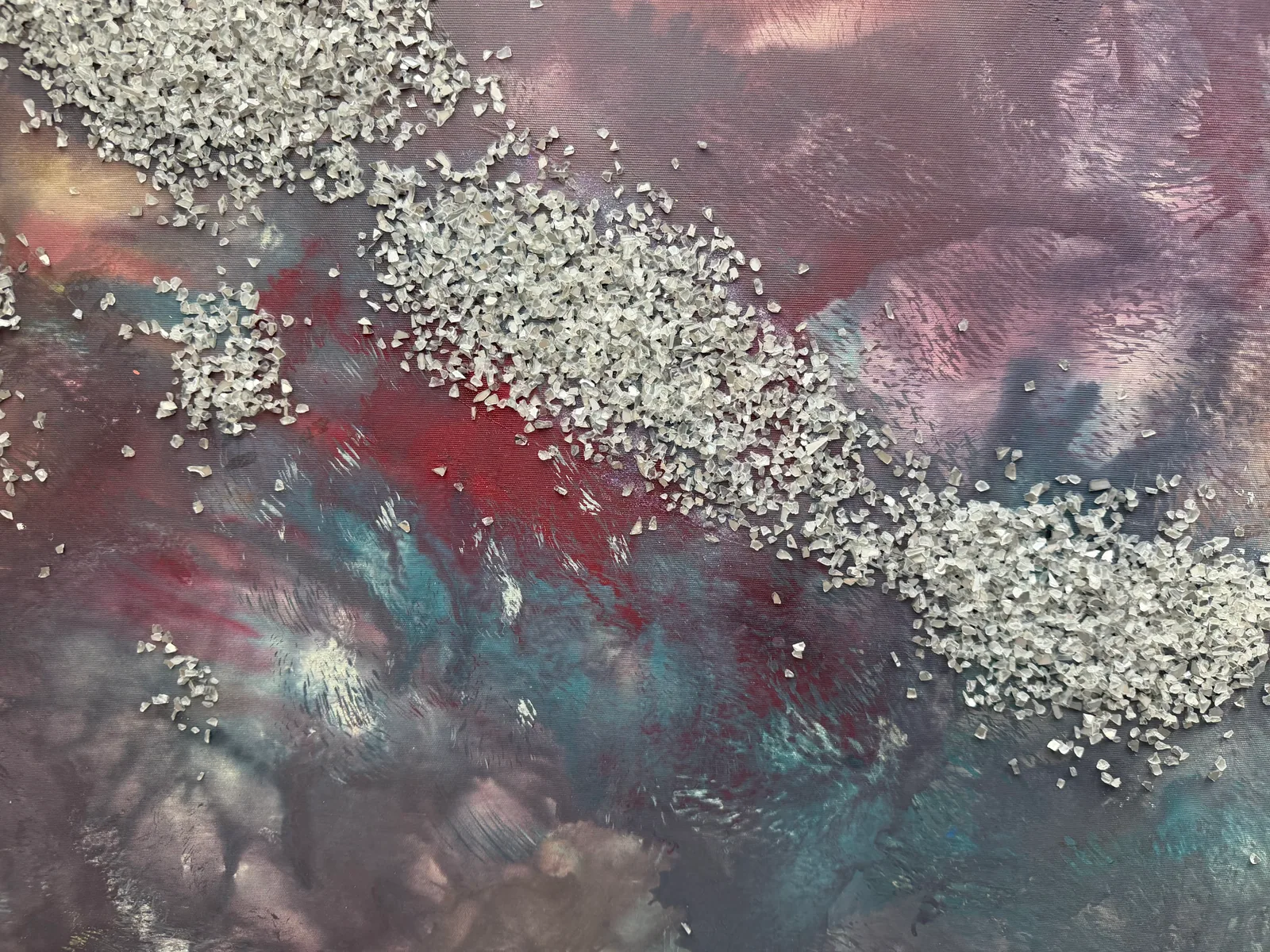
Elemental Veins is the piece in this detail photo, and it is a good example of what "paying for labor" actually means in practice. The surface is not one layer of paint, it is pigment, metallic dust, and texture paste built up across several separate working sessions, each one added only once the layer underneath had fully cured. Rush that sequence and the metallic fragments sit flat instead of catching light the way they do here; the texture would read as decoration instead of geology, which was the whole point of the piece.
I priced it, like everything in the Terra & Ether series, by working out a rate per square meter for the series and adjusting for how much layering that specific canvas took relative to the others. That number is not a guess made by looking at the market and picking something that feels fair, it is arithmetic I redo for every new piece. What the price does not include is any promise about what the painting will be worth later. It includes the hours, the materials, and a certificate that says exactly what you own.
Frequently asked
What exactly am I paying for when I buy an original painting?
Four things: the hours of manual labor that went into building and layering the surface, the cost of the materials used (pigment, metallic fragments, gold leaf, or texture paste, depending on the piece), the fact that the object is one of one rather than one of many, and the documentation that comes with it, a signed certificate of authenticity, a work dossier, and a traceable Archive ID. None of those four apply to a print or a decorative reproduction, which is why the prices are structurally different, not just marked up or down.
Why does an emerging artist's work cost less than an established artist's?
An artist's trajectory, meaning her sales history and how long she has been building a documented body of work, is a real factor in art pricing, separate from a canvas's size or technique. A collector is partly paying for track record when buying from an artist with decades of sales behind her. An artist earlier in her career, selling directly from her own studio without a gallery's resale markup, can offer comparable craftsmanship at a more accessible price. That is a statement about market position, not about the quality of the work itself.
Does the price of a painting only reflect its size?
No, though size is usually the dominant factor and the first filter for estimating a price. Beyond size, the technique and number of layers involved, the cost of the specific materials used (gold leaf and metallic fragments cost more than a single layer of acrylic), the artist's trajectory, and the documentation included with the piece all move the final number. Two works the same size can carry different prices for exactly these reasons.
Why is a print so much cheaper than the original it's based on?
Because almost none of what makes an original expensive applies to a print. A print is manufactured in an edition rather than hand-built in one sitting, it uses ink and paper or canvas rather than hand-applied pigment and materials, it is not unique, and it carries no Archive ID connecting it to a single physical object the artist touched. The lower price reflects a genuinely different production process, not a discount on the same object.
Can an original painting's price go down over time?
It can. Resale value depends on factors no studio or artist can guarantee, including how the artist's career develops and how buyer tastes shift over time. No responsible seller can promise a painting will appreciate. What can be controlled and documented is what went into the piece: the labor, the materials, and the authenticity trail. If you are buying because you want that specific painting, the price is justified by the object itself; if you are buying purely as a financial bet, that is a different, riskier decision the artwork cannot guarantee an outcome for.
Want to talk through the price of a specific piece?
Every work in the collection is priced openly and includes a signed certificate of authenticity, a work dossier, and a traceable Archive ID. Reach out directly with questions about what a specific piece includes.
Published on