How to find emerging artists before they are represented
Emerging artists are found by looking, not scrolling: degree shows, open studios, artist-run spaces, and direct contact online, not an algorithm. What separates a real find from a lucky guess is reading six signals in the work itself and four signals in how the artist actually practices — production, documentation, price clarity, and how they answer you.
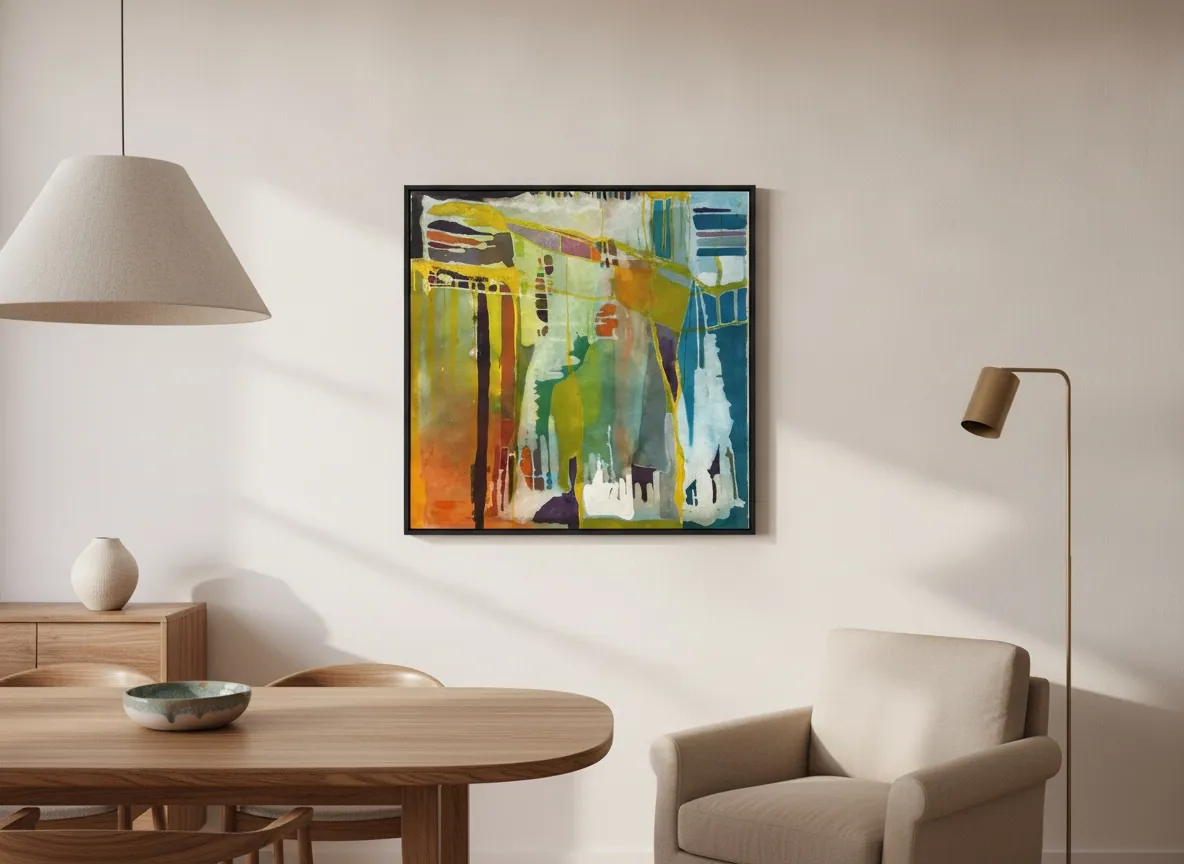
Where emerging work is actually found
Serious collectors of emerging work almost never start with an algorithm. They start with the places unrepresented artists actually show their work: degree shows at art schools, where a body of work is presented in full for the first time; open studios, where you see pieces mid-process and can ask direct questions; artist-run spaces and small independent shows, which exist precisely because they sit outside the gallery system; and direct contact online — an artist's own site or profile, where prices, availability, and documentation are stated plainly rather than filtered through a dealer. Recommendations from curators or other collectors round this out — someone who has already looked closely tends to be a better filter than a feed.
What these have in common is that they put you in front of a body of work, not one image optimized for a scroll. An unsolicited Instagram scroll is not a method, for the opposite reason: the feed ranks for engagement, not for coherence, technical command, or documentation, and one striking post says nothing about whether it belongs to a practice or is the single good frame out of hundreds. Finding an artist before representation means doing the looking a gallery would otherwise do for you — which is exactly why the signals below matter.
Six signals you read in the work itself
Before anything about the artist's career, the work has to hold up on its own terms. Across a body of work — not one flattering photograph — look for:
- Technical command: brushwork, layering, or mark-making that reads as deliberate, not accidental — the difference between a controlled surface and a lucky one.
- A coherent visual language: pieces that speak to each other rather than a scattered set of one-off experiments, a sign of direction rather than a hobby.
- A recognizable point of view: something in the palette, composition, or subject that would let you identify the artist's hand without being told.
- Considered material choices: canvas, medium, and finish chosen for a reason, not whatever was cheapest or fastest to hand.
- Resolved scale and proportion: a piece that reads correctly at the size it was made, holding its own in a real room rather than only in a cropped photo.
- Presentation-ready finish: edges, surface, and framing decisions handled with the same care as the image itself — a work that is finished, not still in progress.
Four signals you read in the practice
The work is necessary but not sufficient. The practice around it tells you whether you are looking at a career in motion or a single lucky piece:
- Continuous production: new work appearing across seasons and years, not one exhibition-worthy piece followed by silence.
- Documentation from the first piece: archive numbering, dated works, technique and provenance recorded as a habit, not assembled retroactively once a sale is in reach.
- Price clarity: published prices tied to a logic — size, series, material — rather than "email for pricing" opacity or numbers that shift depending on who is asking.
- How the artist answers you: a direct question about technique, availability, or a specific piece gets a specific answer, not a redirect to hype or a vague "reach out and we'll see."
The false signals: what to ignore
Some things read as validation but are not, and knowing the difference saves time:
- Follower count. A large audience says an algorithm favored a post; it says nothing about the work's coherence or the artist's documentation.
- "Limited edition" prints marketed like originals. A print run is a different object with different economics than a unique piece — worth knowing before comparing prices.
- Paid or pay-to-enter awards and exhibitions. Recognition anyone can buy their way into is not the same as a curator's or peer's independent judgment.
- Discourse without a body of work behind it. Confident language about "vision" or "movement" is worth little if it is not backed by pieces you can actually see, dated and documented.
From the studio
From the studio
I organize everything I make into five series — Heart of Chaos, Matter & Silence, Luminous Rebirth, Black & Gold, Terra & Ether — because one striking canvas proves nothing about a practice, and a body of work does. Each piece gets an Archive ID the day it is finished, in the numbering of its series, before I know who will buy it or whether it will sell at all. That is the habit described above: documentation as a starting condition, not something assembled after the fact. Every sale leaves with a certificate of authenticity, a curatorial dossier, a conservation guide, and a signed acquisition agreement — the same four documents, every time, regardless of price.
My training is in architecture, and it shows less in any single motif than in how I think about scale and light — how a piece will actually sit against a wall, how it changes across a room over the course of a day, which is a different question than how it photographs on a screen. That is also why I photograph real surface detail on pieces like Prism Garden: the layering, the texture, the way light catches an edge — none of that survives compression into a flat image, and I would rather show it honestly than let a screen flatten it into something it is not. I do not know if any of this means a piece will be worth more later. I do know it means that, if you ask, there is something real behind the answer.
Frequently asked
Is buying an emerging artist a financial bet?
Honestly, yes, in the sense that there is no guarantee: no auction history, no established secondary market, no way to promise a work will be worth more later. It should be bought because you want to live with it, not as a financial position — see the full answer on whether art is a good investment.
Can I buy from outside Brazil?
Yes. Pieces ship internationally with the certificate, dossier, and conservation guide in both Portuguese and English, and payment and logistics are arranged directly with the artist by WhatsApp or email.
How do I know a certificate of authenticity is real documentation, not a marketing prop?
A real certificate names the specific piece by its Archive ID, states technique, dimensions, and year, and comes with a dossier and a signed acquisition agreement — not just a decorative page with a signature.
Is it a problem to buy directly from the artist instead of through a gallery?
No — it is increasingly common, and it means no gallery margin sits inside the price. It does mean the filtering a gallery would normally do is now yours to do, which is exactly why the signals above matter more, not less, when buying direct.
What if the artist has no exhibition history yet?
That is normal at this stage of a career and is not, by itself, a red flag. Look instead at the signals in the work and in the practice described above: continuous production, documentation, price clarity, and how directly the artist answers you.
Want to look at a specific piece before deciding anything?
Ask about technique, documentation, or availability directly, no pitch, no promise of appreciation, just a straight answer.
Talk to the studio on WhatsApp
Published on