How to start an art collection from scratch
Start with one piece you respond to immediately, at a price that doesn't strain you, bought directly from the artist. The practical first step is acquiring a single work you can live with, not building a five-year plan — how many pieces come next, and whether you ever need an advisor, follows from that first decision.
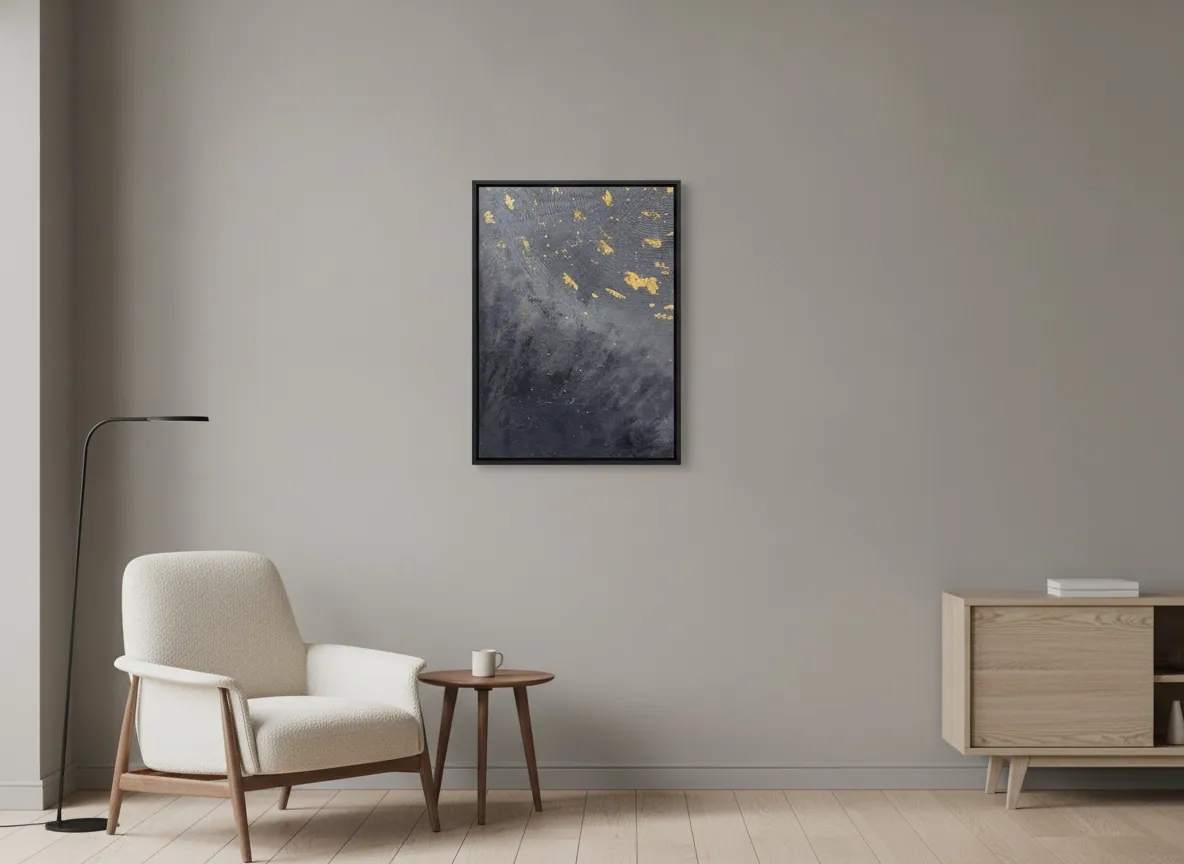
Start with one piece, not a plan
The most common way a first collection stalls is that it never becomes a collection at all — it stays a research project. New collectors read about markets, movements, and provenance for months, and end up owning nothing. The practical alternative is smaller than it sounds: pick one work that holds your attention across several viewings, at a price you can pay without negotiating with yourself afterward, and buy it.
That first piece does two jobs a spreadsheet can't. It teaches you what you actually respond to — color, scale, texture, subject — which is different from what you think you should respond to. And it gives you a live reference point: everything you look at afterward gets measured against something real on your wall, not against an abstract idea of good taste.
Is it better to buy one expensive piece or several smaller ones?
For a genuine beginner, one work you're certain about tends to outperform three you're lukewarm on. A single strong piece, lived with over months, sharpens your eye in a way that a handful of safe, undersized choices rarely does — you notice how it holds up in different light, whether the composition still surprises you in March the way it did in January, whether the scale feels right in the room. Diffusing a budget across several tentative purchases usually just delays that education.
Budget is the honest constraint, though, and there's no need to pretend otherwise. At Perfeito Studio, single original signed works currently run roughly R$ 2,400 to R$ 8,800, depending on scale and series — a range wide enough that "one good piece" and "entry point into collecting" aren't mutually exclusive. If your budget only reaches the lower end of that range, one entry-tier piece chosen deliberately still beats an impulse buy at any price.
Buying directly from an artist's studio
Buying straight from a working studio — rather than through a gallery or a secondary market — is a legitimate and increasingly common way to start. There's no resale markup, and the conversation is direct: you can ask about materials, the story behind a series, or how a piece was made, and get an answer from the person who made it, not a sales intermediary.
What direct purchase should include, and what to check for before you commit, is documentation. At Perfeito Studio, every acquisition comes with a signed Certificate of Authenticity (title, series, year, medium, dimensions, image, and an internal Archive ID), an official invoice or receipt, an Artwork Acquisition Agreement, an artist dossier, and care instructions. For collectors outside Brazil, international shipping is quoted per destination on request, with professional packaging included. That paperwork is what makes a studio-direct purchase behave like a real acquisition instead of a favor.
Do you need an art advisor to start collecting?
No — not for a first piece. Advisors earn their fee helping build larger, more strategic collections, or navigating auctions and secondary markets where information asymmetry is real. For someone buying their first original work directly from an artist or studio, the advisor's usual function — asking hard questions about the piece, checking documentation, understanding materials — is something you can do yourself in a direct conversation with the artist.
An advisor becomes genuinely useful later: when you're weighing works across several artists at once, assembling a collection with a specific curatorial logic, or buying at a scale where a second opinion has real financial weight. Treating one as mandatory from the first purchase adds a layer of cost and delay that a beginner's first acquisition doesn't need.
Buy on taste, not on resale potential
At the beginning, buy what you can't stop looking at — not what you suspect will be easy to sell later. A first collection built on genuine response to a work tends to keep its meaning for you regardless of what the market does; one assembled purely around anticipated resale rarely satisfies on either front, because guessing resale value as a beginner is close to guesswork, and a piece you never loved is a poor thing to own while you wait to find out if you guessed right.
This isn't a claim that art doesn't have a market — it does. It's a sequencing point: taste is the skill you can build immediately, with your own eyes, on your own wall. Market judgment, if you ever want it, is built over years and many more purchases than your first one.
From the studio
The studio's view
When someone writes to me on WhatsApp about a first piece, they rarely ask about the market first — they ask whether a work will still hold up on their wall after the initial pull fades. That's the right question, and it's usually answerable in one conversation: I'll talk through the materials, why a piece sits where it does in a series, and what it looks like at different times of day, because most first-time collectors have never had the chance to ask an artist that directly.
What I notice first-time collectors respond to isn't the largest or the most expensive piece in the studio — it's the one they keep returning to in photos I send. I'd rather someone leave with a smaller entry-tier piece from Matter & Silence they genuinely can't stop looking at than talk them into a larger acquisition they're unsure about. Every piece leaves with its Archive ID, a signed certificate, and a dossier — not because a first collector needs convincing it's real, but because that record is what lets the piece keep its own history as it moves through their life.
Frequently asked
Where should a beginner start when collecting art?
Start with a single work you respond to strongly, at a price you're genuinely comfortable paying, rather than researching for months before making any purchase. That first piece teaches you what you actually respond to and gives you a real reference point for every future decision. Buying directly from an artist or studio, where you can ask questions about the work, is a practical and low-friction way to make that first purchase.
Is it better to buy one expensive piece first or several smaller ones?
For most beginners, one work you're genuinely certain about is a better start than several you're only mildly interested in. Living with a single strong piece over time sharpens your eye faster than spreading a budget across a handful of safe, tentative choices. If budget is limited, a deliberately chosen entry-tier piece is still a better first step than several impulse purchases at any price point.
Is buying directly from an artist's studio a good way to start collecting?
Yes. Buying direct removes gallery markup and puts you in direct conversation with the person who made the work, which is useful when you're still learning what questions to ask. What matters is documentation: a signed Certificate of Authenticity, an invoice or receipt, and clear provenance records. A studio that provides these is offering the same legitimacy as a gallery purchase, without the intermediary.
Do I need an art advisor to start collecting?
No. Advisors add real value for larger, more strategic collections or for navigating auctions, but a first purchase directly from an artist or studio doesn't require one — you can ask the same questions an advisor would ask in a direct conversation with the artist. An advisor becomes more useful later, once you're weighing multiple artists or buying at a scale where a second opinion carries real financial weight.
Should I buy based on taste or resale potential when starting out?
Buy based on taste. As a beginner, judging resale potential accurately is close to guesswork, and a piece you don't genuinely respond to is a poor thing to own while you find out if the guess was right. Taste is a skill you can build immediately, from your own eyes and your own wall; market judgment, if you want it later, is built over years and many more purchases than your first.
Ready to start with a first piece?
Talk directly with the studio about a work you're drawn to, your space, and any questions before you decide. Replies are personal.
Published on