How to hang a gallery wall of art
A gallery wall reads as intentional when two things are fixed before hanging: consistent spacing between pieces — professional framing guidance points to roughly 2 to 3 inches, about 5 to 8 cm — and a single shared alignment axis every piece lines up to, whether the layout is a tight grid or a looser, mixed cluster.
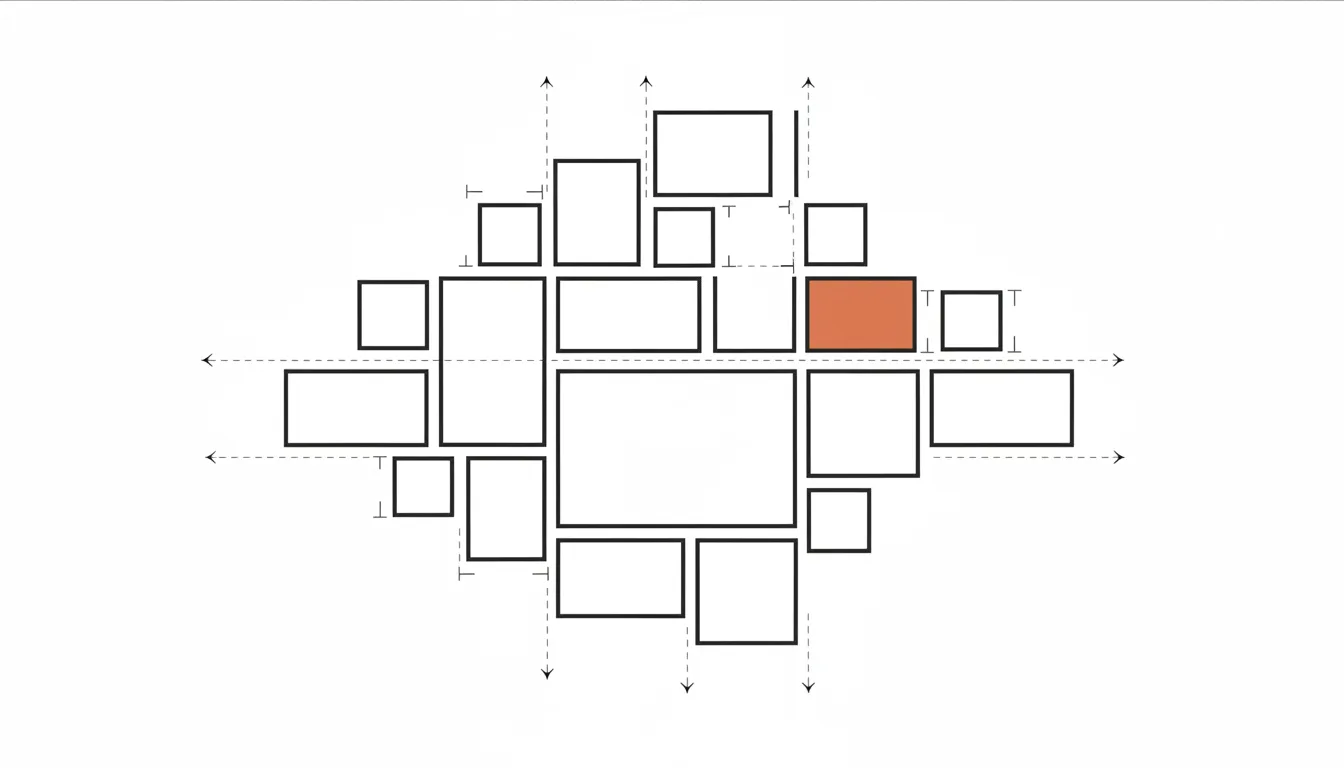
Choose a method first: grid or cluster
Every gallery wall resolves into one of two structures. A grid uses identical or near-identical frame sizes arranged in uniform rows and columns with consistent spacing throughout — the result reads as symmetrical, modern, and orderly, and it's the easiest layout to plan with painter's tape and a level before a single nail goes in. An organic cluster mixes frame sizes, orientations, and sometimes finishes into a single asymmetrical composition that feels collected rather than rigid.
Neither structure is more correct than the other — the choice depends on the pieces on hand and the room. What both structures share, and what actually separates a considered wall from a cluttered one, is that the same spacing and alignment rule is applied without exception across every piece in the group.
The spacing rule that makes the difference
The single most repeated piece of guidance from professional framers is to keep the gap between frames small and, above all, consistent. Framebridge, a US framing company, puts it plainly: "Space your frames 2-3 inches apart, and keep the spacing consistent between each frame." That range, roughly 5 to 8 cm, is tight enough that the pieces read as one composition rather than as scattered individual objects, and wide enough that each piece still has room to be seen on its own.
Frameology, another framing company, breaks the same range down further by context: 2.5 inches as a general default for most clusters, 2 to 2.5 inches for a four-frame grid, and 2.5 to 3 inches for a five- or six-piece cluster — with slightly tighter spacing (around 2 inches) recommended for staircase arrangements and slightly wider spacing (around 3 inches) for hallway grids, where the wall is seen from a greater distance. The exact number matters less than picking one gap and repeating it at every edge in the group.
Set an alignment axis before you hang anything
Spacing controls how close pieces sit to each other; alignment controls whether the group reads as a single object on the wall. Before hanging, pick one shared line for the whole composition to key to — a common center line running through the visual middle of the group, a shared top edge for pieces of different heights, or the bottom edge if the arrangement sits above a piece of furniture. Every frame in the layout should touch that line consistently, even when the frames themselves vary in size.
The center of the full arrangement — not each individual piece — is what should land at the eye-level height used for a single piece; see our guide on standard hanging height for that range. The most reliable way to test a layout before committing to it is the same one framers recommend for a single piece: cut paper templates to the exact size of each frame, position them on the wall with painter's tape in the planned arrangement, and live with it for a day before drilling.
Mixing a large original with smaller framed pieces
A large original painting and a handful of smaller framed pieces — prints, photographs, drawings — can share a wall, and the combination is common in real collections rather than a compromise. The practical approach is to treat the large piece as the anchor: it sets the group's center or dominant edge, and the smaller pieces are arranged around it at the same consistent gap used everywhere else in the composition, rather than crowding closer to the large piece than they sit from each other.
Scale contrast reads as intentional when the spacing rule doesn't change piece to piece. It reads as an accident when a large piece is dropped into a grid built for uniform frames, or when smaller pieces cluster unevenly around it. If the room can support it, giving the anchor piece slightly more surrounding negative space than the gap used between the smaller pieces helps it still register as the focal point of the group.
From the studio
From the atelier
I trained as an architect before I trained as a painter, and a wall of multiple pieces is, to me, a composition problem before it's a hanging problem — the same kind of question as how a floor plan distributes weight and movement across a room. When a collector asks me how to hang one of my pieces alongside other work, I don't start with the tape measure. I start by asking what the other pieces are: their scale, their color temperature, whether they're framed or raw canvas, because that decides whether my piece should anchor the group or sit as one voice among several.
My own larger, more textured works — the pieces with sculpted relief or gold leaf, mostly in Matter & Silence and Terra & Ether — read best as the anchor of a group rather than as one of several equal-sized pieces in a tight grid, because the texture needs enough surrounding space to catch light from more than one angle. A smaller, flatter piece from Luminous Rebirth or Black & Gold, on the other hand, sits comfortably inside a denser cluster with photographs or smaller works on paper, as long as the spacing between every piece in the group stays the same. That consistency is the one rule I don't bend, on my own walls or when I'm advising a collector on theirs.
Frequently asked
How much space should you leave between pieces in a gallery wall?
Professional framing guidance points to roughly 2 to 3 inches (about 5 to 8 cm) between frames, kept consistent at every edge in the arrangement. Some framers narrow this by context — a bit tighter for a compact four-frame grid, a bit wider for a hallway grid seen from further away — but the constant gap matters more than the exact number chosen.
Should a gallery wall be symmetrical or asymmetrical?
Either works. A symmetrical grid, using identical or near-identical frame sizes in uniform rows and columns, reads as modern and orderly. An asymmetrical, organic cluster mixes frame sizes and orientations into a single collected-looking composition. What matters more than which structure you choose is applying the same spacing and alignment rule to every piece in the group, without exception.
What height should the center of a gallery wall be at?
Treat the full arrangement as one object: its overall visual center, not each individual piece, is what should land at the same eye-level height normally used for hanging a single piece. See our guide on standard hanging height for that range and how it adjusts for rooms where people are usually seated.
Can you mix a large original painting with smaller framed pieces?
Yes. Treat the large piece as the anchor of the group, letting it set the shared center or edge that the smaller pieces align to, and keep the same spacing between every piece in the composition rather than crowding the smaller pieces closer to the large one. Giving the anchor slightly more surrounding space than the gap used elsewhere helps it keep its role as the focal point.
How many pieces is too many for one wall?
There is no fixed number — it depends on the wall's size and how much breathing room is left around the whole arrangement, not just between individual pieces. A useful check is to leave visibly more open wall around the outer edge of the group than the gap used between pieces inside it; if that outer margin disappears, the wall usually reads as crowded regardless of how many pieces are hung.
Planning a gallery wall around one of our pieces?
Send us a photo of the wall and the other pieces you're combining it with, and we'll help you work out which piece should anchor the group.
Sources
- Framebridge — 2026-08-01
- Frameology — 2026-08-01
Published on