Building a coherent art collection across several homes
An art collection stays coherent across several homes when it is organized around a repeated decision — the same artist's evolving body of work, a shared palette, or a consistent scale logic — rather than around the properties themselves. The through-line has to travel with the collector, not stay behind in one house, which is why documentation and a single acquisition source matter more here than in a one-address collection.
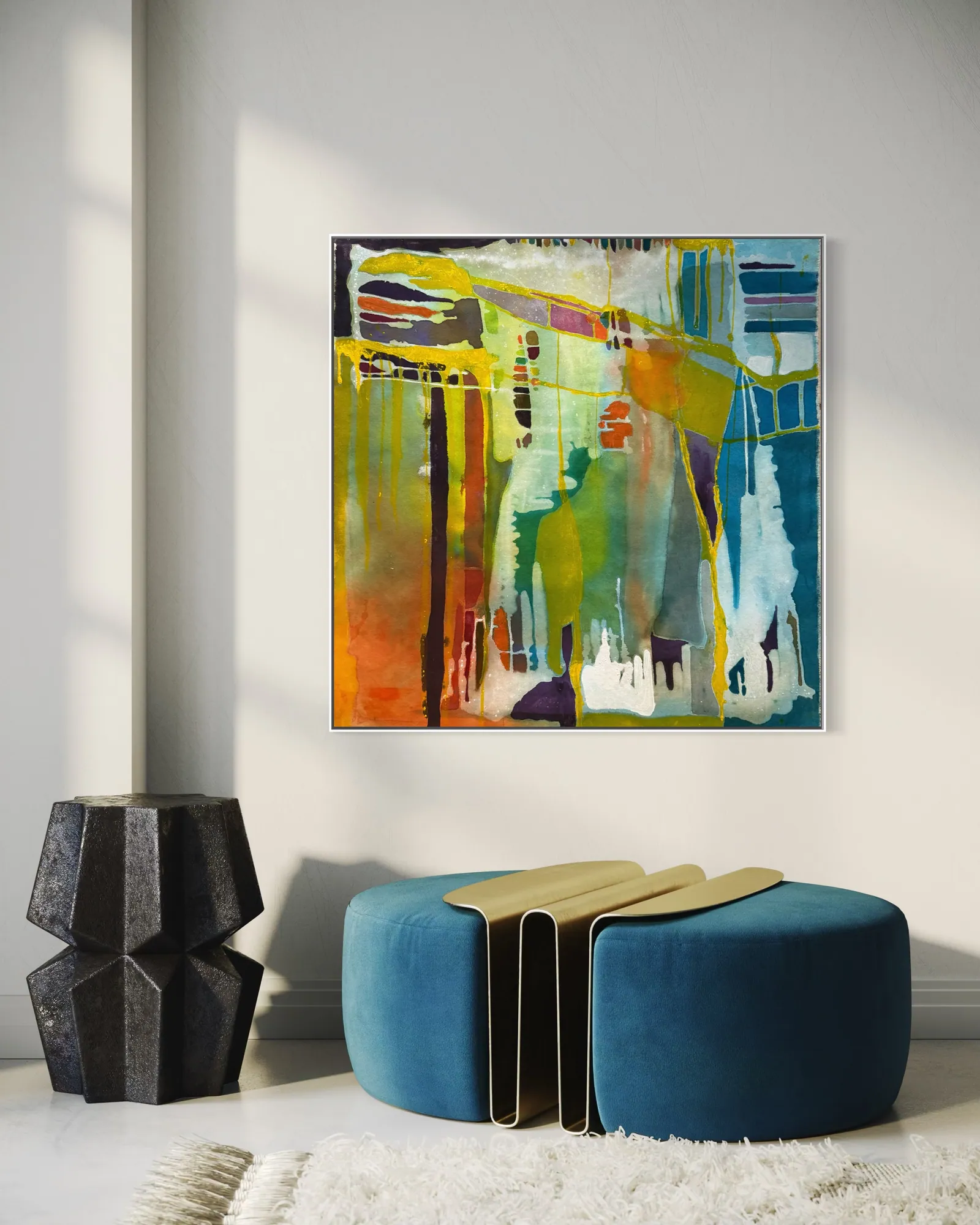
Two homes, two collections is the default failure mode
Most multi-home collections drift apart by accident, not by choice. A piece gets bought for the vacation property because it "felt right for that house," another gets bought for the primary residence for the same reason, and within a few years the two groups of work share nothing — no artist, no palette, no scale logic. Each home ends up with its own unrelated collection under one roof of ownership, which reads as decoration rather than as a collection at all.
The fix is not to force identical work into every property. It is to decide, early, what the one or two threads are that will repeat across addresses — and to make every acquisition decision check against that thread before it checks against the room it will hang in.
The through-line that travels: artist, series, or palette
A single artist's evolving body of work is the strongest through-line for a multi-home collection, because it survives being split across properties in a way a matched color scheme does not. Two pieces from the same series — one large-format for a primary living room, one smaller for a study or guest room abroad — read as a deliberate pair even when neither is in the same building as the other, because the hand, the material logic, and the visual language are shared.
Palette is the second-strongest anchor and the easiest to apply loosely: a collector who commits to warm luminous tones, or to a restricted range of blues and golds, can source work from more than one artist and still have the homes feel connected when photographed side by side. Scale logic — one statement piece per main room, supported by smaller works — is a third, weaker anchor on its own, but it compounds well when paired with either of the first two.
What actually needs to move, and what should stay put
Rotating a specific physical painting between a primary home and a second property is uncommon in practice — shipping and reinstallation cost and risk usually outweigh the benefit, and most collectors instead buy a second piece for the second address rather than move the first one back and forth seasonally. What should travel between homes is not the object but the decision: the same artist, the same series, or the same palette rule, applied fresh at each address.
Where multi-home collectors do move work, it tends to be smaller, lower-risk pieces rather than a large anchor canvas — and always with proper packing, insurance in transit, and a paper trail showing which piece is where, for both insurance and eventual resale.
Documentation is what makes 'one collection' provable
Across a single home, a collector can often keep the story of a collection in memory. Across several addresses — especially when one is abroad or used only part of the year — memory is not enough. A collection that is meant to read as one body of work needs a paper trail that says so: a certificate of authenticity per piece, a numbered archive reference tying each work back to the artist's records, and a simple inventory noting which piece is installed at which address.
This matters for two practical reasons beyond aesthetics. First, insurers for high-value collections generally want a current location on file for each piece, particularly when a property sits empty for part of the year. Second, if the collection is ever appraised, sold, or divided, an archive number and certificate per work make it possible to reconstruct the collection as a set rather than as a pile of separate purchases with no documented relationship to one another.
From the studio
The ateliê's view
Because Alyne Perfeito trained as an architect before she trained as a painter, she thinks about a piece's second life the moment it leaves the studio — not just the wall it is being bought for today, but the other rooms and other houses a collector's holdings will eventually span. Every work leaves with its own Archive ID and certificate precisely so that a piece can move between a collector's addresses, be insured in a new location, or sit next to a later acquisition from a different series, and still read as part of one documented body of work rather than as an orphaned purchase. Collectors building across more than one home are, in the ateliê's experience, the ones who ask the most careful questions about series and sequencing before buying — which is the right instinct, not an overcautious one.
Frequently asked
Does a collection need one unifying artist or series to feel coherent across several homes?
Not strictly one artist, but it needs a repeated decision of some kind. The most durable through-line is a single artist's evolving body of work, because it survives being split across addresses. A shared palette or a consistent scale logic can substitute for this if a collector prefers to buy from more than one artist, but without any repeated thread, work spread across several homes tends to read as unrelated decoration rather than as one collection.
Is it better to place similar-toned pieces in each home, or to let each property have its own identity?
Both approaches work, but they answer different goals. Matching palette or series across homes reinforces that the collector owns one coherent body of work, which matters most if the collection will later be viewed, insured, or sold as a set. Letting each property keep its own identity within a shared artist or series still preserves coherence, since the connecting thread is the artist's hand rather than a repeated color scheme, and it avoids each home feeling like a copy of the others.
Does moving a piece between homes seasonally make a collection feel more connected?
It can, but in practice most multi-home collectors buy a second piece for the second address rather than rotate one physical painting between properties, because the cost and risk of repeated shipping and reinstallation usually outweighs the benefit. What should move between homes is the underlying decision — the same artist, series, or palette rule — applied again at each address, rather than the object itself.
How do collectors document and insure pieces that move between more than one address?
Each piece should carry its own certificate of authenticity and a numbered archive reference tying it back to the artist's records, plus a simple inventory noting its current address. Insurers covering high-value collections generally want a current location on file for every piece, which matters most for a property that sits empty part of the year. This documentation is also what allows the collection to be reconstructed as one coherent set later, rather than as a group of unrelated purchases.
Does buying from the same artist over time make managing a multi-home collection easier?
Yes, largely because it removes the guesswork of matching unrelated work later. A collector who returns to the same artist's studio for each new address inherits a consistent material language and, when the artist provides one, a consistent documentation system — certificate, archive number, dossier — across every piece, which is exactly the record-keeping that a multi-home collection needs most.
Building a collection across more than one home?
Talk to the Perfeito Studio ateliê about pairing a new piece with work you already own, across any of your addresses.
Published on