What is the difference between a freight forwarder and a fine art shipper?
A freight forwarder coordinates the logistics of a shipment — booking cargo space, arranging carriers, and handling customs paperwork — without necessarily specializing in any one type of cargo. A fine art shipper focuses specifically on the physical handling of artwork: custom crating, controlled movement, and fewer touchpoints between pickup and delivery. The two roles can overlap in the same company, or be split across two different providers on a single shipment.
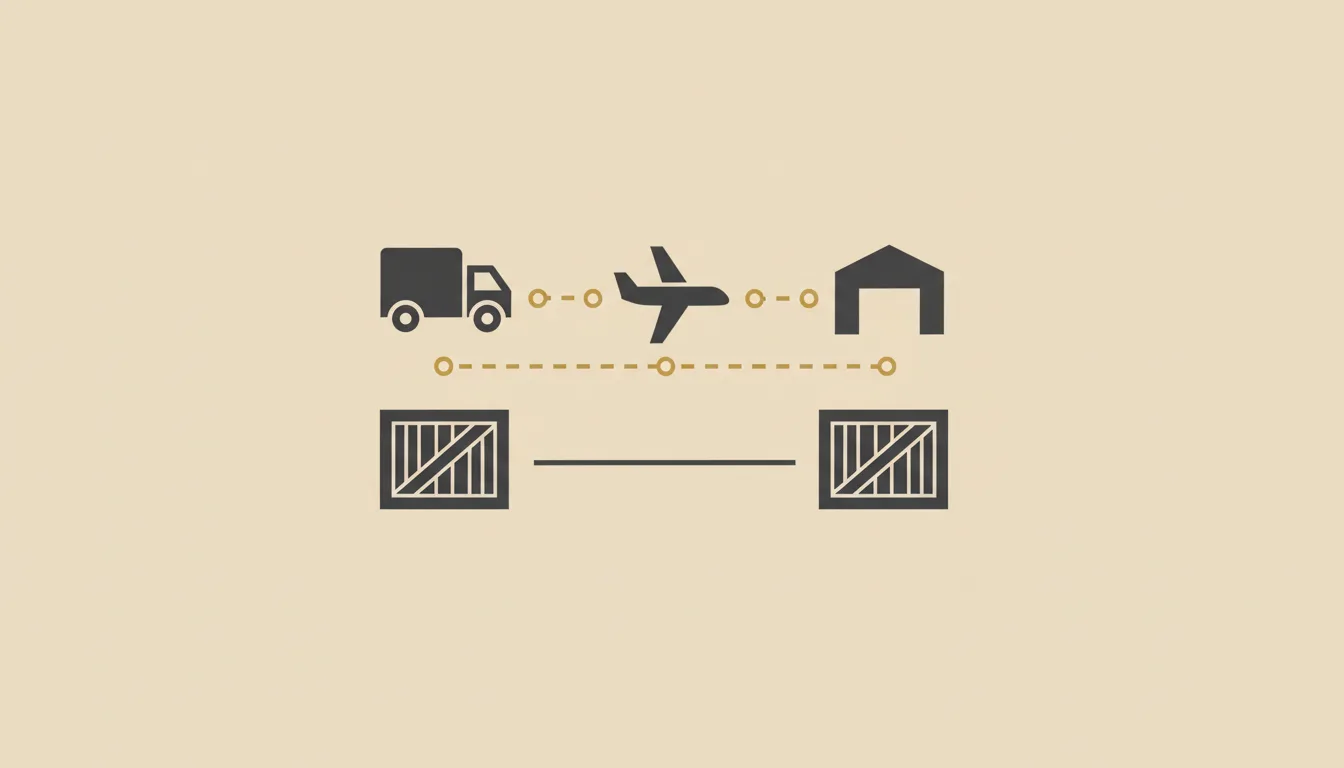
What a freight forwarder actually does
A freight forwarder is a logistics coordinator, not a carrier itself. It books cargo space with airlines, ocean carriers, or trucking companies, arranges customs clearance and paperwork, consolidates shipments where useful, and optimizes routing for cost and transit time. A freight forwarder "does not travel with the artwork" — it manages the process from an office, working through a network of carriers and warehouses rather than handling any single item directly.
This is a general-purpose role: the same forwarder that moves a container of furniture can, in principle, move a crated painting, as long as the paperwork and routing are handled correctly. What a forwarder is not is a guarantee that the cargo itself gets specialized physical care once it enters that network — that depends on who is actually touching the crate at each transfer point.
What a fine art shipper does differently
A fine art shipper is defined by how the object is handled, not by who books the transport. The comparison drawn by Arrow Express is specific: fine art shipments are "managed by trained art handlers with experience in fragile, high-value items," while standard freight is "handled by a general warehouse and logistics staff." Packing follows the same split — fine art shipping uses "custom crating, archival materials, and internal stabilization, designed for the specific artwork," against "basic packaging such as boxes, pallets, or shrink wrap" for standard freight.
The practical effect is fewer transfers. Arrow Express describes fine art logistics as relying on "fewer touchpoints, often direct or carefully routed transport," limiting "vibration, shifting, and pressure throughout transit," compared with standard freight where "items may shift, stack, or move within shared loads" across "multiple transfers between hubs, vehicles, and facilities." Fewer touchpoints mean fewer chances for a crate to be mishandled, dropped, or left exposed to weather on a loading dock.
Where an art courier fits in — and where forwarding stops
A third role sometimes gets folded into this comparison: the art courier. Fine Art Shippers draws the line clearly — "an art courier physically accompanies valuable artwork throughout its journey," handling "condition report verification" and "oversight of loading and unloading procedures" in person. A freight forwarder, by contrast, "coordinates every stage of the shipping process" — booking cargo space, coordinating customs clearance, optimizing routes — without ever being in the same vehicle as the shipment. Not every painting needs a courier; for the range of works most private collectors buy, a specialized fine art shipper with trained handlers and proper crating covers the physical risk without the added cost of a person traveling alongside the crate.
Climate control and insurance: read the specifics, not the label
Climate control is a real difference in practice, but it is a claim made by individual providers about their own equipment, not a universal feature of every company calling itself a "fine art shipper." Convelio, describing what white-glove fine art delivery is built to prevent, notes that unstable conditions cause problems like "wood warping, paint cracking, metal expansion" and that controlled conditions exist to "prevent these issues" — but the same source is explicit that white-glove service is a bundle offered by specific providers, going "far beyond standard shipping or courier services" as a "comprehensive, end-to-end solution," rather than a fixed industry standard every shipper meets by default.
Insurance follows the same pattern. Arrow Express contrasts "specialized fine art insurance options, aligned with item value" against the "limited carrier liability based on weight and standard terms" that comes with standard freight. The takeaway for a buyer is procedural, not just definitional: ask any shipper — whichever label they use — exactly which vehicle will carry the piece, whether it is temperature-controlled, what the crate is made of, and what the declared-value insurance actually covers, rather than assuming a title implies a fixed level of care. What insurance covers a painting in international transit and how a crate is built for an international art shipment go into both of those questions in more detail.
From the studio
The studio's view
Every piece that leaves this studio is large-format and heavily textured — acrylic, metallic pigment, gold leaf, sculpted paste — which means the packing decision is never generic. For a domestic delivery, a courier or a general carrier is usually enough. For an international shipment, the studio chooses the shipper and crating method per piece and per destination, rather than defaulting to whichever service happens to be cheapest, because a painting with raised texture or a gold-leaf surface has different risk points than a flat canvas. That choice, and its cost, is quoted to the buyer as part of the shipping conversation — not assumed or hidden in the piece price.
Frequently asked
What is the difference between a freight forwarder and a fine art shipper?
A freight forwarder coordinates the logistics of a shipment — booking cargo space, arranging customs paperwork, and routing through carriers — without necessarily specializing in any cargo type. A fine art shipper focuses on the physical handling of the artwork itself: trained handlers, custom crating, and fewer transfer points between pickup and delivery. Some companies do both; on other shipments, a forwarder arranges the route while a separate fine art specialist handles the crate.
What should a foreign buyer know before acting on this?
The label a company uses is less important than the specifics it can confirm in writing: who physically handles the crate, what material the crate is built from, whether the vehicle is climate-controlled, and what the insurance actually covers if something goes wrong. Ask these questions directly of whichever shipper is proposed for a specific piece and destination, rather than assuming a title guarantees a certain standard of care.
Does this differ for a US buyer vs a European buyer?
The roles themselves — forwarder, fine art shipper, courier — are the same regardless of destination. What changes by country is the customs process a forwarder has to navigate (entry paperwork, duties, and import rules differ between the US, the EU, and elsewhere), so the choice of provider is often driven as much by familiarity with the destination country's customs rules as by fine art handling experience.
Who handles this in practice — the artist, a shipper, or the buyer?
For a Perfeito Studio piece, the studio coordinates packing and selects the shipper or forwarder appropriate to the piece and destination once a sale is confirmed. The buyer is responsible for freight cost and any import duties or taxes charged by the destination country. Neither the artist nor the buyer typically handles the physical crating themselves — that is the shipper's job.
What could go wrong if this step is skipped?
Assuming any generic carrier can safely move a large, textured canvas is the most common mistake. Standard freight handling involves more transfers, less specialized packing, and liability coverage based on weight rather than the artwork's actual value — a combination that raises the risk of damage to a raised or gold-leaf surface, and leaves a buyer under-covered if damage does occur. Confirming handling and insurance details before the piece ships avoids that exposure.
Shipping a specific piece internationally?
The studio confirms crating and shipper details per piece and destination before a sale is finalized.
Sources
- Fine Art Shippers — 2026-09-27
- Arrow Express — 2026-09-27
- Convelio — 2026-09-27
Published on