Air freight or sea freight for a large painting: what actually changes
For a large painting, air freight typically arrives within a few days and sea freight takes several weeks to over a month — the trade-off is speed and fewer handling stages against a lower price. Air suits time-sensitive or heavily textured pieces best; sea freight suits large, well-crated work on no fixed deadline. The right call depends on the piece's surface, size, and your timeline, not on price alone.
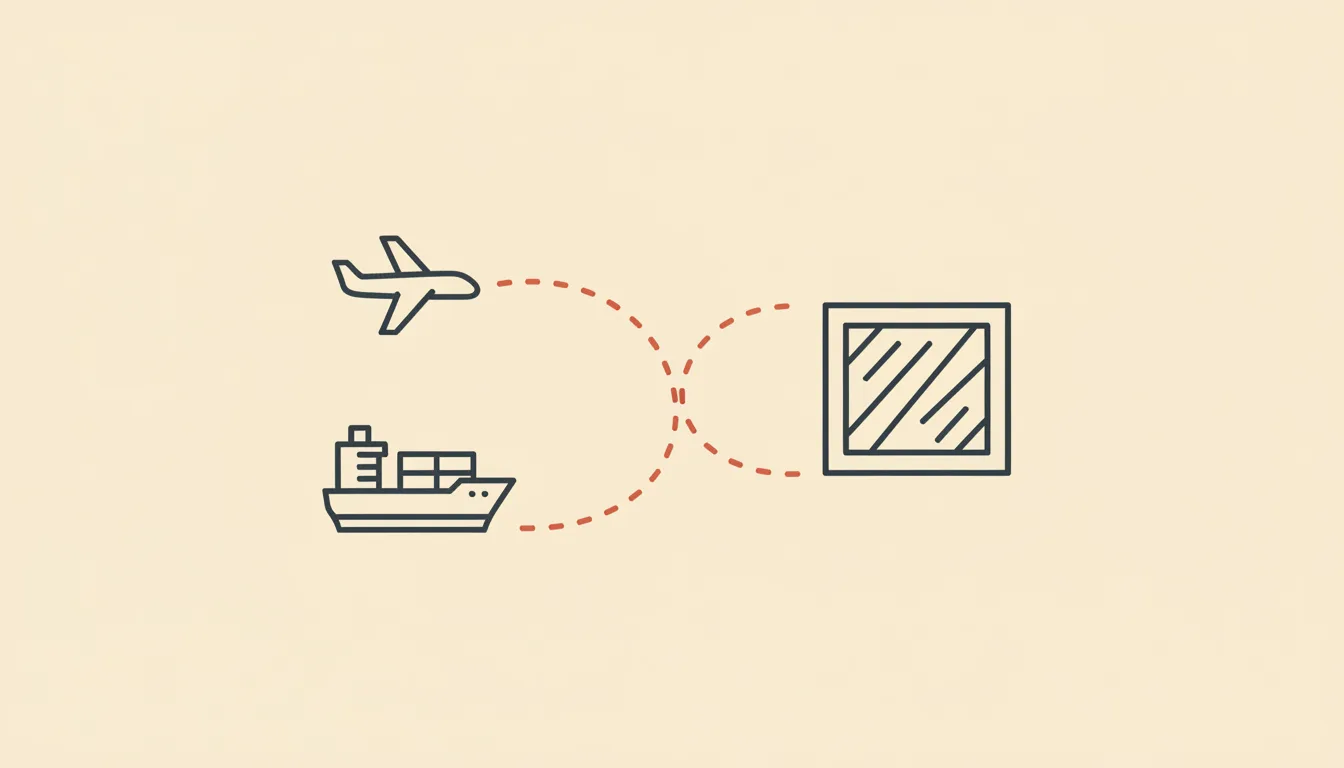
The two variables that actually move: time and cost
Every comparison between air and sea freight for art comes down to the same two variables trading against each other. Air freight is the faster option by a wide margin — industry sources put intercontinental air transit at roughly a week or less, against roughly three to six weeks for ocean freight on the same route, depending on port congestion and onward inland transport at the destination. That speed comes at a real premium: air freight is consistently described as the more expensive mode, while sea freight is positioned as the cost-effective choice specifically for shipments that are not on a deadline.
Neither mode is inherently "safer" in the abstract. What changes is the shape of the risk. A faster, more direct air routing means fewer handling stages and a shorter window during which anything can go wrong — fewer transfers, less time in transit generally. A sea route, by contrast, involves multiple port handling stages and a much longer exposure window, which raises the bar on how the piece is crated and protected, not on whether sea freight is a legitimate option at all.
Why a large, textured canvas tips the calculation
Size and surface are the two factors that matter most for a specific piece, and they can pull the decision in opposite directions. On sheer bulk, sea freight is generally described as the fitting choice for large-scale moves — bulky work, multiple pieces, or an entire studio's worth of inventory — precisely because it has no practical size ceiling the way air cargo does. A single very large stretched canvas, in other words, is not disqualified from sea freight by its dimensions alone.
Surface changes that picture. Fine art logistics guidance is consistent that heavily textured, raised, or mixed-media surfaces — anything with sculpted relief, applied paste, or gold leaf — benefit from the shorter transit and more controlled handling that air freight offers, because less time in transit and fewer transfer points mean fewer chances for vibration, pressure, or humidity swings to affect a surface that a flat oil painting would tolerate without issue. A flat, fully cured, single-medium canvas is the more forgiving case either way; a piece with meaningful surface relief is the one where the extra cost of air freight is buying something concrete, not just speed.
Where sea freight needs to work harder to be safe
Choosing sea freight for a large painting is not a lesser choice — it is a choice that shifts more of the safety burden onto the crate and the climate control inside it. Because the piece spends weeks in transit and passes through more port handling stages than an air shipment, fine art shippers point to museum-grade crating and reliable humidity control as the baseline for an ocean shipment, not an upgrade. Advanced sealing and moisture protection matter more here precisely because the canvas has no way to "outrun" a bad month at sea the way an air shipment outruns a bad week.
Consolidated ocean freight (sharing container space with other cargo rather than booking a full container) is the option most often associated with meaningful savings on a large, budget-conscious shipment — but it also means less control over exactly how the crate is stacked and handled relative to a dedicated air waybill. That trade is worth naming explicitly when comparing a quote, rather than assuming the cheaper number carries the same handling standard as the more expensive one.
From the studio
The view from the studio
Every piece that leaves this studio for a buyer outside Brazil gets the same question asked before packing even starts: how thick is the surface, and how soon does it need to arrive? Alyne's work in the Black & Gold and Terra & Ether series carries real relief — gold leaf, texture paste, built-up layers — and that physical fact, not the size of the canvas by itself, is usually what tips the recommendation toward a faster, more controlled route rather than the cheaper one. A flatter, more restrained surface gives a collector genuinely more room to choose on price and timeline alone. The honest version of this conversation is case by case, piece by piece, which is also why the studio never quotes a shipping method before seeing the actual work and hearing the destination and the deadline.
Frequently asked
Air freight or sea freight for a large painting: what actually changes?
The two things that change are time and cost, moving in opposite directions. Air freight is faster — typically a few days in transit for an intercontinental route — and more expensive. Sea freight is slower, often several weeks to over a month depending on the route and port congestion, and more cost-effective, particularly for large shipments. Surface texture and any real deadline are what should decide between them, not price alone.
What should a foreign buyer know before acting on this?
Get a quote for both modes before deciding, since the price gap and the timeline gap both vary by destination and by how the piece is crated. A heavily textured surface is the strongest reason to lean toward air freight regardless of size, because shorter transit and fewer handling stages reduce the number of chances for vibration or humidity to affect a raised surface. Ask specifically what crating and humidity control are included in a sea freight quote, since that is where an ocean shipment's safety margin actually lives.
Does this differ for a US buyer vs a European buyer?
The underlying trade-off is the same everywhere — speed against cost, controlled handling against exposure time — but the specific transit times, port congestion, and available consolidation options differ by route and by the courier or freight forwarder used. A quote for a US destination and a quote for a European destination are not interchangeable even for the identical piece; ask the studio for a route-specific estimate rather than assuming either continent is faster or cheaper by default.
Who handles this in practice — the artist, a shipper, or the buyer?
For work leaving this studio, the packing method and the shipping quote are worked out directly between the studio and the buyer once a piece and destination are confirmed — confirm with the studio for the specific arrangement on a given piece. In the wider fine art market, dedicated fine art logistics companies typically execute both modes professionally, and choosing an experienced fine art shipper rather than a general cargo carrier is described as the more important safety factor than the mode itself.
What could go wrong if this step is skipped?
Booking the cheaper mode without weighing the piece's surface against the transit time is the most common misstep — a heavily textured or raised surface put on a long sea voyage without museum-grade crating and humidity control is exposed to weeks of vibration and climate swings it did not need to absorb. The reverse mistake is paying an air freight premium for a flat, robust, single-medium canvas with no deadline pressure, when sea freight would have protected the same piece at a meaningfully lower cost.
Ask about shipping before you decide on a piece
Send Alyne a photo of the wall and, if you have one, a timeline — she will tell you which shipping method actually fits the piece you're considering, and quote it for your destination.
Sources
- FreightAmigo — 2026-09-27
- Calco Cargo — 2026-09-27
- Fine Art Shippers — 2026-09-27
- Aardvark Art Services — 2026-09-27
Published on