Journal · Exhibitions & museums
Uffizi or the Accademia: which to visit if you have one day in Florence
If you truly have to choose, go to the Accademia for the David and go to the Uffizi for everything else -- the Accademia is a short, focused visit built around one sculpture, while the Uffizi is a half-day survey of Renaissance painting. Most visitors with a single day in Florence can actually do both, in that order, and still have the afternoon free.
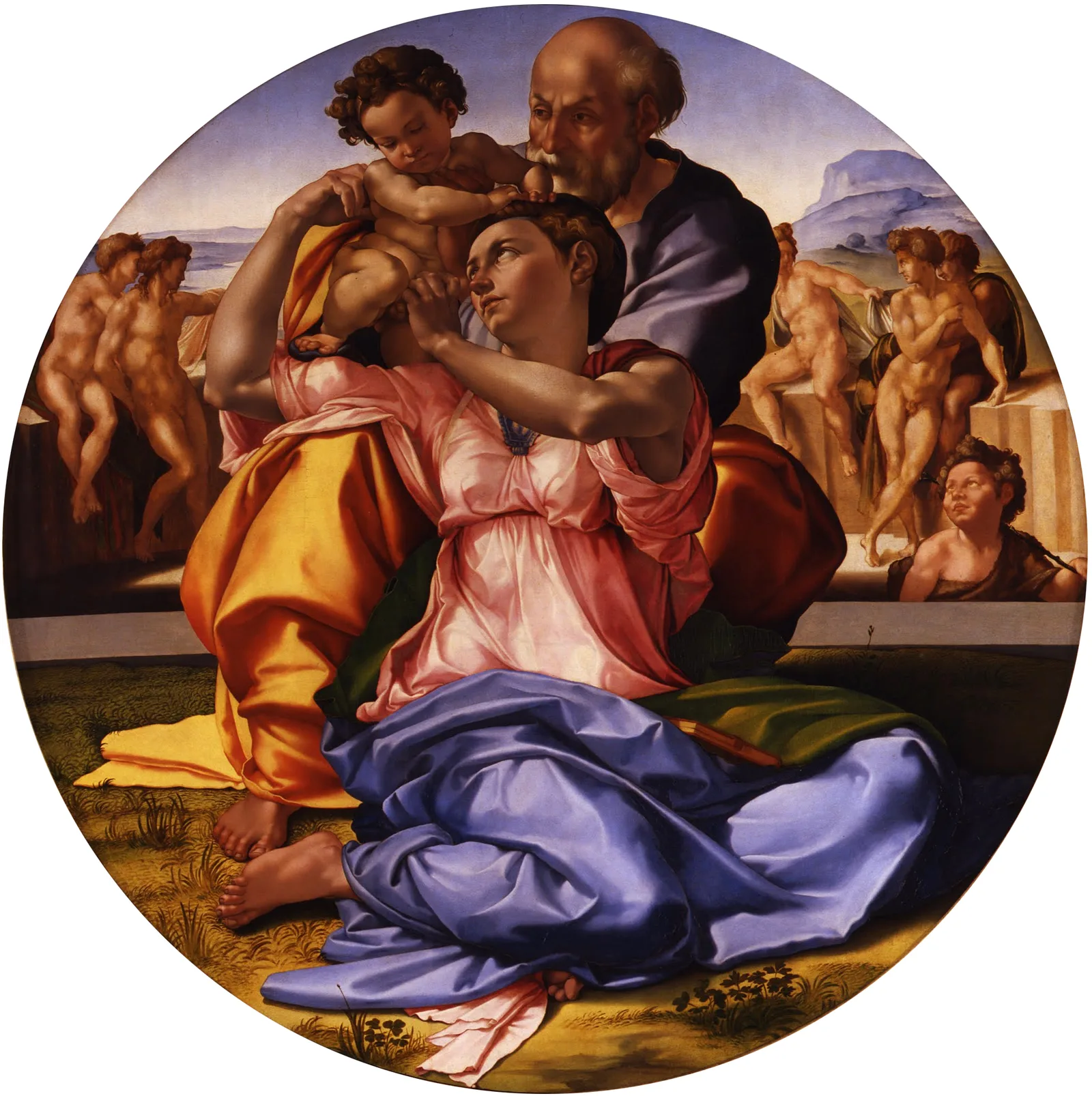
What each museum actually holds, and what each visit actually is
The two collections don't compete for the same kind of attention, which is the first thing worth understanding before comparing them. The Uffizi Gallery is in the collection of five centuries of Italian Renaissance painting -- Botticelli's Primavera and The Birth of Venus, Leonardo da Vinci's early Annunciation, Michelangelo's Doni Tondo, Titian's Venus of Urbino, and Caravaggio's Baroque canvases, spread across galleries that run, roughly, from Giotto to the early 1600s. It rewards slow walking and stopping often, because the point of the Uffizi is the accumulation -- one painting explains the next.
The Galleria dell'Accademia is built around a single reason to walk in the door: Michelangelo's David is in its collection, set under a rotunda built specifically to hold it. The museum is small. A visitor focused on David and the corridor leading to it can see the essential Accademia in under an hour, though the collection also holds Michelangelo's unfinished Prigioni, a small gallery of Florentine paintings from the 13th to 16th centuries, and a collection of historic musical instruments, including pieces by Stradivari, Amati, and Cristofori -- worth the extra twenty minutes if music history interests you at all.
Put simply: the Uffizi is a museum you spend half a day inside; the Accademia is a museum you visit, in the fullest sense of that word, in under an hour.
The David: why the original matters, and what a replica can't carry
Michelangelo's David is in the collection of the Galleria dell'Accademia, where it was moved in 1873 to protect the marble from the weather after nearly four centuries standing outdoors in Piazza della Signoria. What makes seeing the original worth the trip isn't a fact you can look up in advance -- it's the scale, up close, that no photograph prepares you for. The figure stands over five meters tall including its base, carved from a single block of marble that two earlier sculptors had already tried and abandoned as too flawed to work. Standing at the foot of it, under the rotunda built for exactly this purpose, the proportions read differently than any reproduction suggests: the hands and head are deliberately oversized relative to the body, a choice Michelangelo made knowing the statue would originally be seen from below, against the sky.
The corridor leading to David carries the other half of the argument. Michelangelo's Prigioni -- the unfinished Slaves, intended for a tomb that was never completed as planned -- stand along the way, each caught at a different stage of emerging from its marble block. Seeing them just before David changes how the finished sculpture reads: you walk past four bodies still fighting their way out of stone, and then arrive at the one Michelangelo carried all the way through. No photograph of David alone tells you that story -- it only makes sense in the sequence the museum itself was built to preserve.
This is also where the most common point of confusion in Florence gets settled: the statue standing outdoors in Piazza della Signoria, in front of the Palazzo Vecchio, is a full-scale replica, placed there in 1910 to keep the square's historic silhouette after the original moved indoors. A second copy, in bronze, stands at Piazzale Michelangelo overlooking the city -- also not the original. The Accademia is the only place in Florence where Michelangelo's actual marble stands, and no replica, however faithful, carries the scale, the marble, or the unfinished Prigioni beside it.
How to choose, if you truly have time for only one
Three kinds of visitors end up choosing just one museum, and the right choice depends on which one you are.
- The visitor with under two hours in Florence -- a cruise-ship stop, a train layover, a half-day detour from another city. Go to the Accademia. An hour there delivers the single most recognizable work of Renaissance sculpture, and there is no equivalent hour at the Uffizi that captures the collection half as completely.
- The visitor who cares more about painting than sculpture, or who has already seen David in a book or documentary and doesn't feel the pull to see it in person. Go to the Uffizi. Nothing about the Accademia replaces a morning spent in front of Botticelli, Leonardo, and Titian in sequence.
- The visitor planning a longer Italy trip with several cities on the list, trying to decide where to spend limited museum hours. The Uffizi is the higher-value stop if only one Florence museum fits the itinerary -- its collection has no equivalent anywhere else in the city, while David, though singular, is one work.
For nearly everyone else, the honest answer is that choosing isn't necessary. Both museums fit comfortably into a single day.
The order for doing both in one day, and what else is worth the rest
Go to the Accademia first, early, before the galleries fill -- it's the shorter visit, and starting there means the David doesn't get sacrificed later in the day if the Uffizi runs long. An hour, perhaps ninety minutes with the Prigioni and the musical instruments, is enough. The two museums sit a short walk apart in central Florence, so the transition itself costs almost no time.
Spend the rest of the day at the Uffizi. Its galleries reward three to four unhurried hours for the essential works -- Botticelli, Leonardo, the Doni Tondo, Titian -- and a full day if the whole collection interests you. Planning the Accademia first and the Uffizi second, rather than the reverse, means the longer museum absorbs whatever time is left, instead of forcing a rushed finish before closing.
With any remaining hours, the Duomo complex -- Brunelleschi's dome, the Baptistery, and the bell tower -- sits a few minutes' walk from both museums and needs no advance planning to appreciate from the outside. The Ponte Vecchio, Florence's oldest bridge, lined with jewelers' shops since the 16th century, makes a natural way to end the day, especially near sunset. Neither requires the kind of dedicated museum time the Uffizi or Accademia does, which is exactly why they fit into whatever is left of a day already built around the two galleries.
From the studio
From the studio
I trained as an architect before I trained as a painter, and the Prigioni are the closest thing I know, in any medium, to watching a painting's underlayers exposed on purpose. Michelangelo left those four figures mid-emergence -- a shoulder fully carved, a leg still fused to raw stone, the whole body caught between block and form. That's not a flaw in the work. It's the one place in sculpture where you get to see the decision-making itself, instead of only its finished result.
It's exactly what I look for in my own surfaces. I build my canvases in layers -- pigment, texture, sometimes metallic fragments -- and the pieces I care about most are the ones where an earlier layer still shows through the last one, where you can tell the surface has a history instead of arriving finished and sealed. Standing in that corridor at the Accademia, walking past four bodies at four different stages of arriving, is the nearest thing I've found to seeing that same instinct carved in marble five centuries before acrylic existed.
Frequently asked
Is the David in Piazza della Signoria the real one?
<p>No, it's a replica. Michelangelo's original marble David stood in Piazza della Signoria from 1504 until 1873, when it was moved indoors to the Galleria dell'Accademia to protect it from weather damage. The statue in the piazza today is a full-scale copy installed in 1910 to preserve the square's historic look.</p>
If I only have one day in Florence, can I really see both museums?
<p>Yes, for most visitors. The Accademia's essential visit -- David and the Prigioni corridor -- takes about an hour, and the museum sits a short walk from the Uffizi. Going to the Accademia first, early in the day, then spending the rest of the day at the Uffizi is the order that works best for most itineraries.</p>
Which museum should I choose if I truly only have time for one?
<p>The Accademia if your time is under two hours -- it delivers David in full in a single short visit. The Uffizi if painting matters more to you than sculpture, or if you're allocating limited museum time across a longer Italy trip, since its collection has no equivalent elsewhere in Florence.</p>
What else is in the Galleria dell'Accademia besides David?
<p>Michelangelo's unfinished Prigioni (Prisoners), a collection of Florentine paintings from the 13th to 16th centuries, and a museum of historic musical instruments, including pieces by Stradivari, Amati, and Cristofori. Most visitors budget an extra twenty to thirty minutes beyond David to see these.</p>
Is the Uffizi only about Botticelli's Primavera and The Birth of Venus?
<p>No. Those two works anchor the collection, but the Uffizi also holds Leonardo da Vinci's early Annunciation, Michelangelo's Doni Tondo, Titian's Venus of Urbino, and paintings by Caravaggio, among many others -- a collection that spans roughly five centuries rather than a handful of highlights.</p>
Sources
- Wikipedia — 2026-07-26
- Wikipedia — 2026-07-26
- Accademia Gallery (official) — 2026-07-26
- Wikipedia — 2026-07-26
- Untold Italy — 2026-07-26
- Wikipedia — 2026-07-26
- Wikimedia Commons — 2026-07-26
Ask the studio directly
Planning a museum-focused trip to Florence, or just comparing collections? Alyne answers her own messages, in English or Portuguese.
Talk to the studio on WhatsApp
Published on