Journal · Exhibitions & museums
The art museums worth planning a trip to in Italy
The essential itinerary runs through four cities: the Uffizi and Galleria dell'Accademia in Florence, the Vatican Museums and Galleria Borghese in Rome, the Gallerie dell'Accademia and Peggy Guggenheim Collection in Venice, and the Pinacoteca di Brera in Milan -- five centuries of Italian art in six stops.
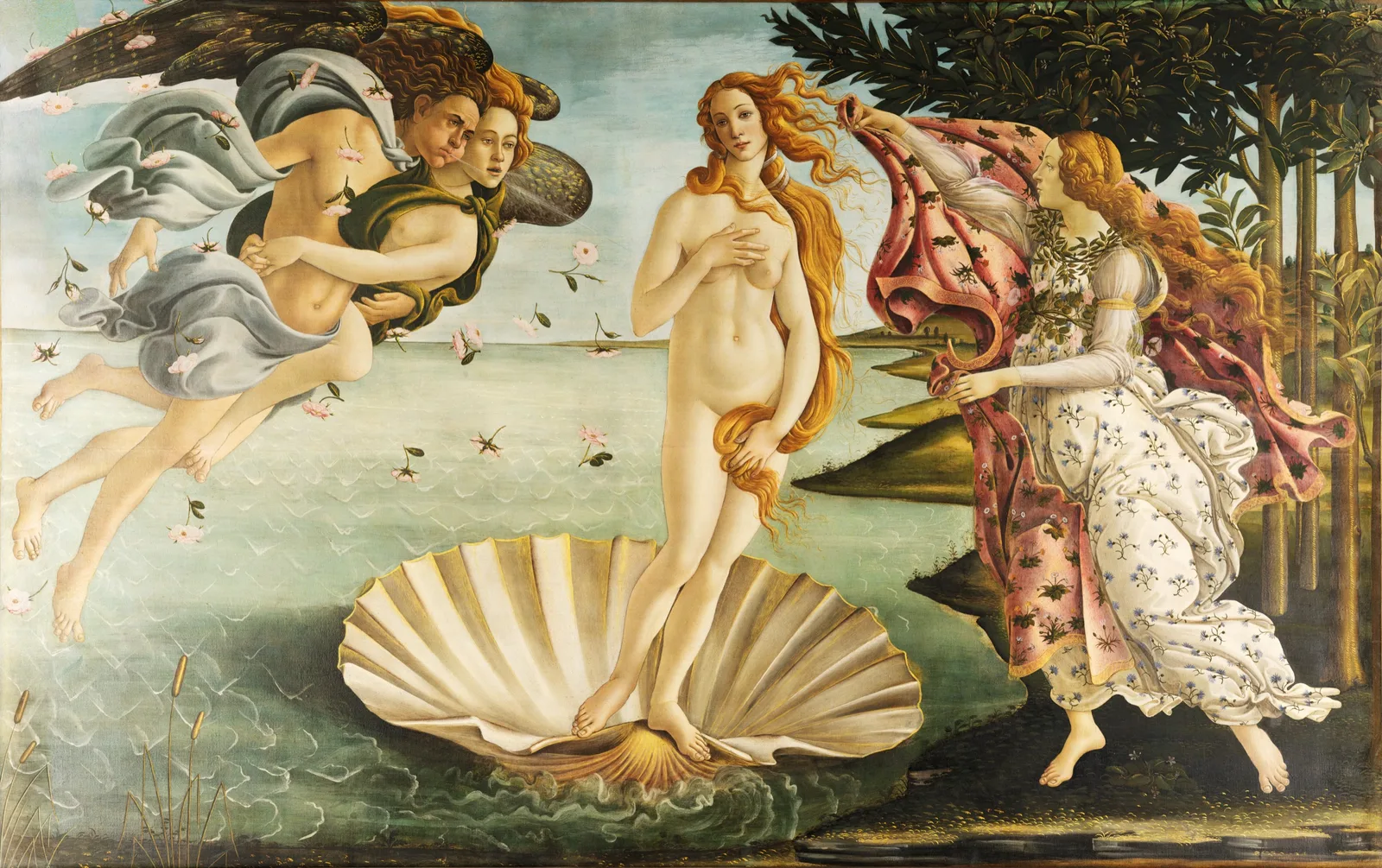
Florence: the Renaissance core and the two museums that carry it
Florence holds the deepest concentration of Italian Renaissance painting and sculpture anywhere, split between two museums that rarely take more than a day together. The Uffizi Gallery, built from the Medici family's own collection, is in the collection of Sandro Botticelli's The Birth of Venus and Primavera, both painted in the 1480s, along with Leonardo da Vinci's early Annunciation. These three works alone justify a half-day, but the Uffizi's galleries run continuously from Giotto through the High Renaissance, so budget more time if the period interests you beyond the highlights.
A short walk away, the Galleria dell'Accademia exists for a single reason that still holds up: Michelangelo's David is in its collection, set under a rotunda built specifically for the statue. The gallery is small enough to see in under an hour, including Michelangelo's unfinished Prisoners (Prigioni) in the corridor leading toward it -- roughed-out figures still emerging from the marble block, left deliberately incomplete.
Rome: the Vatican, the Borghese and what makes each different
Rome asks for more planning than Florence, because its major art museums have almost nothing in common except the city. The Vatican Museums are the largest and most encyclopedic: room after room leads, eventually, to the Sistine Chapel ceiling and the Stanze di Raffaello, where Raphael's School of Athens is in the collection. Treat the Vatican as a full day on its own -- rushing straight toward the ceiling skips most of what makes the collection worth the walk.
The Galleria Borghese is the opposite kind of experience: a single villa, tightly curated, built around Cardinal Scipione Borghese's own taste. Gian Lorenzo Bernini's Apollo and Daphne is in the collection, along with several of Caravaggio's early paintings, including Boy with a Basket of Fruit and David with the Head of Goliath. Where the Vatican overwhelms by scale, the Borghese rewards close, unhurried looking at a small number of exceptional pieces.
A third option, skipped by most first-time visitors, is the Capitoline Museums on the Capitoline Hill -- Rome's civic collection, distinct from both the Vatican's papal holdings and the Borghese's private one. Ancient sculpture dominates (the bronze Capitoline Wolf among the best known), but the Pinacoteca Capitolina upstairs is in the collection of Caravaggio's The Fortune Teller, a quieter counterpoint to the Borghese canvases.
Venice: the historical collection and the Peggy Guggenheim as the modern counterpoint
Venice separates cleanly into two collections that make sense to see on the same day, since they sit a short walk apart along the Grand Canal. The Gallerie dell'Accademia holds the historical survey: Giovanni Bellini's San Giobbe Altarpiece and Titian's Presentation of the Virgin at the Temple are both in the collection, tracing Venetian painting's particular use of color and light across three centuries.
A few minutes away, the Peggy Guggenheim Collection is the modern counterpoint -- Peggy Guggenheim's own former house, now holding her collection of Cubist, Surrealist and early Abstract Expressionist work, including pieces by Pablo Picasso, Jackson Pollock, Marcel Duchamp and Constantin Brancusi. Seeing both in one day makes the five-century jump legible in a way that reading about it doesn't: the same city's light shows up in both a fifteenth-century altarpiece and a twentieth-century canvas.
Worth adding, for anyone spending more than a day in Venice: the Palazzo Ducale (Doge's Palace) is in the collection of Tintoretto's Paradise, one of the largest oil paintings ever made, along with ceiling work by Veronese -- a reminder that Venice's major paintings aren't only in its two dedicated galleries.
How to build an itinerary that isn't exhausting
The mistake most itineraries make is treating Rome, Florence, Venice and Milan as one continuous list instead of four separate days of walking. Florence's two museums fit into a single day if timed well; Rome genuinely needs two, one for the Vatican and one for the Borghese and Capitoline together; Venice's Accademia and Peggy Guggenheim pair naturally into one day, with the Palazzo Ducale as an optional add if there's a second day in the city.
The museum most itineraries skip entirely is the Museo e Real Bosco di Capodimonte, in Naples -- outside the usual Rome-Florence-Venice-Milan route, and for that reason far less crowded than any of the museums above. Titian's Danaë and Caravaggio's The Flagellation of Christ are both in the collection, and the building itself, a former Bourbon royal palace on a hill above the city, is worth the detour for anyone extending the trip south.
For a route that includes Milan, the Pinacoteca di Brera rounds out the itinerary with a different core: Raphael's The Marriage of the Virgin, Piero della Francesca's Brera Madonna, and Andrea Mantegna's Lamentation of Christ are all in the collection -- three works that, between them, cover a full generation of the Renaissance moving north from Florence.
From the studio
From the studio
I trained as an architect before I trained as a painter, and Italy is where that order stops mattering -- the fresco and the wall it's on were never two separate decisions. Raphael's School of Athens was painted for that room, at that height, with that light coming through that window; the composition bends around an architecture that was already built before he arrived. Standing in front of it, I can't separate the painting from the building the way I can with a canvas hung in a white-cube gallery. In Italy, the two disciplines I studied are, most of the time, one project.
What I take back to the studio from that isn't a style -- it's a way of looking at surface. Standing close enough to see the actual brushwork on a five-hundred-year-old panel, the texture of pigment ground by hand, tells me things no reproduction does: how paint sits differently on wood than on canvas, how a fresco's plaster shows through the paint in a way oil on canvas never will, how much a varnish shift changes a color over centuries. None of that appears in a book. It only shows up a few centimeters from the surface, which is most of why I'd rather stand in the room than look at a photograph of it.
Frequently asked
How many days do I need for an art trip to Italy?
<p>A realistic minimum is five days: one for Florence's two museums, two for Rome (Vatican Museums one day, Galleria Borghese and Capitoline Museums together on another), and two for Venice, including time for the Palazzo Ducale. Adding Milan's Pinacoteca di Brera or Naples' Capodimonte extends the trip by at least a day each.</p>
Uffizi or Accademia if I only have one?
<p>The Uffizi, if forced to choose one museum in Florence -- it holds Botticelli's The Birth of Venus and Primavera along with Leonardo's Annunciation, and its collection spans centuries rather than a single sculpture. The Accademia takes under an hour and is built around one work, Michelangelo's David, so it's the easier one to add on top of an Uffizi morning rather than swap in for it.</p>
What's the difference between the Vatican Museums and the Galleria Borghese?
<p>Scale and character. The Vatican Museums are a vast papal collection culminating in the Sistine Chapel ceiling and Raphael's Stanze, and reward a full day. The Galleria Borghese is a single villa with a tightly curated collection built around one cardinal's taste, including Bernini's Apollo and Daphne and several Caravaggios -- a shorter, more concentrated visit.</p>
Do I need to visit all four cities -- Rome, Florence, Venice and Milan?
<p>No. Florence and Rome cover the deepest concentration of Renaissance and Baroque work and are the two cities most itineraries prioritize. Venice adds a genuinely different collection, both historical and modern, in the Accademia and the Peggy Guggenheim. Milan's Pinacoteca di Brera is worth adding if the route already passes through the city, but it isn't essential to a first trip.</p>
Is the Peggy Guggenheim Collection worth visiting after the Gallerie dell'Accademia?
<p>Yes -- they cover different centuries entirely, and seeing them on the same day in Venice makes the contrast sharper. The Accademia holds Bellini and Titian; the Peggy Guggenheim Collection holds Picasso, Pollock and Duchamp. The two together, a few minutes' walk apart, are a compact way to see five centuries of art history without leaving the same stretch of canal.</p>
Ask the studio directly
Planning a museum-focused trip to Italy, or just comparing collections? Alyne answers her own messages, in English or Portuguese.
Sources
- Uffizi Gallery (Wikipedia) -- key works, Botticelli and Leonardo
- Galleria dell'Accademia, Florence (Wikipedia) -- Michelangelo's David
- Vatican Museums (Wikipedia) -- Sistine Chapel and Stanze di Raffaello
- Sistine Chapel ceiling (Wikipedia)
- The School of Athens (Wikipedia)
- Galleria Borghese (Wikipedia) -- Bernini's Apollo and Daphne, Caravaggio works
- Capitoline Museums (Wikipedia) -- Pinacoteca Capitolina, Caravaggio's The Fortune Teller
- Gallerie dell'Accademia, Venice (Wikipedia) -- Bellini and Titian works
- Peggy Guggenheim Collection (Wikipedia)
- Doge's Palace, Venice (Wikipedia) -- Tintoretto's Paradise, Veronese ceilings
- Pinacoteca di Brera (Wikipedia) -- Raphael, Piero della Francesca, Mantegna
- Titian's Danaë from the Capodimonte Museum, Naples -- National Gallery of Art
- The Flagellation of Christ (Caravaggio) (Wikipedia) -- Museo di Capodimonte
- Sandro Botticelli, La nascita di Venere -- Wikimedia Commons (public domain source file)
Published on