Journal · Exhibitions & museums
The art museums worth your time in Washington, DC
Washington's essential art museums are the National Gallery of Art, the Smithsonian American Art Museum, the National Portrait Gallery, the Hirshhorn Museum and Sculpture Garden, the National Museum of Asian Art, and The Phillips Collection. Together they cover European old masters, American art, modern sculpture, Asian art, and the country's first museum of modern art.
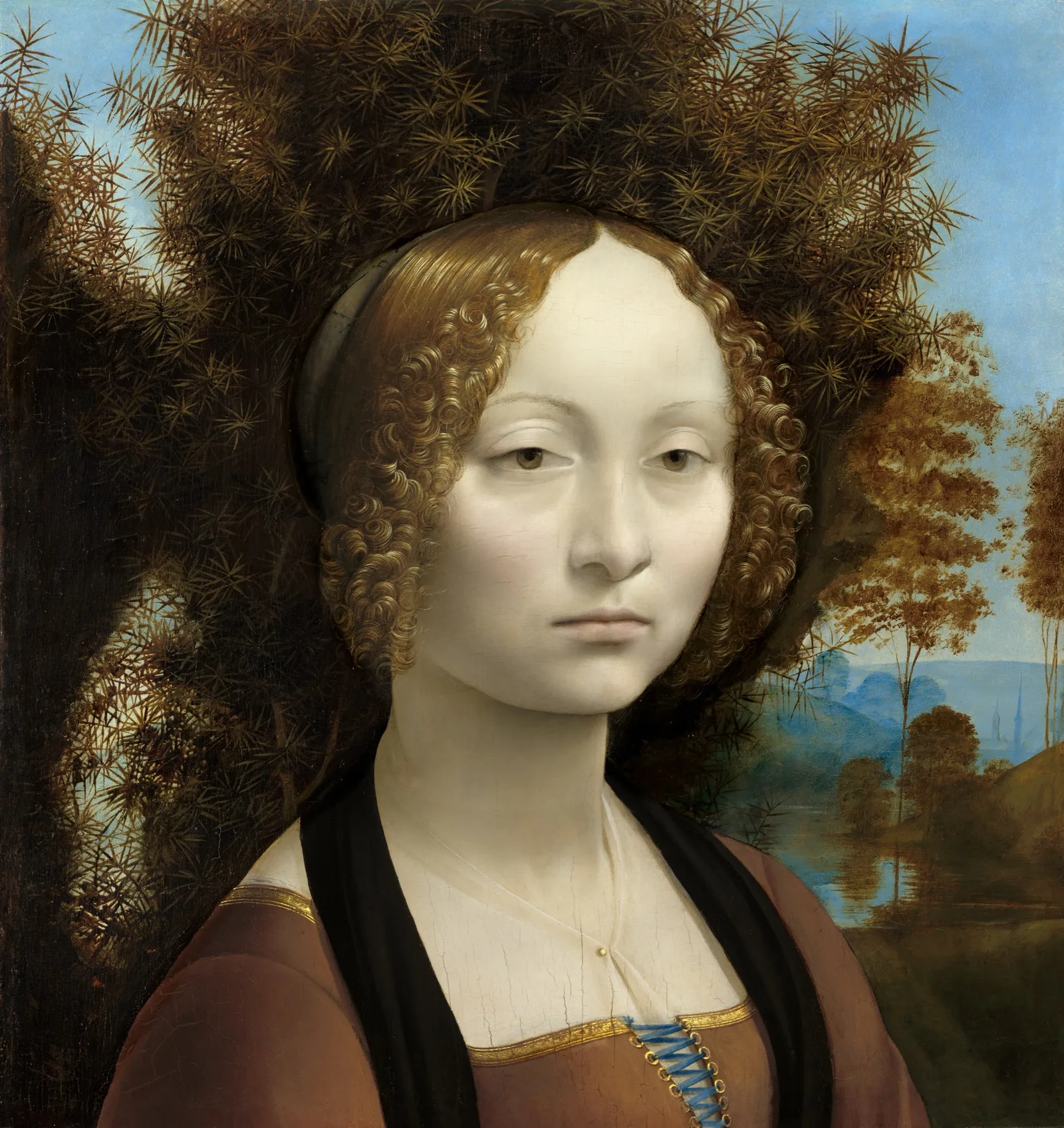
The National Gallery of Art: what it holds, and why it isn't a Smithsonian museum
The National Gallery of Art is often assumed to be one of the Smithsonian museums, since it sits among them on the National Mall -- but it is its own institution, created by a separate act of Congress in 1937 after industrialist Andrew W. Mellon donated his collection of European old masters and funded the building. It has its own board of trustees and is legally distinct from the Smithsonian Institution.
The Gallery is really two buildings joined by an underground concourse. The neoclassical West Building, designed by John Russell Pope and opened in 1941, holds the historical collection: European painting and sculpture from the medieval period through the 19th century, including Ginevra de' Benci, the only painting by Leonardo da Vinci in the Americas. The modernist East Building, designed by I. M. Pei and opened in 1978, is devoted to 20th- and 21st-century art.
The East Building is also where the National Gallery's Rothko holdings live: a very large collection of paintings given by the Mark Rothko Foundation, among the largest public collections of the artist's work anywhere. It is a distinct body of work from the Rothko Chapel in Houston, or the smaller groups of paintings held by MoMA and the Whitney in New York -- worth knowing before assuming any Rothko room you've seen elsewhere is the definitive one.
The Smithsonian's art museums, and how they differ from one another
The Smithsonian Institution runs several distinct art museums in Washington, and each has a different focus rather than overlapping collections. The Smithsonian American Art Museum holds one of the largest collections of American art anywhere, spanning the colonial period to the present, and shares its historic building with the National Portrait Gallery, which is dedicated to portraits of the people who shaped the country's politics, science, and culture rather than to any single period or style.
The Renwick Gallery is a branch of the American Art Museum with its own building near the White House, devoted entirely to contemporary craft and decorative art -- ceramics, glass, wood, and textile work shown as art in its own right. The Hirshhorn Museum and Sculpture Garden, by contrast, is the Smithsonian's museum of modern and contemporary art, in a distinctive cylindrical building with an outdoor sculpture garden facing it. The National Museum of Asian Art -- formerly known separately as the Freer Gallery of Art and the Arthur M. Sackler Gallery -- covers Asian art across cultures and centuries as a single connected museum today.
The National Museum of African American History and Culture is newer and broader than the others: its collection spans history, art, and music together, telling one continuous story rather than functioning as a fine-art museum alone. As the Smithsonian's own materials note, admission to all of these museums is free to the public -- a detail that surprises many first-time visitors from outside the United States.
The Phillips Collection and the case for the small museum
Founded by Duncan Phillips in 1921, The Phillips Collection describes itself as America's first museum of modern art -- it opened years before the Museum of Modern Art in New York, built around Phillips's own conviction that modern painting deserved the same serious attention as the old masters. The museum still occupies Phillips's former family townhouse in the Dupont Circle area, a short distance from the Mall, and that domestic scale is the whole point: paintings are hung in rooms that feel like rooms, not halls.
The signature work is Renoir's Luncheon of the Boating Party, in the collection of The Phillips Collection since Duncan Phillips acquired it in the 1920s, alongside strong holdings of Bonnard, Rothko, and early American modernists. The museum also rehangs its galleries regularly to put works from different periods in conversation with each other, rather than presenting a fixed, chronological march through art history -- a curatorial habit that rewards a second or third visit.
Unlike the National Gallery and the Smithsonian museums, The Phillips Collection is privately founded and endowed, which is part of why its rhythm feels different: fewer galleries, a slower pace, and a collection shaped by one collector's eye rather than by a century of institutional acquisition.
How to build the itinerary along the Mall and beyond it
Most of the essential museums sit on or within a few blocks of the National Mall, which makes a walking itinerary realistic. The two buildings of the National Gallery of Art connect underground, so they work as a single stop. A short walk away, the Hirshhorn and the National Museum of Asian Art sit close enough together to pair in one day, and the National Museum of African American History and Culture anchors the western end of the Mall.
The Smithsonian American Art Museum and the National Portrait Gallery, sharing one building a few blocks north of the Mall, are worth treating as their own excursion rather than squeezing in at the end of a Mall day -- the building itself, the old Patent Office, rewards slower attention. The Renwick Gallery, near the White House, and The Phillips Collection, in Dupont Circle, both sit outside the Mall entirely and need to be planned as separate outings, not add-ons.
A workable rhythm for a first visit: one full day for the National Gallery of Art, one day combining the Smithsonian art museums on and off the Mall, and a half day for The Phillips Collection, ideally on its own rather than rushed after a full morning elsewhere.
From the studio
From the studio
I trained as an architect before I trained as a painter, and Washington is where that training keeps interrupting whatever I am supposed to be looking at. I. M. Pei's East Building is the clearest case: he was handed an oddly shaped, sharply angled site next to a neoclassical rotunda, and instead of hiding the constraint he turned it into the building's whole geometry -- sharp trapezoidal volumes and a soaring atrium that argue, quite openly, with the collection of modern art hanging inside them. It is architecture that refuses to be neutral background, which is a much harder thing to build than it sounds.
The Rothko rooms are the other lesson I keep coming back to. A reproduction flattens a Rothko into a rectangle of color, and that is exactly the wrong way to understand the paintings -- in person, the scale of the canvas relative to your own body, and the way the paint sits on the surface with a kind of soft, breathing edge, are the entire experience. No photograph has ever shown me what standing in front of one actually feels like. It is the clearest argument I know for why scale and surface have to be seen in person, and it is the same argument I try to hold onto when I think about how a large canvas of my own should be lived with, not just photographed.
Frequently asked
Is the National Gallery of Art a Smithsonian museum?
<p>No. Although it sits on the National Mall alongside the Smithsonian museums, the National Gallery of Art was established by a separate act of Congress in 1937, following Andrew W. Mellon's gift of his art collection, and it operates under its own board of trustees rather than under the Smithsonian Institution.</p>
Are the art museums in Washington, DC free to visit?
<p>Yes, for the museums covered here. The National Gallery of Art and the Smithsonian's art museums are free and open to the public, a policy the institutions themselves describe as core to their mission. The Phillips Collection is a separate case: it is privately founded and funded, and works differently from the free national museums.</p>
How many days do I need to see the major art museums?
<p>Two full days covers the essentials at a comfortable pace: one for both buildings of the National Gallery of Art, and one for the Smithsonian art museums on and near the Mall. Add a half day for The Phillips Collection if the schedule allows, ideally on its own rather than folded into a longer day.</p>
Where can I see the only Leonardo da Vinci painting in the Americas?
<p><em>Ginevra de' Benci</em> is in the collection of the National Gallery of Art, in the West Building, alongside the museum's broader collection of European old masters.</p>
Is The Phillips Collection part of the Smithsonian?
<p>No. The Phillips Collection is an independent, privately founded museum, established by Duncan Phillips in 1921 -- entirely separate from both the Smithsonian Institution and the National Gallery of Art.</p>
Sources
- National Gallery of Art — 2026-07-26
- Wikipedia — 2026-07-26
- National Gallery of Art — 2026-07-26
- Smithsonian Institution — 2026-07-26
- Wikipedia — 2026-07-26
- Wikipedia — 2026-07-26
- Wikipedia — 2026-07-26
- Wikipedia — 2026-07-26
- Wikipedia — 2026-07-26
- The Phillips Collection — 2026-07-26
- The Phillips Collection — 2026-07-26
- Wikimedia Commons — 2026-07-26
Ask the studio directly
Planning a museum-focused trip, or just comparing collections? Alyne answers her own messages, in English or Portuguese.
Talk to the studio on WhatsApp
Published on