Who was Mark Rothko
Mark Rothko (1903–1970) was a Russian-born American painter and a leading figure of Abstract Expressionism, known for large-scale color field paintings of luminous rectangular forms. Born in Dvinsk (now Daugavpils, Latvia), he studied briefly at Yale, co-founded the group "The Ten," and later withdrew his Seagram Building murals, donating nine of them to Tate.
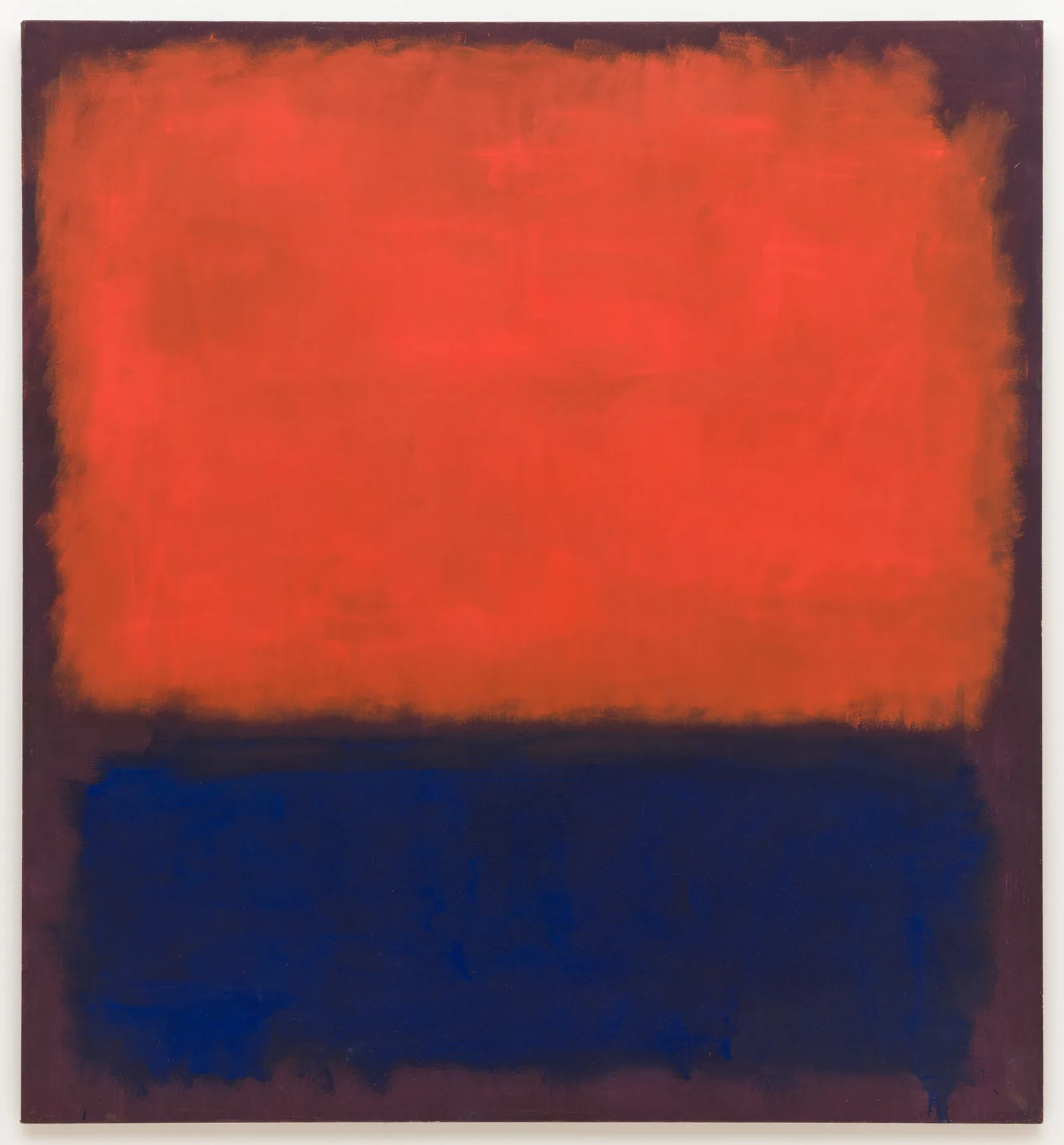
From Dvinsk to the New York School
Mark Rothko was born Marcus Rothkowitz on September 25, 1903, in Dvinsk, in what was then the Russian Empire — the city is now Daugavpils, Latvia. He emigrated to the United States at age ten, settling first with his family in Portland, Oregon, before moving to New York City in 1923. He had attended Yale University for two years, then continued his training at the Art Students League in New York, where he studied under Max Weber.
In New York, Rothko became a founding member of "The Ten," a group of young painters pushing for wider recognition of abstract and expressionist work in America, and for a period he worked with the WPA Federal Art Project. His early paintings depicted urban scenes with isolated figures; by the 1940s he was working through Surrealist and mythological imagery on his way toward the abstraction that would define his mature career.
The Language of Color Field Painting
By the late 1940s, Rothko had arrived at the format now most associated with his name: two or three softly bordered rectangles of saturated color, stacked and floating within a larger field. He became one of the central figures of Abstract Expressionism and, within it, of the related Color Field current — painting not to depict a subject but to hold an emotional charge directly in the surface of color itself.
Rothko described his intent in blunt terms: he wanted his stacked bands of luminous color to express what he called "basic human emotions — tragedy, ecstasy, doom." The scale of the canvases was deliberate. Rothko painted at a size meant to surround the viewer rather than be viewed at a distance, so that standing in front of one of his late works reads less like looking at an object and more like standing inside a charged, quiet room.
The Seagram Murals and the Rothko Chapel
In 1958, Rothko accepted a major commission: a series of murals for the Four Seasons restaurant in New York's newly built Seagram Building. He worked on the project for more than two years, producing a series of paintings in a darker palette of maroon, dark red and black — a marked shift from the brighter colors of his earlier work. In 1960, after the room was complete, Rothko withdrew from the commission, feeling the exclusive restaurant setting was the wrong context for the paintings; he later described the works as "involved with the scale of human feelings, the human drama, as much of it as I can express."
Rothko instead offered a group of the murals to Tate in London, and nine of the Seagram canvases entered Tate's collection. In his final years he also devoted himself to another architectural commission: fourteen paintings for a non-denominational chapel in Houston, Texas, now known as the Rothko Chapel. Rothko began the paintings in 1964; the chapel opened in 1971, a year after his death.
Death and Legacy
Rothko died by suicide in his New York studio on February 25, 1970, at age 66, after a period of declining health and depression. In the decades since, his reputation has only grown: his major works are held by museums including the San Francisco Museum of Modern Art, the Whitney Museum of American Art, and Tate, and he is taught as one of the central figures of postwar American painting.
Rothko's paintings also rank among the most sought-after at auction. On May 8, 2012, his 1961 canvas Orange, Red, Yellow — estimated at $35–45 million — sold at Christie's, in New York, for $86,882,500, then the highest price ever paid for a contemporary painting at auction. The sale, from the collection assembled by David and Geraldine Pincus, reflected both the scarcity of major Rothko canvases on the market and the enduring intensity of demand for his late, large-format work.
From the studio
The Atelier's Perspective
What draws me back to Rothko isn't the color theory — it's the scale decision. He built paintings meant to be stood in front of at close range, so the canvas fills the whole field of vision instead of sitting on a wall as an object. That's close to the instinct behind Matter & Silence, the series I keep returning to as an architect first. A piece like Echo of Silence is built from sculpted, concentric relief rather than flat pigment, but the intention runs the same direction: enough scale and enough restraint that a viewer standing in front of it stops reading the surface as decoration and starts reading it as a room.
Rothko got there with veils of luminous color; I get there with texture and monochrome, because that's the material vocabulary I actually work in — mineral pigment, sculpted paste, the discipline of proportion I carried over from architectural training. I don't share his belief that a painting has to carry tragedy and doom to be serious; the quietness in my monochromatic pieces sits closer to stillness than to grief. But the working premise underneath both — that scale and restraint, handled carefully, can produce a genuinely felt space rather than a picture of one — is the same premise I'm testing on the studio wall in Brasília every time a new canvas in that series goes up.
Frequently asked
Who was Mark Rothko?
Mark Rothko (1903-1970) was a Russian-born American painter and one of the leading figures of Abstract Expressionism. Born in Dvinsk (now Daugavpils, Latvia), he emigrated to the United States as a child, studied briefly at Yale, and settled in New York, where he became known for large-scale paintings of luminous, softly bordered rectangles of color. He co-founded the artist group 'The Ten' in the 1930s, later withdrew a major mural commission for the Seagram Building, and died in New York in 1970.
Why did Rothko paint large color blocks?
By the late 1940s, Rothko had moved away from figures and myth toward stacked rectangles of saturated color, painted at a scale meant to surround the viewer rather than be seen from a distance. He described the aim as expressing 'basic human emotions - tragedy, ecstasy, doom' directly through color and proportion, without a recognizable subject standing between the viewer and the feeling. The size of the canvases was deliberate: he wanted a painting large enough to fill the viewer's field of vision, closer to an environment than a picture on a wall.
What art movement is Rothko associated with?
Rothko is one of the central figures of Abstract Expressionism, the movement of large-scale, non-representational painting that emerged in New York in the 1940s. Within that broader movement, his mature work - stacked fields of luminous color rather than the gestural brushwork of painters like Jackson Pollock - is usually classified under the related term Color Field painting. He had been a founding member of 'The Ten,' a smaller 1930s group of artists promoting abstract and expressionist work in America, before arriving at the style that made him famous.
Where can I see Rothko's work?
Major Rothko paintings are held in museum collections worldwide. The San Francisco Museum of Modern Art shows No. 14, 1960, one of his best-known large-format canvases. Tate in London holds nine of the Seagram murals, the darker maroon-and-black paintings Rothko withdrew from a restaurant commission in 1960 and donated to the museum instead. In Houston, Texas, the Rothko Chapel houses fourteen paintings he made specifically for that space between 1964 and his death in 1970. The Whitney Museum of American Art in New York also holds Rothko works.
Why are Rothko paintings so valuable at auction?
Major Rothko canvases rarely reach the market, since most large-format works are already held by museums or long-term collections, and scarcity drives price when a significant example is offered. That dynamic was visible in May 2012, when his 1961 painting Orange, Red, Yellow - estimated at $35-45 million - sold at Christie's New York for $86,882,500, then the highest price recorded for a contemporary painting at auction. Prices at that level reflect Rothko's standing as one of the defining painters of postwar American art, not a guarantee about the value of any other artist's work.
Sources
- Whitney Museum of American Art — 2026-08-14
- Whitney Museum of American Art — 2026-08-14
- SFMOMA — 2026-08-14
- Tate — 2026-08-14
- Tate — 2026-08-14
- The Art Wolf — 2026-08-14
- SFMOMA — 2026-08-14
- Perfeito Studio -- internal catalog source — 2026-08-14
See Where the Atelier Takes Monochrome Next
Echo of Silence, from the Matter & Silence series, shares Rothko's instinct for scale and restraint as a route to feeling. Original, signed, with a Certificate of Authenticity.
Talk to the studio on WhatsApp
Published on