Journal · Technique & materials
Oil vs acrylic paint: what is the difference
The essential difference is how they dry: a thin film of acrylic can feel dry to the touch within seconds, while oil paint typically needs two to twelve days just to reach the touch-dry stage, then keeps hardening for decades. Texture, layering order, and studio pace all follow from that one gap.
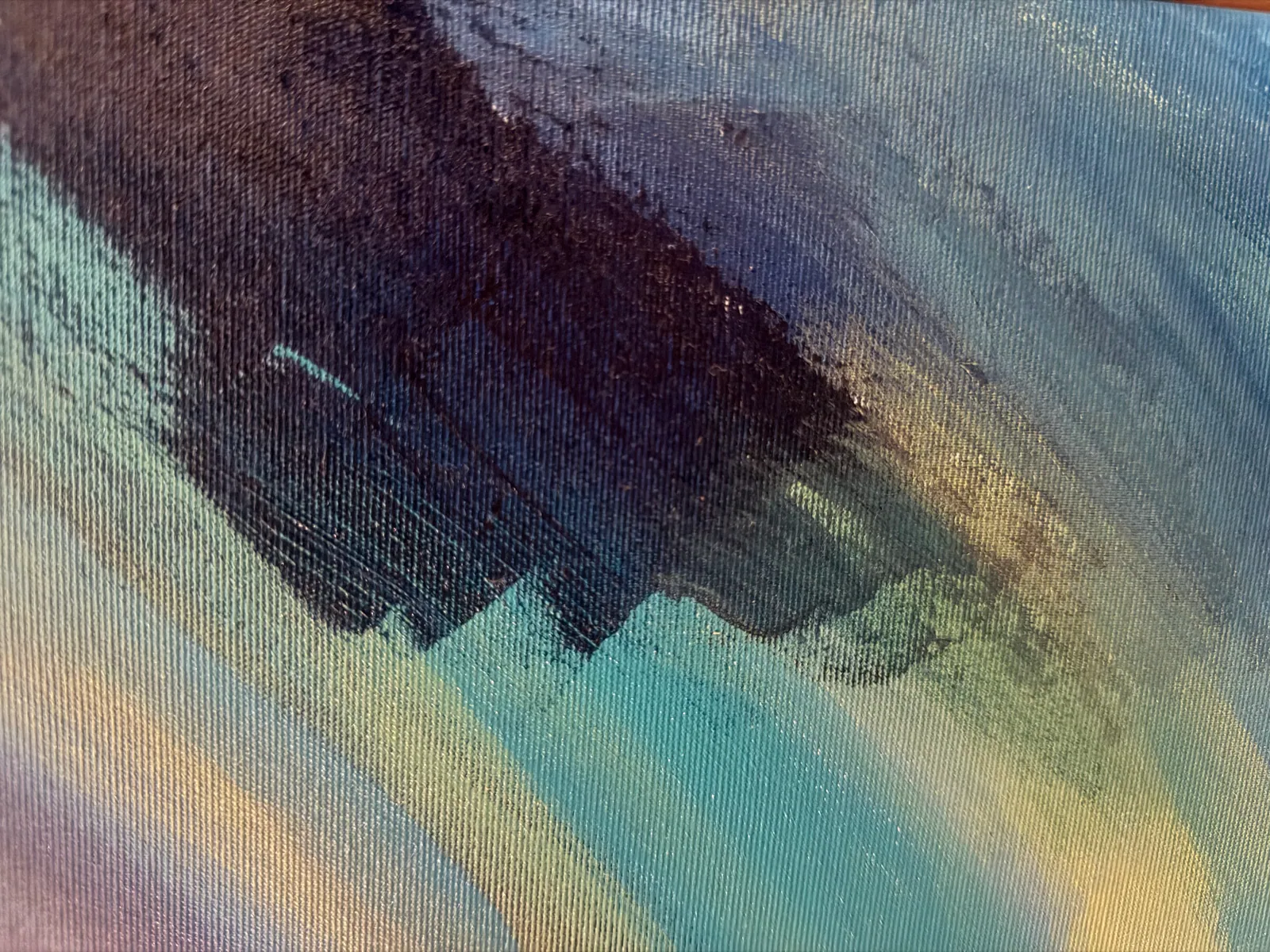
Drying speed: seconds versus days
The gap starts immediately. Golden Artist Colors' technical notes on drying state that a very thin film of acrylic paint can feel dry within seconds, while a thick film may take a full day or more to skin over. Oil moves on a slower schedule: Winsor & Newton's technical guidance for its Artists' Oil Colour range states that oil paint becomes touch-dry in thin films within two to twelve days, with the exact time depending on the pigment — different pigments react with the oil binder at different speeds.
In the studio, that difference changes how a painting gets built. A thin passage of acrylic can be reworked, glazed, or built on top of within the same sitting. A thin passage of oil has to be left alone for the better part of a week before it can safely take another layer, which is one reason oil painters plan a session's layers in advance rather than deciding as they go.
Touch-dry is not the same as fully cured
Both mediums separate “dry to the touch” from “fully cured,” and the gap between the two is large either way. For acrylic, Golden Artist Colors notes that a thin film may cure completely within a few days, while a film a quarter of an inch thick or more can take months, and even years, to be completely dry all the way through — the surface skins over long before the interior has finished setting.
Oil follows the same logic on a longer timescale. Tate's definition of oil paint notes that it “continues to dry, getting harder with age over many decades.” That is part of why Winsor & Newton's technical guidance recommends waiting at least three months before varnishing an oil painting — not because the surface still feels wet, but because the layer underneath needs that much time before it can reasonably be sealed under varnish.
Why the fat-over-lean rule exists in oil, and doesn't in acrylic
Because oil paint keeps moving chemically for so long, oil painters follow what is known as the fat-over-lean rule. Gamblin Artists Colors explains the logic directly: “the under layers of a painting should be leaner than the upper layers,” because a leaner, faster-drying layer beneath a fatter, slower-drying one stays flexible enough to move with the layers above it as they keep curing — which is what keeps the painting from cracking over time.
Acrylic doesn't carry the same constraint. It dries mainly by water evaporating out of a polymer emulsion rather than by a slow oxidation reaction, so an acrylic layer reaches most of its working flexibility within days rather than months. Later layers aren't fighting an underlayer that is still chemically in motion, which is part of why acrylic tolerates rapid, session-by-session layering in a way that oil, structurally, does not.
Yellowing and long-term color stability
The two mediums also age differently in color. Golden Artist Colors' Senior Technical Specialist Sarah Sands explains in a reader-question reply on Just Paint that “the yellowing of Titanium White in oils is truly due to the nature of drying oils used as a binder, while Titanium White in acrylics will retain its bright whiteness.” Oil's drying-oil binder — most often linseed oil — is itself the source of that discoloration, independent of the pigment mixed into it.
A separate Just Paint comparison of the two mediums' long-term behavior notes that “acrylics have proven advantages in terms of resistance to yellowing and long term flexibility,” while oil's documented long-term issues include “yellowing, cracking, wrinkling, flaking, embrittlement, hydrolysis, fatty acid crystallization.” Acrylic isn't without its own weaknesses — the same source notes its softer surface makes it easier for dust and dirt to embed. Neither medium is simply “better preserved”; they age differently, which is why conservators treat each on its own terms.
Mixing oil and acrylic on the same canvas
The two can share a canvas, but only in a fixed order. Golden Artist Colors' guidelines on combining the two state that “oil over acrylic is fine,” with certain precautions, but that “acrylics over oil paints and oil grounds should be avoided,” because oil paint “forms tight, water-resistant films that provide poor adhesion when acrylics are painted on top of them.”
In practice, that means an artist can use acrylic as a fast-drying underpainting — blocking in composition and value in an afternoon — and finish the piece in oil once the acrylic layer has fully dried. Reversing the order risks the top layer failing to bond and eventually flaking away, since acrylic has nothing to physically grip on a cured oil surface.
From the studio
From the studio
Most of what leaves this studio starts and ends as acrylic on canvas — Celestial Drift, Vibrant Awakening, Solar Rain, Prism Garden. I chose it early in the Luminous Rebirth series because my process moves in short passages: lay a field, step back, decide the next gesture against what's already there, sometimes three or four times in one afternoon. I trained as an architect, and I think about a canvas closer to how I'd think about a floor plan — one move has to resolve before the next one can respond to it. Waiting two to twelve days between decisions would break that rhythm entirely.
Where I do reach for a slower, fatter material is when a piece needs actual relief rather than just color — Golden Passage and Celestial Plan build texture paste under the gold leaf, and that paste has to set enough to hold its own shape before I work into it or lay the leaf down. So the choice was never acrylic-is-modern, oil-is-traditional. It's whichever material can physically do what a given surface needs done.
Frequently asked
Which dries faster, oil or acrylic paint?
Acrylic, by a wide margin. A thin film of acrylic paint can feel dry to the touch within seconds, and even a thick film usually skins over within a day, according to Golden Artist Colors' technical notes on drying. Oil paint moves on a different clock: Winsor & Newton's technical guidance states that oil colors become touch-dry in thin films within two to twelve days, depending on the pigment, and manufacturer guidance recommends waiting at least three months before varnishing to be sure the paint is fully dry underneath.
Is acrylic less durable than oil paint over time?
Not simply “loss” — differently durable. Golden Artist Colors' conservation resource Just Paint notes that acrylics have proven advantages in resistance to yellowing and long-term flexibility, while oil paint's documented long-term issues include yellowing, cracking, wrinkling, flaking, and embrittlement. Acrylic has its own weak points: its softer surface makes it easier for dust and dirt to embed. Golden Artist Colors compares the two to apples and oranges — each has real strengths and real weaknesses, not a single winner.
Why do many contemporary artists prefer acrylic?
Tate's definition of acrylic paint points to two reasons: it is water-based, so it dilutes and cleans up with water, and it dries quickly, which Tate credits directly for its popularity, stating that because of its versatility and the fact it dries quickly it has become a popular painting medium. That speed lets an artist build several passages of paint in one working session instead of waiting days between layers, which suits techniques like rapid layering, stencil work, and built-up texture.
Can you mix oil and acrylic on the same canvas?
Yes, but only in one direction. Golden Artist Colors' technical guidelines state that oil over acrylic is fine, with certain precautions, but that acrylics over oil paints and oil grounds should be avoided, because oil paint forms a tight, water-resistant film that acrylic cannot properly grip. In practice, this means acrylic can be used as a fast-drying underpainting for a piece later finished in oil, but reversing that order risks the top layer lifting or flaking away later.
Which yellows less with age, oil or acrylic?
Acrylic. Golden Artist Colors' Senior Technical Specialist Sarah Sands explains that the yellowing of Titanium White in oils is truly due to the nature of drying oils used as a binder, while Titanium White in acrylics will retain its bright whiteness. Oil's drying-oil binder, most often linseed oil, is the source of that discoloration; acrylic's synthetic polymer binder does not carry the same tendency, which is one reason the two mediums suit different situations depending on how much long-term color stability matters.
Ask the studio about materials before you decide
Every work's technical sheet lists its exact medium — ask on WhatsApp if you're weighing an acrylic piece against a mixed-media one.
Sources
- Golden Artist Colors — 2026-08-02
- Winsor & Newton — 2026-08-02
- Tate — 2026-08-02
- Tate — 2026-08-02
- Gamblin Artists Colors — 2026-08-02
- Just Paint (Golden Artist Colors) — 2026-08-02
- Just Paint (Golden Artist Colors) — 2026-08-02
- Golden Artist Colors — 2026-08-02
Published on