What was the Bauhaus?
The Bauhaus was a German school of art, architecture, and design founded by Walter Gropius in Weimar in 1919, and shut down by the Nazis in 1933. Its core idea was unifying craft, fine art, and technology into a single design education — an approach whose diaspora went on to reshape modern architecture, furniture, and graphic design well beyond Germany.
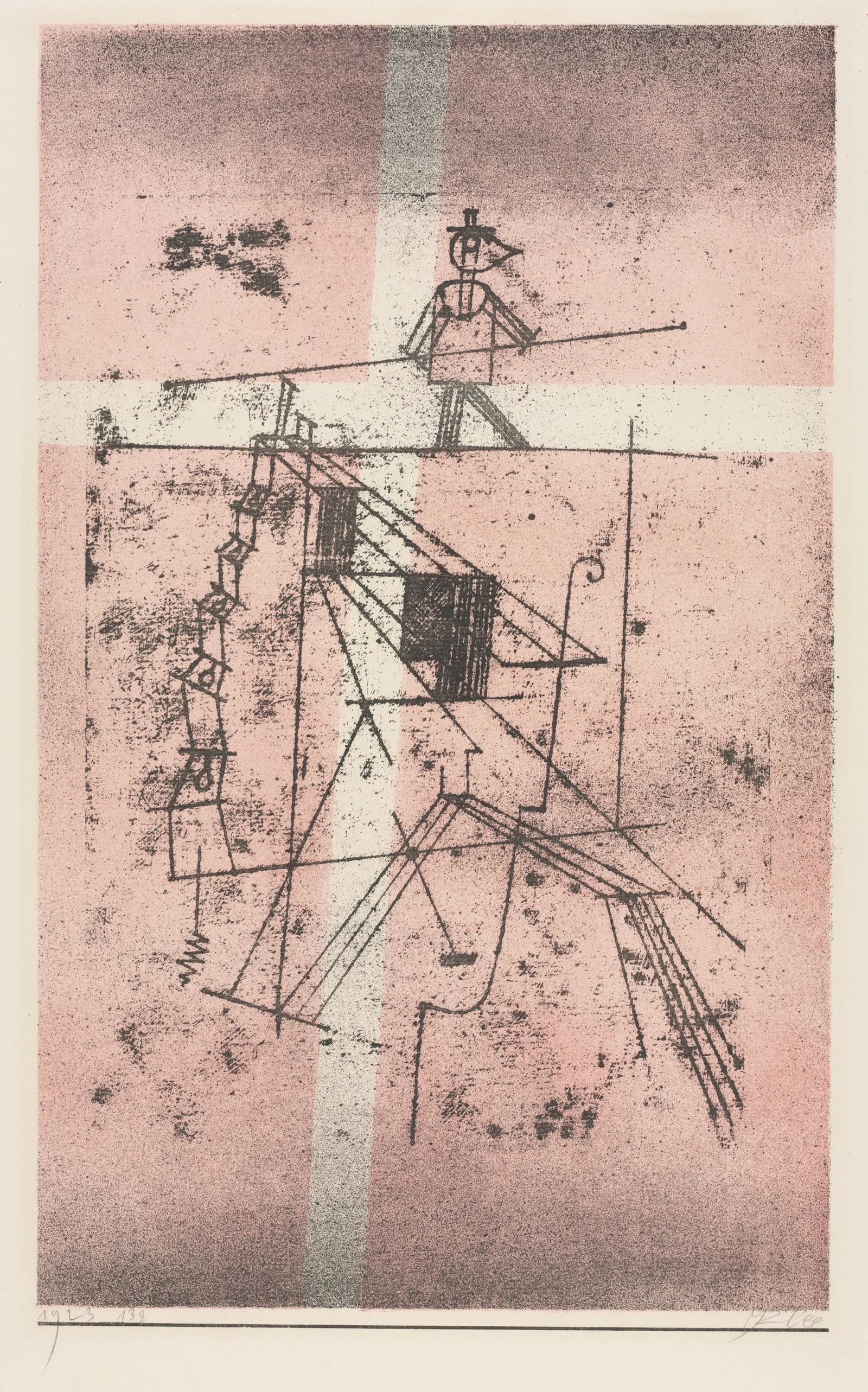
Founding and philosophy: one school, three disciplines
The Bauhaus was founded by the architect Walter Gropius in Weimar, Germany, on April 12, 1919. It doesn't sit neatly in a single category — it was, at once, an art school, an architecture school, and a design school, built around the idea that fine art, craft, and applied design should be taught as one continuous discipline rather than as separate, hierarchical tracks. Gropius described the goal as a "reform of artistic work," reuniting sculpture, painting, and applied arts and crafts under one roof.
Rather than the traditional relationship of master handing down technique to pupil, the school organized itself as a working community of artists and craftspeople. The underlying ambition was practical as much as artistic: to bring design back into contact with everyday life, so that a chair, a typeface, or a building could carry the same rigor as a painting.
Three cities, three directors, and a forced closure
The Bauhaus operated for a compressed fourteen years, from 1919 to 1933, and moved twice under political and financial pressure. It was based in Weimar until 1925, then relocated to Dessau, where Gropius designed the school a new purpose-built home. In October 1932, facing a hostile city council, the school moved a final time to Berlin, occupying a former factory building.
Three directors led the school in succession: Walter Gropius (1919–1928), followed by the Swiss architect Hannes Meyer (1928–1930), then Ludwig Mies van der Rohe (1930–1933). The end came from outside the school rather than from within it. After Nazi electoral gains, the party campaigned explicitly on cutting the Bauhaus's public funding; the Dessau city council voted to discontinue teaching there in August 1932, and once relocated to Berlin, the Gestapo demanded curriculum changes aligned with National Socialist ideology. Rather than comply, the staff voted to close the school entirely, and the Bauhaus shut its doors for good on July 20, 1933.
Who taught there: Kandinsky, Klee, and the Bauhaus masters
The Bauhaus faculty — called "masters" rather than professors — reads as a list of the era's most consequential abstract artists. Wassily Kandinsky taught at the Bauhaus from 1922 until its closure in 1933, directing the wall-painting workshop in Weimar and later heading painting instruction in Dessau, alongside his own theoretical writing on abstract form. Paul Klee taught alongside him as a Bauhaus Master from 1921 to 1931, appointed Master of Form to the bookbindery and running courses across bookbinding, glass painting, weaving, and painting — a body of teaching notes he later compiled under the title Pictorial Formation.
Other masters shaped the school's identity in the same years: Josef Albers, Lyonel Feininger, László Moholy-Nagy, and Oskar Schlemmer among them. Klee's Tightrope Walker, shown above, dates from 1923 — squarely within his Bauhaus teaching years — and belongs to the print portfolios the school's masters produced and circulated as part of its own program.
Why the Bauhaus still matters for design today
The Bauhaus existed for only fourteen years, yet its influence on twentieth-century art, architecture, and design proved outsized — driven less by the school's physical survival than by the network of teachers and students who kept practicing its ideas after 1933. When the Nazis closed the school, its masters scattered rather than disappeared: Josef and Anni Albers carried Bauhaus teaching methods to Black Mountain College and then Yale in the United States, while Moholy-Nagy founded the Institute of Design in Chicago. That diaspora is largely why Bauhaus thinking — unifying craft, art, and function in a single design process — became foundational to design education well beyond Germany, particularly in the United States.
From the studio
The atelier's view
I trained as an architect before I painted, so the Bauhaus premise — that structure and material discipline aren't separate from artistic intention, they're part of it — isn't abstract theory to me, it's how I was taught to look at a room before I ever stretched a canvas. I don't claim any lineage to that school; what I recognize in it is a working method. In Patina Field, the surface is built and then partly removed — pigment applied, scraped back, reapplied — until the panel reads more like a wall that has recorded its own history than an illustration of one. That's closer to how a Bauhaus workshop treated a material: let the process and the structure show, rather than disguise them under decoration.
Frequently asked
Was the Bauhaus an art school or an architecture school?
Both, and more — it doesn't fit neatly into either category alone. Founded in Weimar in 1919, the Bauhaus combined fine art, architecture, and applied design into a single course of study, on the premise that painting, sculpture, furniture, typography, and building design should all be taught with the same rigor rather than ranked as "fine art" above "craft." Its own name, combining the German words for building and house, points to that intention: to found a working guild that designed everyday life, not just gallery objects.
Why did the Bauhaus close?
It closed under direct Nazi political pressure, not for financial or artistic reasons. After Nazi electoral gains, the party campaigned on cutting the school's public funding, and the Dessau city council voted in August 1932 to end its teaching there. The school relocated to Berlin, but the Gestapo soon demanded the curriculum be rewritten to match National Socialist ideology. Rather than comply, the staff chose to close the school entirely, and the Bauhaus shut down for good on July 20, 1933, after fourteen years.
Did Kandinsky teach at the Bauhaus?
Yes. Wassily Kandinsky joined the Bauhaus faculty in 1922, at Walter Gropius's invitation, and taught there continuously until the school's closure in 1933. He directed the wall-painting workshop in Weimar, later led painting instruction in Dessau, and used his time at the school to develop his theoretical writing on abstract form and color — work that fed directly into his 1926 treatise on point, line, and plane.
How did the Bauhaus influence modern design?
Mostly through the people who carried its methods elsewhere after 1933, rather than through the school's own short existence. When the Bauhaus closed, its masters didn't stop teaching — Josef and Anni Albers took Bauhaus pedagogy to Black Mountain College and then Yale, and László Moholy-Nagy founded the Institute of Design in Chicago. Through that diaspora, especially in the United States, the core Bauhaus idea — that art, craft, and technology belong in one design process — became a foundation of modern design education.
Is there a museum dedicated to the Bauhaus?
Yes. The Bauhaus Museum Dessau, near the school's second home, holds a permanent collection on the school's history. Other institutions, including the Bauhaus-Archiv / Museum für Gestaltung in Berlin, also hold significant collections of Bauhaus-related objects, documents, and artworks.
See the studio's architectural side in person
Patina Field and other works in the Terra & Ether series carry the same structure-first restraint discussed above. Ask the studio for detail photographs before deciding.
Sources
- Bauhaus-Archiv / Museum für Gestaltung — 2026-07-30
- Bauhaus-Archiv / Museum für Gestaltung — 2026-07-30
- Tate — 2026-07-30
- Tate — 2026-07-30
- Solomon R. Guggenheim Museum — 2026-07-30
- Wikipedia — 2026-07-30
- Stiftung Bauhaus Dessau — 2026-07-30
- The Cleveland Museum of Art (Open Access) — 2026-07-30
Published on