How does a hotel or hospitality project buy art in bulk from Brazil?
A hospitality project buying art "in bulk" from Brazil rarely means one supplier filling every wall. In practice it means an art consultant or the design team sourcing a limited number of pieces from several independent ateliers, matched to room types and budget tiers, then coordinating shipping and paperwork per piece rather than as a single order.
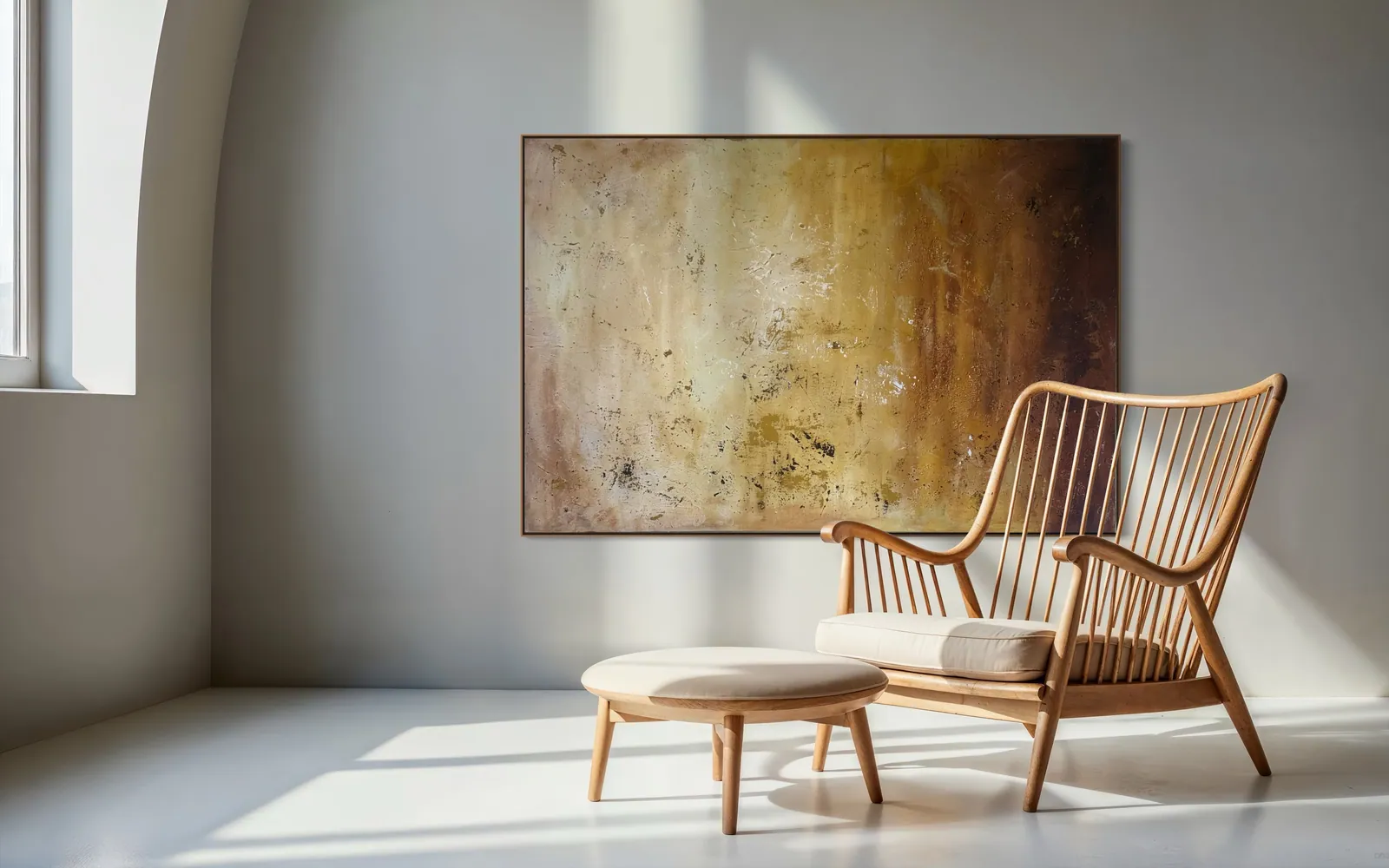
"In bulk" means many rooms, not one supplier
A single-family home buys art one wall at a time. A hotel, a serviced-apartment building, or a branded residence buys for dozens or hundreds of rooms plus public areas — lobby, corridors, restaurant, spa — on a schedule tied to construction, not to how long it takes to fall in love with a painting. That volume is real, but it does not usually get filled by one atelier producing a run of matching pieces.
Because each original work is made by one artist, working alone, at the pace of one piece at a time, no single small atelier can supply the number of walls a property needs. What actually happens is closer to assembling a roster: the project works with several artists or ateliers in parallel, each contributing a handful of pieces that fit a specific room type, floor, or budget tier. "Buying in bulk from Brazil" describes the project's total order, not any one artist's production capacity.
Who runs the buying process, in practice
On a project of any size, the decision rarely sits with one person. The developer or brand sets the budget envelope and the story the art needs to tell — local, contemporary, Brazilian-made. The architect or interior designer sets the physical constraints: wall dimensions, sightlines, lighting, and how a guest room's art differs from a lobby's. An art consultant or procurement lead, when one is on the project, does the legwork of finding artists whose work fits both, negotiating per-piece terms, and tracking delivery against the construction timeline.
Without a dedicated consultant, that role usually falls to whoever on the design team already has relationships with artists or ateliers — often the interior designer. Either way, the buying happens piece by piece and artist by artist, even when the total order across the property is large.
Budgeting across room types, not one blanket price
A property rarely pays the same price per wall throughout. Guest rooms typically get smaller, less expensive originals selected for a consistent look across many identical rooms; suites and public areas get fewer, larger, more expensive pieces meant to stand out. Splitting the budget this way — instead of one flat price times the room count — is what makes buying original work at scale financially workable, since a large one-of-a-kind piece for a lobby costs far more than a modest piece repeated conceptually across twenty similar rooms.
Within a single artist's catalog, that same logic applies at a smaller scale: on the Perfeito Studio site, current works range from roughly R$ 2,400 to R$ 8,800 depending on size and series, which is closer to the range a project would draw from for a handful of rooms or a single feature wall than for an entire building.
Shipping and paperwork multiply with volume — plan for that, not around it
Buying five or fifty originals from Brazil for delivery abroad does not simplify the paperwork; it multiplies it. Each work still needs its own invoice, its own packaging, and — for international delivery — its own customs declaration and import duties in the destination country. Import tax rules and required documentation vary by destination country and change over time, so a project should confirm the current requirements with a customs broker or the destination country's own customs authority before committing to a delivery date, rather than assuming a rule that applied to a past shipment still holds.
What a project can plan around: professional packaging per piece, insured transit, and a quote requested per destination rather than a single blanket shipping price for the whole order — because carriers and customs treatment differ by country and by piece size.
Where a single atelier like Perfeito Studio fits into a larger order
Perfeito Studio works with a catalog of already-finished, one-of-a-kind paintings by Alyne Perfeito — not a production line and not made-to-order series. For a hospitality project sourcing dozens of walls, that means the studio is realistically one source among several on the roster, contributing a limited number of pieces selected from the current catalog for specific rooms or a signature space, rather than fulfilling an entire property's art program alone or producing a run of matching works to a fixed schedule.
A project team working this way typically shares the wall dimensions and a photo of the space for each room type it wants filled, and receives a short list of catalog pieces that fit — a scope this atelier can commit to, distinct from open-ended volume or discounted bulk pricing that isn't part of how it sells.
From the studio
How this looks from inside a small atelier
When a hospitality project reaches out, the first thing I clarify is scale: I paint one piece at a time, and everything in the collection is already finished and one-of-a-kind. I'm not set up to produce twenty matching canvases on a delivery date, and I say that upfront rather than let a project assume otherwise.
What I can do well is contribute to a handful of specific spaces — a signature wall in a lobby, a small run of rooms in the same wing, a restaurant that wants one strong piece instead of five modest ones. I ask for the wall measurements and a photo of the space before recommending anything, because a piece that reads well on a residential wall can disappear or overwhelm in a hotel corridor with different light and sightlines.
Frequently asked
How does a hotel or hospitality project buy art in bulk from Brazil?
Usually not from one supplier. A project sources a limited number of original pieces from several independent artists or ateliers, matched to room types and budget tiers, and coordinates paperwork and shipping per piece rather than as a single combined order.
What should a foreign buyer know before acting on this?
That volume does not simplify logistics — it multiplies them. Each original needs its own invoice, packaging, and, for international delivery, its own customs declaration and import duties in the destination country. Confirm current customs and tax requirements with a broker or the destination country's own authority before setting a delivery date.
Does this differ for a US buyer vs a European buyer?
The buying process is the same — sourcing from Brazilian artists, agreeing terms per piece, shipping internationally — but import duties, required documentation, and typical transit times vary by destination country. That detail should be confirmed per country with a customs broker rather than assumed to be identical across markets.
Who handles this in practice — the artist, a shipper, or the buyer?
All three, at different stages. The artist or atelier handles the piece itself, its documentation, and packaging; a shipping carrier handles international transit; the buyer (or their consultant) coordinates sourcing across multiple artists, sets the budget by room type, and pays shipping plus any destination-country duties or taxes.
What could go wrong if this step is skipped?
Assuming one atelier can fill an entire property, or assuming shipping and customs terms scale linearly with quantity, are the two most common planning mistakes. Both lead to missed delivery dates against a construction schedule. Confirming per-artist capacity and requesting a shipping quote per destination early avoids most of that.
Sourcing art for a hospitality project?
Share the room types, wall dimensions, and a photo of the space, and we'll confirm which pieces from the current catalog fit — with no assumption of volume production.
Published on