What should a foreign buyer photograph or measure before ordering art for a space they can't visit?
Before ordering a piece for a wall you can't visit in person, send four things: a full, uncropped photo of the entire wall taken from across the room, exact width and height in centimeters measured above any furniture, a shot of the wall in daylight and again at night, and one photo that includes a familiar object — a door, a sofa — for scale.
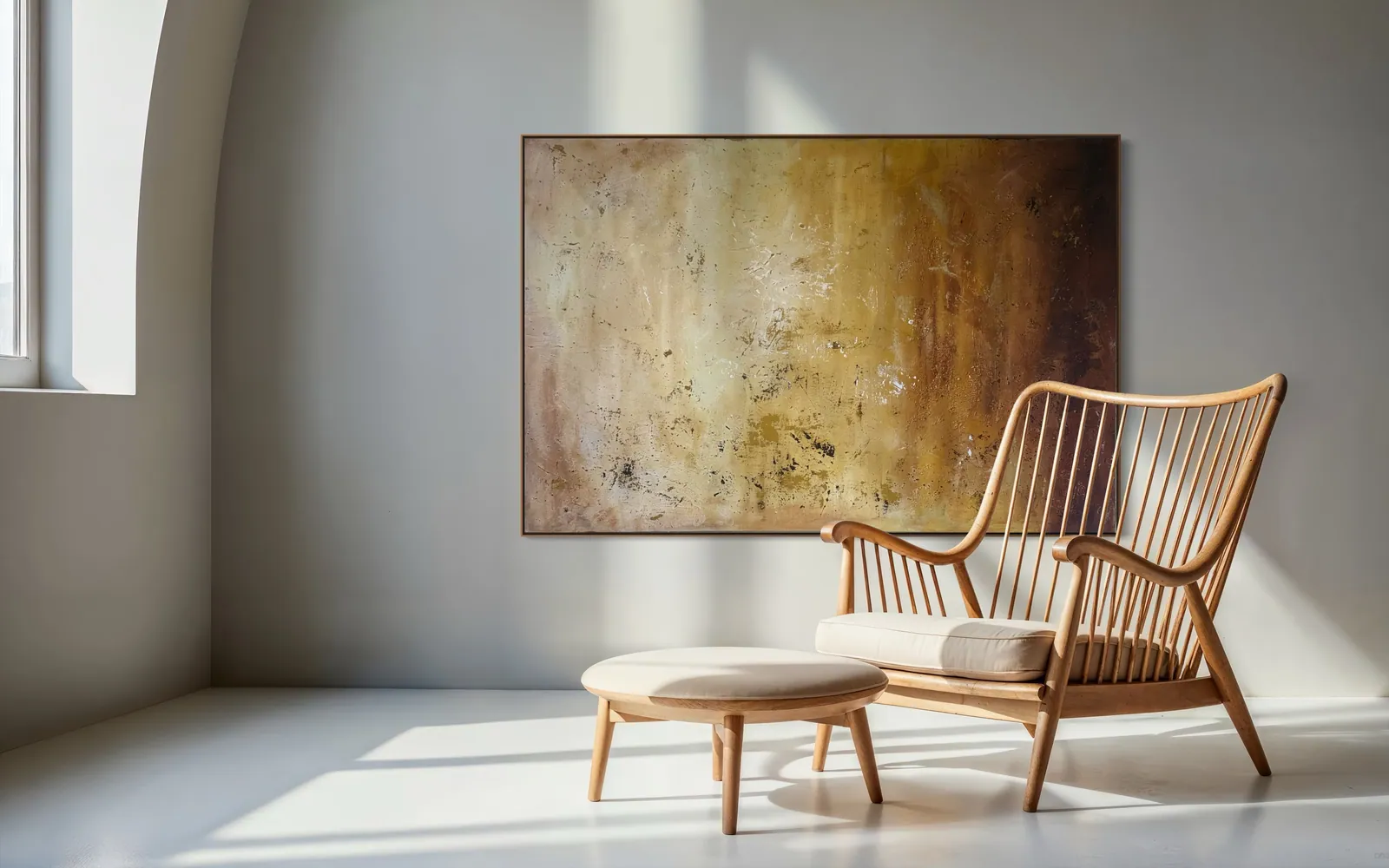
Photograph the whole wall, not just the spot you're picturing the painting on
The single most common photo a buyer sends is a tight crop of one section of wall — the part they've already decided the piece should hang on. That framing hides exactly what the studio needs to see: how much wall actually surrounds that spot, where the ceiling line falls, whether a doorway, window, or light switch sits close enough to constrain the piece's width. Stand back as far as the room allows and take the photo straight-on, including the full floor-to-ceiling span of the wall and a few feet of the adjacent walls on either side.
A second photo from an angle — standing where you'd actually be sitting or walking when you look at the piece — is worth sending too. A wall photographed straight-on can look perfectly proportioned and still feel wrong once a painting is hanging there and being viewed from a sofa ten feet to the side.
Measure the wall in centimeters, not by eye
A tape measure against the actual wall gives a number that survives translation across time zones and screen sizes; a photo alone does not. Measure the full available width and height above any furniture or trim — a console, a headboard, a radiator — since that's the space a piece needs to clear, not the wall's total dimensions. Note the ceiling height as well, and the position of any outlet, switch, or vent that falls inside that rectangle, since those can rule out a size that otherwise looks like it fits.
Metric measurements matter specifically here: Perfeito Studio's catalogue is priced and listed in centimeters, and a buyer working in inches risks a rounding error that becomes visible once a canvas over a meter wide is standing against a wall that was measured a few centimeters short.
Shoot the wall's light at two different times of day
A wall photographed at midday under bright daylight and the same wall photographed after dark under a lamp or overhead fixture can look like two different rooms — and a painting's palette reads differently under each. Sending both isn't about picking the flattering one; it's giving the studio enough information to say whether a piece with warm gold-leaf tones or one built from cooler mineral pigments will sit better in that room's actual light, most of the day, not just in the photo used to decide.
This is a separate question from whether a photo can match a painting's true color on screen at all — it generally can't, for reasons that have more to do with your device than the room. Why on-screen colour never matches the canvas exactly covers that gap in more detail; the two photos described here are about the room's light, not the screen showing the photo.
Include one object of known size in at least one frame
A door, a sofa back, a light switch plate — any object whose real-world size is roughly standard — gives a second, independent check on scale once the photo arrives. A standard interior door runs close to 2 meters tall in most builds; a sofa back typically falls between 76 and 91 cm from floor to the top of the backrest — general reference ranges, not a measured spec for your room. Neither number is exact for the object in your specific room, but either one lets the studio cross-check your stated measurements against what the photo actually shows, catching a transcription error before a piece ships rather than after.
This step matters most for a buyer ordering sight-unseen: it's the difference between the studio trusting a number you typed and the studio being able to verify it against the same photo you're using to imagine the piece on that wall.
What this checklist doesn't cover
This is the minimum a buyer photographing their own space needs to send before discussing scale and placement — it isn't the fuller process an architect or designer runs when specifying art for a client project, which also involves floor plans, lighting plots, and a formal approval round. If you're specifying on someone else's behalf rather than buying for your own wall, how an interior designer abroad specifies Brazilian art for a client, remotely walks through that longer version.
International shipping, customs, and import duties are also outside this checklist by design: they vary by destination, and Perfeito Studio quotes international shipping on request rather than against a fixed table. Confirm those specifics — cost, customs paperwork, and expected transit time to your country — directly with the studio before committing to a delivery date.
From the studio
The view from the studio
I trained as an architect before I trained as a painter, and the habit that stayed with me is that I read a photo of a wall the way I used to read a site survey — not for how it looks, but for what it measures. When a buyer sends me a tight, cropped photo of just the spot they're imagining a piece in, I can usually tell within a message or two that I'm missing the ceiling line, the furniture nearby, or the actual width available, and I have to ask for a second photo before I can say honestly whether a given size will work.
The buyers I hear from most often about this are the ones writing to me from another country, who will never stand in front of the canvas before it's crated and shipped. I'd always rather receive one more photo, taken from a few steps further back with a tape measure still in frame, than have a piece arrive and feel wrong on someone's wall because a measurement was estimated instead of taken.
Frequently asked
What should a foreign buyer photograph or measure before ordering art for a space they can't visit?
A full, uncropped photo of the entire wall taken from across the room; the exact width and height of the available space in centimeters, measured above any furniture or trim; a photo of the wall in daylight and again under the room's evening light; and one photo that includes an object of known size, such as a door or sofa, for an independent scale check.
What should a foreign buyer know before acting on this?
Measurements should be in centimeters, since the catalogue is priced and listed that way, and a small unit-conversion error becomes visible once a large canvas is against the actual wall. International shipping is quoted on request rather than against a fixed table, and customs or import specifics for your country should be confirmed directly with the studio before you commit to a delivery date — they aren't part of this photo checklist.
Does this differ for a US buyer vs a European buyer?
The photo and measurement checklist itself doesn't change by country — the wall, the light, and the scale reference are the same questions regardless of destination. What does vary by destination is customs treatment, import duties, and expected transit time, none of which follow a single fixed rule across countries. Confirm those specifics for your own country directly with the studio or a shipper once a piece is selected, rather than assuming they match another buyer's experience.
Who handles this in practice — the artist, a shipper, or the buyer?
The buyer is the only one who can take the photos and measurements, since they're standing in the actual room. The studio reviews those photos and measurements against a piece's real dimensions to confirm fit and discuss how its palette will read in that light. Once a piece is confirmed and packaged, a specialized art shipping service handles the logistics of international transit.
What could go wrong if this step is skipped?
The most common outcome is a piece that arrives the wrong scale for the wall — too large to clear nearby furniture or a doorway, or too small to hold the space the way it did in a photo. A close second is a color surprise: a palette that looked right in a daytime photo can read differently once it's hanging under the room's actual evening light, a mismatch that a second photo at a different time of day would have caught before the piece shipped.
Send a photo of the wall before you decide on a size
A few photos and measurements are enough for the studio to tell you honestly whether a piece will fit — before anything ships.
Published on