How to tell if a painting is fairly priced
A painting is fairly priced when the number tracks size, materials, technique, and the artist's documented trajectory — not a stranger's opinion online. Compare it against similar-scale work by the same artist, confirm it is an original with a certificate and provenance, and treat a vague "price on request" as a prompt to ask more, not fewer, questions.
The variables that actually set a price
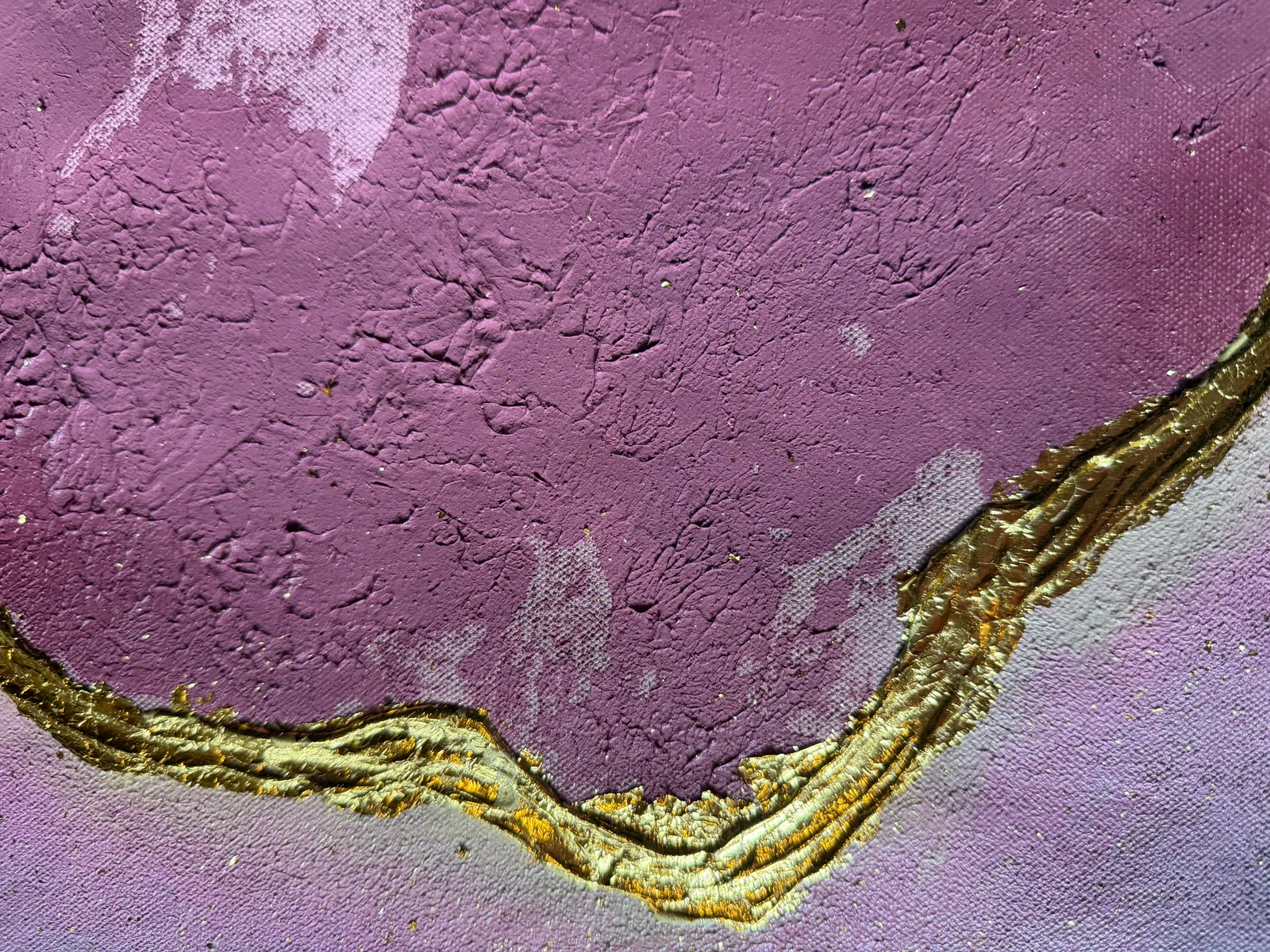
Four variables do almost all of the work in pricing an original painting, and none of them is "how much you like it." Size comes first — a larger canvas requires more material and more hours at the easel, and within any given artist's body of work, price usually tracks square meterage before anything else. Materials and technique come next: a single flat layer of acrylic is a different amount of labor than mixed media built up in passages, with texture, gold leaf, or several drying sessions between layers.
The third variable is documentation — a certificate of authenticity, a dossier describing the work, a traceable registration number (sometimes called an Archive ID), and an acquisition agreement. None of that changes what the paint looks like, but it changes what a buyer can prove later, and a price with no paperwork behind it is a different proposition than one with a paper trail. The fourth is the artist's trajectory — an established name with a documented sales history commands a different number than someone earlier in her career, which is a market fact about demand, not a judgment about the work itself.
Why the same body of work costs more through a gallery
A painting's price is not fixed independent of where it is sold. Commercial galleries retain a share of the sale — commonly described in the trade as a significant commission, though the exact percentage is set contract by contract and is not published as a single market-wide figure. That commission funds the gallery's space, staff, and promotion; it is a legitimate arrangement, not a hidden fee, but it does mean the public price has to sit higher for the artist to net the same amount.
Scale matters here too: the global art market reached $59.6 billion in 2025, and dealers and galleries — not artists selling directly — accounted for roughly $34.8 billion of it, about 58% of total sales, according to the 2026 edition of the Art Basel & UBS Global Art Market Report. That is the backdrop against which most published "gallery prices" exist. A work bought directly from an artist's studio, with no intermediary, skips that layer — a structural difference in how the number was built, not a discount off some "real" price.
Signs a price does not add up
Three patterns are worth pausing on. A price well below what comparable size and technique would suggest usually means one of two things: the piece is a print or limited edition rather than a unique original, or it is missing the documentation that would let a buyer confirm authenticity and provenance later. Neither is automatically dishonest — an early-career artist can price low in good faith — but it is a reason to ask, not to assume.
A price that sits far above comparable work with no visible rationale — no larger scale, no more complex technique, no documented sales history — is the mirror image of the same problem. And a bare "price on request" with no ladder, no comparable works, and no willingness to explain how the number was reached leaves the buyer negotiating blind. It does not mean the seller is acting in bad faith; it means the buyer has no reference point until they ask directly.
A simple check before you buy
Before agreeing to a number, ask for three things. First, comparable pieces — other works by the same artist, close in size and technique, so you can see whether the price sits on a coherent ladder rather than being invented on the spot. Second, documentation — certificate of authenticity, a description of materials and dimensions, and ideally a traceable registration or archive number tied to that specific canvas. Third, ask directly how the price was calculated — by area, by series, by hours of work — and treat hesitation to answer as information in itself.
A studio that publishes its full price list openly, work by work, has already answered most of this before you ask. That is unusual in the art market, where "price on request" is closer to the default — but it is not the only model, and it is worth noticing when a seller chooses otherwise.
From the studio
From the studio
I price every canvas the same way: by calculating value per square meter within its own series — Heart of Chaos, Matter & Silence, Luminous Rebirth, Black & Gold, Terra & Ether — so that two paintings in the same family sit on a coherent ladder instead of a number I picked by feel. As an architect before I was a full-time painter, that discipline is not optional for me; I am used to justifying a measurement, not eyeballing one.
I publish every price on the site because most independent artists do not, and "price on request" quietly shifts the negotiation in the seller's favor before a conversation even starts. If you are looking at a painting anywhere — mine or someone else's — and the number feels arbitrary, that is usually because no one has shown their work. Ask to see it.
Frequently asked
What is the single biggest factor in an original painting's price?
Size, in most cases. A larger canvas requires more material and more working time, and within one artist's body of work, price usually scales with area before technique, subject, or anything else is factored in. Technique, layering, and documentation explain most of the variation within a given size band.
Is "price on request" automatically a red flag?
Not automatically — it is the common default in the art market, especially through galleries. But it does mean you have no reference point until you ask directly for comparable prices, how the number was set, and what documentation comes with the piece. Treat it as a prompt to ask more, not a reason to walk away.
Why does the same artist's work cost more in a gallery than bought directly?
Galleries retain a share of the sale price to cover their space, staff, and promotion, which is a standard and legitimate part of that business model. For the artist to receive the same net amount through a gallery, the listed price has to be higher than it would be in a direct sale with no intermediary.
Does a very low price mean a painting is a bargain?
Not necessarily. It can mean an artist earlier in her career is pricing honestly, or it can mean the piece is a print or reproduction rather than a unique original, or that it lacks the certificate and provenance documentation that support the work later. The price alone does not answer which one it is — ask.
What documentation should come with a fairly priced original painting?
At minimum, a certificate of authenticity signed by the artist. A more complete package includes a work dossier describing materials and dimensions, a traceable registration or archive number specific to that canvas, and a written acquisition agreement. Their absence does not prove a work is fake, but their presence supports the price.
Can I compare prices across different artists to judge whether one is fair?
Only loosely. Price differences between artists reflect trajectory, market demand, and gallery representation as much as the work itself, so cross-artist comparisons are a weak test. A tighter comparison is the same artist's other pieces, similar in size and technique — that is where a price ladder either holds together or does not.
Wondering if a specific price is fair?
Send Alyne the size, technique, and asking price of the piece you're considering — she'll tell you plainly how it compares to the studio's own price ladder, no obligation to buy.
Sources
Published on