Does an abstract painting have a right way up?
Yes — most abstract paintings have one deliberate orientation chosen by the artist, even without a recognizable subject to confirm it. The proof usually isn't visual instinct but physical evidence: a signature, a verso label, or hanging hardware. In 1961, the Museum of Modern Art hung a Matisse upside down for 47 days before anyone noticed.
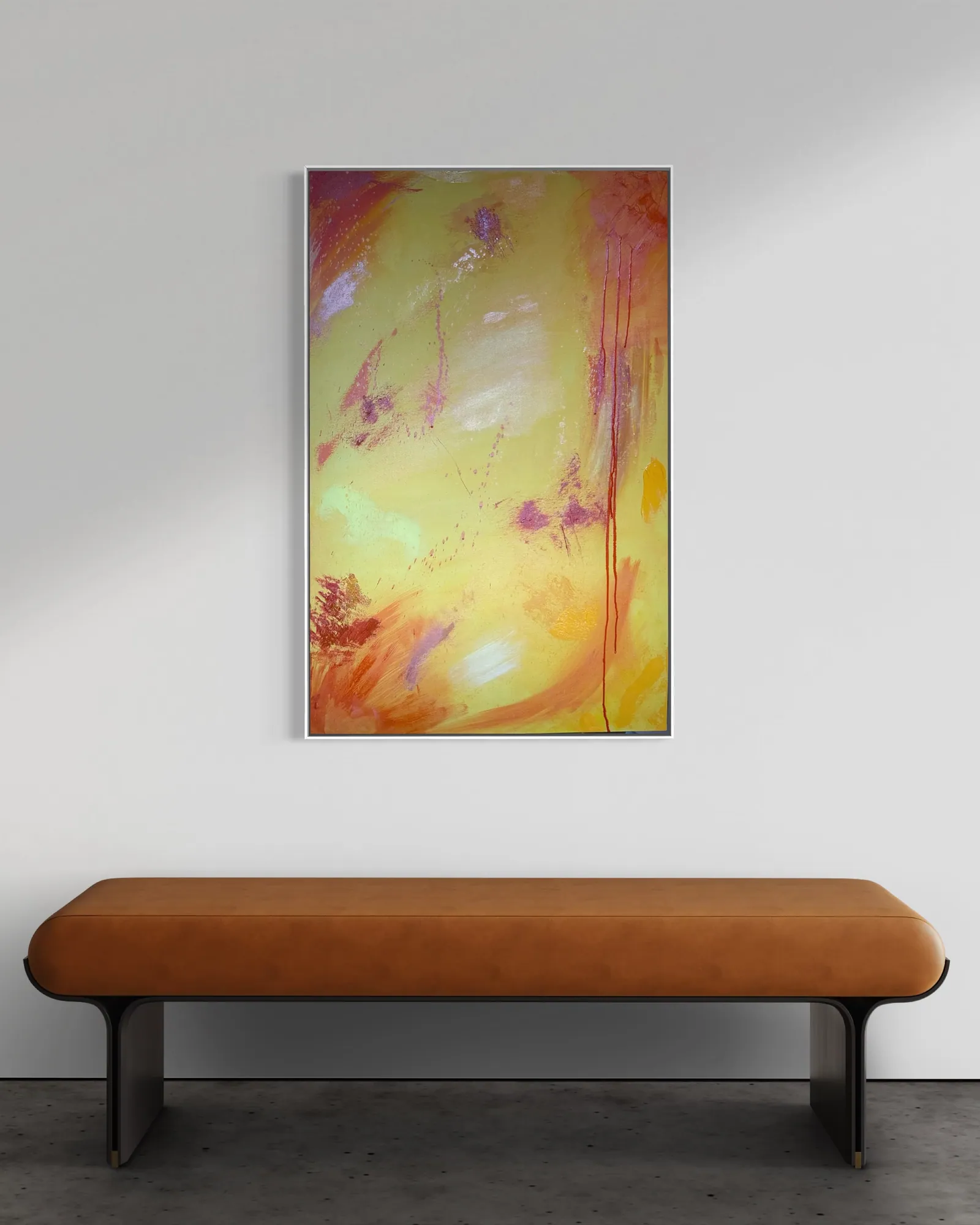
Yes — abstract doesn't mean orientation-free
An abstract painting has no face, no horizon, and no figure to tell a viewer which way is up, but that doesn't mean the artist left it undecided. Composition in an abstract work is still built around a top and a bottom — where weight settles, where a gesture starts and ends, where a color field is meant to feel grounded versus airborne. Flip that arrangement, and the internal logic of the piece changes even though every mark is technically still on the canvas.
The confusion comes from assuming that "no recognizable subject" means "no correct reading." It doesn't. The orientation is a decision the artist made once, usually at the moment of signing and titling the piece, and from that point on it is fixed information, not a matter of taste for whoever is holding the hammer and nail.
How orientation actually gets confirmed
Because the image alone often can't settle the question, museums and conservators rely on physical evidence rather than gut feeling: the position of the artist's signature, a label or inventory number on the verso (the back of the canvas), and the placement of the wire, D-rings, or hanging hardware, which is normally installed with the correct orientation already in mind.
That evidence is exactly what exposed one of the best-documented mix-ups in a major museum's history — and it wasn't spotted by an art historian looking at the image, but by a visitor who compared the hung painting against its own catalogue reproduction.
The most famous case: Matisse's Le Bateau, upside down for 47 days at MoMA
On October 18, 1961, the Museum of Modern Art in New York opened "The Last Works of Henri Matisse," which included the gouache cut-out Le Bateau (The Boat) — a composition of a sailboat and its mirrored reflection in water. The work hung upside down for 47 days. Thousands of visitors passed it, along with curators, critics, and even Matisse's own son Pierre, and no one flagged it.
The mistake was caught by Genevieve Habert, a stockbroker visiting the show, who felt the reflection in the image looked more structurally complex than the boat itself — the opposite of how a reflection normally reads. She checked the hung painting against the exhibition catalogue and confirmed it was inverted, then contacted The New York Times. The museum's director of exhibitions, Monroe Wheeler, was notified and the painting was corrected within about two hours — the day before the Times ran the story on December 5, 1961. An assistant curator later pointed to the actual physical evidence behind the error: a label on the back of the work had been posted the wrong way, and screw holes on the frame suggested it had already been hung upside down once before.
Why getting it wrong matters more than it seems
Hanging a painting upside down doesn't damage the canvas, but it does break the two things a serious acquisition is supposed to protect: the artist's intended composition and the documentation trail that proves what the piece actually is. A certificate, a catalogue image, or an archive record that shows one orientation and a wall that shows another is a discrepancy — the kind of detail a future appraiser, insurer, or buyer will eventually notice, the same way Habert did in 1961.
For a collector, the practical takeaway is simple: treat orientation as documented fact, not as a call to make in the moment while a level is in your hand. Check the piece's own paperwork, its signature, or ask the studio or gallery directly before it goes on the wall.
From the studio
How orientation is set before a piece ever leaves the studio
Every piece in this studio's archive carries a fixed orientation from the moment it's finished — recorded internally as vertical, horizontal, or square, alongside the Archive ID, dimensions, and technique. It isn't an afterthought decided at framing; it's part of what gets documented from the start and carried into the certificate.
Because I trained as an architect before I trained as a painter, I think about orientation together with the wall it's going to, not apart from it. A piece like Solar Rain only holds together if the drips are read as falling — reverse it and the gravity the whole composition depends on stops making sense. When a collector asks which way a piece goes, there's always one answer, and it's the same one written on the certificate.
Frequently asked
Does every abstract painting have one correct way to hang it?
In almost every case, yes. Even without a recognizable subject, the artist composes around a top and bottom — where weight, color, and gesture are meant to sit. A small number of works are genuinely designed to be shown in more than one orientation, but that's a deliberate exception the artist states, not the default assumption for abstract art in general.
How can I tell which way up my abstract painting goes?
Look for physical evidence rather than trusting the eye alone: the artist's signature, any label or inventory number on the back of the canvas, and the placement of the hanging wire or hardware. If the piece came with a certificate, dossier, or gallery documentation, that record should state the orientation directly — check it before you hang.
What actually happened with the Matisse painting hung upside down at MoMA?
In 1961, MoMA displayed Henri Matisse's gouache cut-out Le Bateau upside down for 47 days during the exhibition "The Last Works of Henri Matisse." A visitor, stockbroker Genevieve Habert, noticed the reflection in the image looked wrong and confirmed it against the exhibition catalogue. The museum corrected the hang within hours of being formally notified, shortly before The New York Times reported the story on December 5, 1961.
How does Perfeito Studio establish the correct orientation for each piece?
Orientation is recorded internally the moment a piece is finished — as vertical, horizontal, or square — alongside its Archive ID, dimensions, and technique. It isn't decided later at framing or installation; it's documented from the start and carried through to the piece's certificate.
Does hanging a painting upside down damage it?
Not physically — the canvas itself isn't harmed. What breaks is the intended composition and the accuracy of the documentation: a certificate or catalogue image that shows one orientation while the wall shows another is a mismatch that a future appraiser, insurer, or buyer can notice, much like the discrepancy that exposed the Matisse case in 1961.
Not sure which way a piece is meant to hang?
Send the studio a photo of the artwork or its certificate, and we'll confirm the intended orientation directly.
Sources
- Masterworks Fine Art (citing The New York Times, Dec. 5, 1961) — 2026-09-14
- Wikipedia, "The Boat (Matisse)" — 2026-09-14
Published on