Buying Brazilian art before you leave Brasília: a guide for expats and diplomats
A painting bought directly from a working artist in Brazil is, in nearly all cases, free to leave the country without any IPHAN authorization — the law behind Brazil's art-export reputation, Lei 4.845/1965, covers only work made up through 1889. What's worth carrying is simple: the studio's invoice, and, if you want it in writing, IPHAN's free export consultation.
What Brazil's export law for art actually covers
The rule most people have heard about — that art can't leave Brazil — comes from a single law, Lei 4.845/1965, and it is far narrower than its reputation. It restricts the export of works of art and craft made or brought into Brazil only up through the end of the monarchical period, which closed in 1889: paintings, sculptures, engravings, furniture, religious imagery, and metalwork from that era. IPHAN, the federal heritage institute, also blocks export under three separate rules: objects individually listed (tombados) as having exceptional heritage value, pre-historic archaeological items and ancient coins or medals, and Brazilian books and manuscripts from the 16th to 19th centuries.
A painting finished in 2025 or 2026 by a living artist, bought directly from the studio, does not fall into any of these four categories. It is a contemporary work with no heritage listing and no claim on national patrimony — the restriction that shapes most people's mental image of Brazilian export law for art simply does not apply to it.
Getting it in writing: IPHAN's free export consultation
Because "it's probably fine" is a poor thing to carry through customs, IPHAN runs a free consultation through its online Portal de Serviços specifically to settle the question: submit the piece with photographs, and the system either returns an automatic clearance or opens a manual review, answered within up to 15 calendar days. If IPHAN needs more information or a physical inspection, that window pauses and the requester has 15 days to respond before it resumes.
Nothing about a contemporary painting requires this step — but for a piece crossing a border inside a moving container, or in a diplomatic shipment among dozens of other items a relocation company is coordinating, having IPHAN's own written answer on file removes a question before anyone at customs has the chance to ask it.
Buying as a private collector vs. exporting as a business
Brazil's foreign-trade system draws a real line between a company exporting goods commercially and a private individual acquiring something for personal use. Formal export registration — RADAR, the system Receita Federal uses to authorize companies and track shipments through Siscomex — is built for the commercial track: a gallery consigning work abroad, a dealer shipping inventory. An individual buying one painting to hang in their own next home sits on the other side of that line, since foreign-trade operations by individuals are limited to their own personal use rather than a registered export operation.
In practice, that is why a painting bought from a studio usually travels as part of a relocation shipment or accompanied belongings, documented by an invoice and a certificate, rather than through the commercial export paperwork a gallery would file for a container of inventory. This is general information about how the mechanism works, not legal, customs, or tax advice for your specific move — a customs broker or your relocation company's logistics team should confirm the requirements for your destination country and your particular shipment.
What to carry with the piece when you go
Two documents do most of the work. The first is the studio's invoice, naming the artist, the title, the medium, the year, and the actual purchase price — the same information customs authorities on the receiving end typically want to see, and the reason a vague description like "painting" causes more delay than a specific one. The second is the Certificate of Authenticity issued with every acquisition, which carries the title, year, dimensions, medium, the work's internal Archive ID, and a QR code linking back to its page on the studio's own site — a second, independent record of the same facts.
If the move is far enough out to plan around, request both at the time of purchase rather than the week you fly, and keep them with the shipment's other paperwork rather than packed inside the crate itself. For the logistics of the shipment itself — crating, declared value, what a receiving country's customs expects — see the studio's full guide to shipping original art internationally from Brazil.
From the studio
From the studio
Brasília is not an ordinary city to sell paintings out of. A gallery in São Paulo mostly sells to people who already live nearby; here, plenty of the conversations I have are with someone on a posting that already has an end date built into it. I built the studio's documentation — the Archive ID on every piece, the Certificate with its own QR code back to the work's page — before I fully understood how often a buyer would need it to make sense to someone who has never seen the painting in person, in a country I've never visited myself.
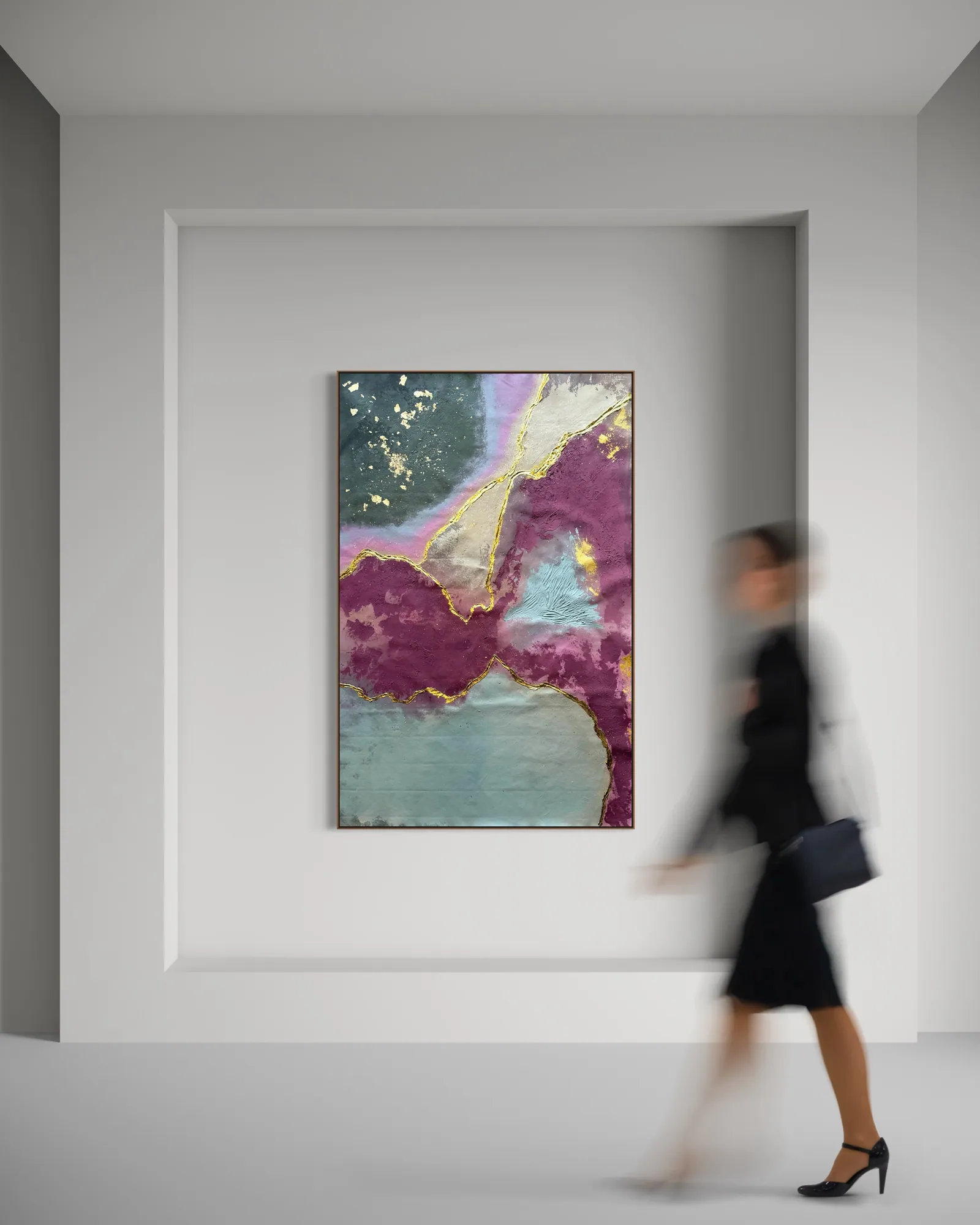
Quartz Seam, the piece pictured here, is a good example of what I mean when people ask what a first Brazilian painting should be: large enough to hold a wall on its own at 98 by 152 centimeters, but built in bounded fields of color rather than one continuous gesture, so it reads clearly in a photograph sent from an apartment on the other side of the world just as it does standing in front of it in Brasília.
Frequently asked
Do I need IPHAN authorization to take a painting bought directly from a working artist out of Brazil?
Generally no. The law that restricts art exports from Brazil, Lei 4.845/1965, only covers work made or brought into the country up through the end of the monarchical period in 1889. IPHAN's other export restrictions cover heritage-listed objects, archaeological items, and historical Brazilian documents from the 16th to 19th centuries — none of which apply to a contemporary painting bought from a living artist's studio. If you want written confirmation for your own records, IPHAN's consultation service is free.
What exactly does Lei 4.845/1965 restrict?
It restricts the export of works of art and craft — paintings, sculptures, engravings, furniture, religious imagery, metalwork — produced or brought into Brazil up through the end of the monarchical period, which ended in 1889. It does not apply to work made after that date, regardless of the artist's nationality or where the piece is going next.
How do I get official confirmation that a specific piece has no export restriction?
IPHAN runs a free online consultation through its Portal de Serviços. You submit the piece with photographs, and the system either returns an automatic clearance or opens a manual review, which IPHAN answers within up to 15 calendar days. That window pauses if IPHAN requests more information or a physical inspection, giving the requester 15 days to respond before the review resumes.
Can I buy a painting from the studio and carry it home myself, or does it have to go through a commercial export process?
Buying for your own home is treated differently from a commercial shipment. Formal export registration through RADAR and Siscomex is built for companies — a gallery or dealer exporting inventory — while an individual's foreign-trade activity is limited to personal use. In practice, a painting bought for a private collection typically travels as part of your own relocation shipment or belongings, documented by the studio's invoice, rather than a company export filing.
What documents should travel with the painting?
Two: the studio's invoice, naming the artist, title, medium, year, and actual purchase price, and the Certificate of Authenticity issued with the piece, which carries the same technical details plus the work's Archive ID and a QR code linking to its page on the studio's site. Request both at the time of purchase and keep them with your shipment's other paperwork rather than inside the crate.
Does any of this change if I'm moving under diplomatic status?
The underlying rules are the same regardless of visa or diplomatic status — Lei 4.845/1965 is about the object's age, not the owner's status. What usually differs is logistics: diplomatic and corporate relocation shipments are often coordinated by a moving company that handles paperwork like this as part of the larger shipment. This is general information, not legal or customs advice — confirm specifics with your relocation coordinator or a customs broker for your particular move.
Buying before you go? Talk it through with the studio.
Tell Alyne your timeline and destination — she'll confirm which piece fits the move and get the invoice and certificate ready with time to spare.
Sources
- IPHAN (gov.br) — 2026-09-15
- Receita Federal (gov.br) — 2026-09-15
- Portal de Serviços / IPHAN (gov.br) — 2026-09-15
- Grupo Serpa (customs brokerage) — 2026-09-15
Published on