Abstract or figurative: which should a first-time art buyer start with?
Neither is objectively easier, but abstract work tends to be the more forgiving first purchase: it asks for a felt response rather than a judgment of technical skill, and it adapts more easily as rooms and moods change. Figurative work suits buyers who already know the subject or mood they want on the wall.
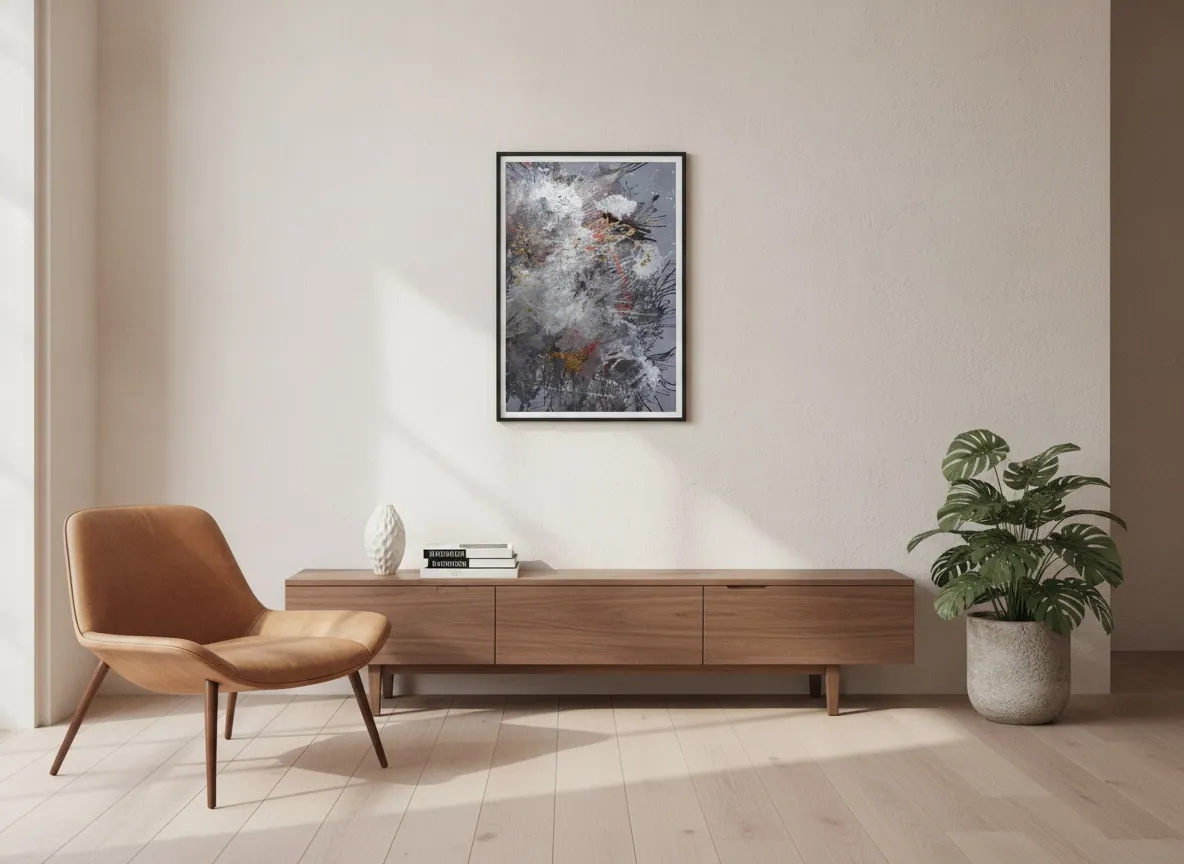
What actually separates abstract from figurative art
Figurative art depicts something you can name -- a face, a landscape, a bowl of fruit, a street. Abstract art works without a depicted subject: color, gesture, texture, and composition carry the piece on their own terms. Between the two sits semi-abstract or gestural work, where a subject is suggested but not fully resolved -- a horizon line, a loose figure, a hint of architecture emerging from paint.
The distinction matters for a first-time buyer because it changes what you are actually judging when you stand in front of a piece. With figurative work, part of your brain is comparing the painted version to your memory of the real thing. With abstract work, there is nothing external to compare against -- only your own response to what is on the canvas.
Why the two get judged so differently by a first-time buyer
Figurative art gives first-time buyers a familiar way in: you can assess likeness, technical control, and whether the mood of the depicted scene matches what you want in the room. That familiarity often makes people feel more confident critiquing a figurative piece, even without any formal training -- everyone has an intuitive sense of whether a face looks "right."
Abstract art removes that reference point, and first-time buyers frequently read the resulting uncertainty as a sign they are missing something -- as if there were a correct interpretation they haven't found. There usually isn't one. The discomfort of not being able to name what a painting is "of" is not evidence that the piece is wrong for you; it is simply a different kind of looking, closer to how you'd judge a piece of music than a photograph.
Which is the safer bet for a first acquisition
For most living spaces, abstract work has a practical edge for a first purchase: because it isn't tied to a specific scene, season, or era, it tends to keep working as furniture, wall color, and taste evolve around it. A landscape painted at dusk anchors a room to that particular mood; an abstract composition built around a palette can sit comfortably across several different room schemes over the years.
Figurative work earns its place when there is a real personal pull toward a specific subject -- a coastal view for someone with a strong tie to the coast, a still life that echoes something in the buyer's own history. In that case the subject itself is the reason to buy, and it should outweigh a general rule about flexibility. Price tiers run similarly across both categories, so budget rarely settles the question either way.
A simple test to run before you decide
Shortlist two or three pieces, mixing abstract and figurative if you're genuinely torn, and give each at least two full minutes of unhurried attention rather than a glance. Later that day, notice which one you find yourself thinking about without trying to. That recall, more than any in-the-moment reaction, tends to predict which piece you'll still want to look at in a year.
It also helps to picture how each piece would answer the question "what's it about?" from a guest. A figurative work usually has one answer. An abstract work can have several, and none of them wrong -- which, for many first-time collectors, ends up being the more comfortable position to live with long-term, not the more intimidating one.
From the studio
The atelier's perspective
As an architect, I think about a painting the way I think about daylight in a room -- not as a fixed image but as something a person's eye returns to differently depending on the hour, the season, the year. That's built into how I paint the Heart of Chaos and Luminous Rebirth series: gesture and layered pigment, with no depicted subject to resolve.
In practice, I notice first-time buyers often want to describe a painting the way they'd describe a photograph -- what it's of. With abstract work I ask them instead what it does to the room, and to their own attention, over a week rather than a glance. That question tends to be more useful for a first acquisition than any judgment about technical skill.
Frequently asked
Is abstract art harder to understand than figurative art?
Not harder -- different. Figurative art gives you a subject to check against reality, so understanding feels like recognition. Abstract art has no subject to verify, so understanding is closer to noticing your own reaction: what colors pull your eye first, whether the composition feels settled or unresolved, how it changes the mood of the room. Neither requires art history training. Spending a few unhurried minutes with a piece, rather than reading wall text, is usually enough to know whether it holds your attention.
Does figurative art hold its value better than abstract art?
There's no reliable rule that one category outperforms the other -- value depends far more on the individual artist, the specific work, and market conditions than on whether the piece is abstract or figurative. If you're buying your first work, choosing based on which piece you want to live with, rather than a category you expect to appreciate, is the more grounded approach. No purchase should be treated as a guaranteed investment.
Can abstract and figurative art work in the same room?
Yes. Many collections mix both -- a figurative piece can anchor a room with a specific mood or memory, while an abstract piece nearby adds movement and color without competing for narrative attention. The main thing to coordinate is scale and palette, not genre. If you're starting a first collection, there's no rule that says every future piece has to match your first choice in style.
Is it true that abstract paintings are easier to place in a modern interior?
Broadly, yes, but it's about tone rather than genre. An abstract work with a dominant palette can be chosen to complement a room's existing colors without introducing a specific scene or era that has to match the furniture. A figurative work can do the same, but the subject itself -- a coastal view, a portrait, a still life -- sets a mood that the rest of the room then has to answer to.
Should a first-time buyer start with a smaller or lower-priced piece regardless of style?
It's a reasonable way to reduce risk while you learn what you respond to, but it isn't required. A first piece chosen because it genuinely holds your attention -- at whatever size and price fit your budget -- tends to be lived with longer than a smaller piece bought mainly to limit commitment. Budget should set the ceiling; the piece itself should still be one you'd choose freely within it.
How do I know if I'm choosing a piece for the wall or for myself?
Ask which one you'd still want if you moved to a different home with entirely different walls. A piece chosen mainly to fill a specific space tends to lose relevance when the space changes; a piece chosen because you keep noticing it usually travels with you. This applies to abstract and figurative work equally -- it's a question about the buyer, not the genre.
Ready to see abstract work in your own space?
Tell the studio about the room and the mood you're after -- Alyne can suggest which piece from the current collection would work as a first acquisition.
Published on