Journal · Exhibitions & museums
Contemporary art galleries in New York: a collector's map
New York's gallery map divides by real geography: Chelsea holds the largest blue-chip houses, while the emerging scene has shifted since 2020 from the Lower East Side to Tribeca, chasing lower rents and flood-safe storage. Knowing that shift is the first thing a visiting collector needs, before a single gallery name.
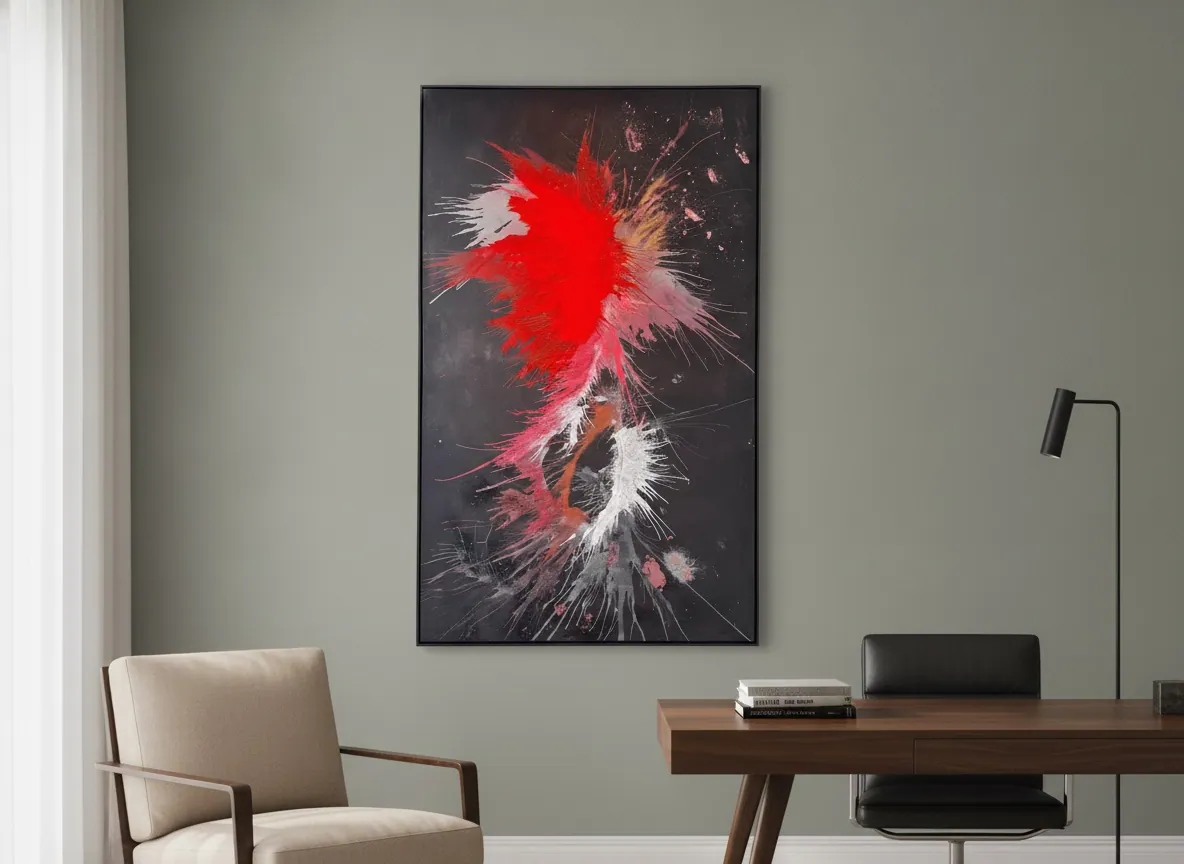
How the map is organized: Chelsea, Tribeca, and the Lower East Side
Manhattan's contemporary gallery scene divides into a small number of walkable districts, and the boundaries have moved over the last several years. Chelsea remains the address for the largest blue-chip houses — purpose-built spaces with museum-scale ceiling heights and a full exhibition calendar. Tribeca has become the newer center of gravity: since around 2020, a wave of galleries has left Chelsea and the Lower East Side for Tribeca's converted loft buildings, drawn by lower retail rents and basement storage that sits above the flood line. The Lower East Side, once the city's default incubator for younger galleries through the 2010s, is smaller today than it was — several longtime tenants have closed their LES spaces and consolidated in Tribeca — though the neighborhood has not emptied out entirely.
For a first visit, the practical read is straightforward: Chelsea for scale and institutional history, Tribeca for a walkable afternoon that now mixes blue-chip satellite spaces with younger programs, and the Lower East Side as a smaller, still-worth-checking stop rather than the center it was a decade ago. Exactly which gallery sits on which block changes constantly — leases turn over, spaces expand, and even the biggest names relocate — so treat any specific address as something to confirm the week of your visit, not a fixed fact.
The blue-chip houses, and what they actually do
A short list of galleries a collector is likely to hear named repeatedly as anchors of the Chelsea gallery district:
- Gagosian — one of the largest gallery networks in the world, with several Chelsea locations.
- David Zwirner — a multi-building Chelsea campus, plus a space in Tribeca.
- Pace Gallery — a large Chelsea headquarters, plus a smaller Tribeca project space.
- Hauser & Wirth — a purpose-built Chelsea space.
- Lisson Gallery — adjoining buildings in Chelsea.
- Paula Cooper Gallery — one of the neighborhood's longest-standing tenants, in Chelsea since 1996.
- Petzel Gallery — a Chelsea program built around a committed roster of contemporary artists.
- Sean Kelly — a program on Chelsea's northern edge, near Hudson Yards.
- Marian Goodman Gallery, in Midtown for over four decades, has relocated to Tribeca — a sign of how far the shift has gone.
Exact addresses in this district turn over often enough — leases end, buildings get renovated, galleries add or drop spaces — that we're deliberately not listing street numbers here; confirm the current address on a gallery's own site before building a visit around it. What these galleries do, in practical terms, is run a program: they represent a fixed roster of artists over years or decades, mount several exhibitions a year, and place work with museums and major private collections through long relationships with curators and advisors. Buying from a gallery at this scale usually means buying into that program — the price reflects decades of positioning an artist's career, not only the object itself.
Where emerging work actually shows, and why collectors look there first
Tribeca's rise since 2020 is largely a story of younger and mid-career galleries relocating there: Cristin Tierney moved from the Bowery to Tribeca, Latitude relocated from its earlier downtown space to Tribeca, and James Cohan closed its Lower East Side location to consolidate into Tribeca. The result is a walkable circuit — a Saturday afternoon in Tribeca can realistically cover six to eight galleries on foot, with lunch in between, in a way Chelsea's larger blocks rarely allow.
Collectors who want to see work before it reaches blue-chip pricing look at this tier first, for a straightforward reason: a gallery's program is a filter, and a newer or smaller gallery is, by definition, showing artists earlier in that filtering process — before a track record has justified blue-chip prices, not necessarily before the work is good. It is also the closest experience, inside the gallery system, to what buying directly from a working studio offers: access to the work and to the person who made it, before a program has built a price around a name.
Visiting galleries as a collector: etiquette, price lists, and the back room
Gallery visits in Chelsea and Tribeca run on unwritten but fairly consistent rules:
- Hours. Most galleries keep Tuesday–Saturday hours, roughly 10am–6pm, and close Sunday and Monday — confirm before building a trip around one stop.
- Price lists. Asking for one at the front desk is normal at any gallery, for any visitor — you don't need to look like you're about to buy. Most galleries hand over a printed list to walk the room with; return it before you leave.
- The back room. After seeing the work on view, it's fair to ask, in general terms, what else the gallery has in storage. It is not fair to walk toward a back office or storage area uninvited — that request goes through a staff member, not through you opening a door.
- Price and discount questions. Asking the price is expected, even from a first-time visitor; gallerists generally treat the question as a normal opening, not a test. Asking for a discount, asked plainly, is also acceptable — and a flat no is a professional answer, not a rebuff.
- The guest book. Leaving your name and email at a gallery you liked gets you on the list for the next opening — the simplest way to build a relationship with a program over time.
From the studio
From the studio
I work from Brasília, on the other side of the world from Chelsea and Tribeca, and I have no gallery representing me in New York or anywhere else — I want to say that plainly, because a collector piecing together a map like this should know exactly where a given artist sits on it. I am not on this circuit. What I build instead is a different kind of order: five named series — Heart of Chaos, Matter & Silence, Luminous Rebirth, Black & Gold, Terra & Ether — each piece logged under its own Archive ID, so that what a gallery program provides through decades of positioning, I try to provide through documentation: a certificate, a curatorial dossier, a conservation guide, a signed acquisition agreement.
Training as an architect shapes how I think about a piece leaving the studio more than it shapes how I paint. I think about the wall it will actually hang on, the light that will hit it at a given hour, the scale a room can hold — questions a gallery show, lit and hung by someone else, doesn't always ask on a collector's behalf. Buying from a studio directly, without a gallery between us, is a different transaction from buying in Chelsea: no program vetting the work, no decades of market position built into the price, but a direct conversation with the person who made it, and paperwork that does the identifying work a gallery provenance record would otherwise do.
Frequently asked
Can I acquire her work from outside Brazil, including from New York?
<p>Yes. Pieces are acquired through a direct WhatsApp conversation with Alyne, in English or Portuguese, and ship internationally — there is no requirement to be in Brazil or to go through a gallery. Each sale includes a certificate of authenticity, a curatorial dossier, a conservation guide, and a signed acquisition agreement.</p>
Is Alyne Perfeito represented by a gallery in New York?
<p>No. Alyne is not represented by any gallery, in New York or elsewhere, and has no exhibition history there. She works directly from her studio in Brasília, Brazil, and sells directly to collectors without a gallery intermediary.</p>
What's the practical difference between buying from a Chelsea gallery and buying from this studio?
<p>A Chelsea gallery sells you into a program — years of positioning an artist's career, reflected in the price. Buying directly from the studio means no gallery margin and a direct conversation with the artist, but also no gallery program behind the piece; the certificate, Archive ID, and acquisition agreement are what stand in for that provenance record.</p>
How should a first-time collector plan a day visiting Chelsea and Tribeca galleries?
<p>Pick one neighborhood per outing rather than both — Chelsea's blocks are large and spread out, while Tribeca's galleries cluster closely enough for six to eight stops on foot. Go Tuesday through Saturday, check each gallery's current hours before you leave, and budget an afternoon rather than an hour.</p>
Do New York galleries require an appointment, or can you walk in?
<p>Most Chelsea and Tribeca galleries are open to walk-in visitors during posted hours, with no appointment needed to view current exhibitions. An appointment matters mainly for viewing work in storage or the back room, arranged with staff on the spot or by contacting the gallery ahead of time.</p>
Sources
- David Zwirner — New York Galleries
- Gagosian Gallery (Wikipedia) — multiple Chelsea locations
- Pace Gallery — About
- Paula Cooper Gallery (Wikipedia) — relocated to Chelsea in 1996
- Lisson Gallery — announcing its New York space
- Hyperallergic — What's Really Luring New York City's Galleries to Tribeca?
- art-collecting.com — New York Gallery Closures & Moves 2025–2026 (James Cohan LES closure)
- Artsy — How to Talk Price with a Gallery
- Marian Goodman Gallery (Wikipedia) — relocation from Midtown to Tribeca
- Cristin Tierney Gallery — news, relocation to Tribeca
- Latitude Gallery — current Tribeca address
Ask the studio directly
Considering a piece for a New York space, or just comparing collections? Alyne answers her own messages, in English or Portuguese.
Talk to the studio on WhatsApp
Published on