Journal · Exhibitions & museums
The art museums worth planning a trip to in Spain
Spain's essential itinerary runs through Madrid's Golden Triangle -- the Museo del Prado, Museo Reina Sofía and Museo Thyssen-Bornemisza -- then out to the Guggenheim Bilbao for the building as much as the art, and on to Barcelona's Museu Picasso, Fundació Joan Miró and MNAC.
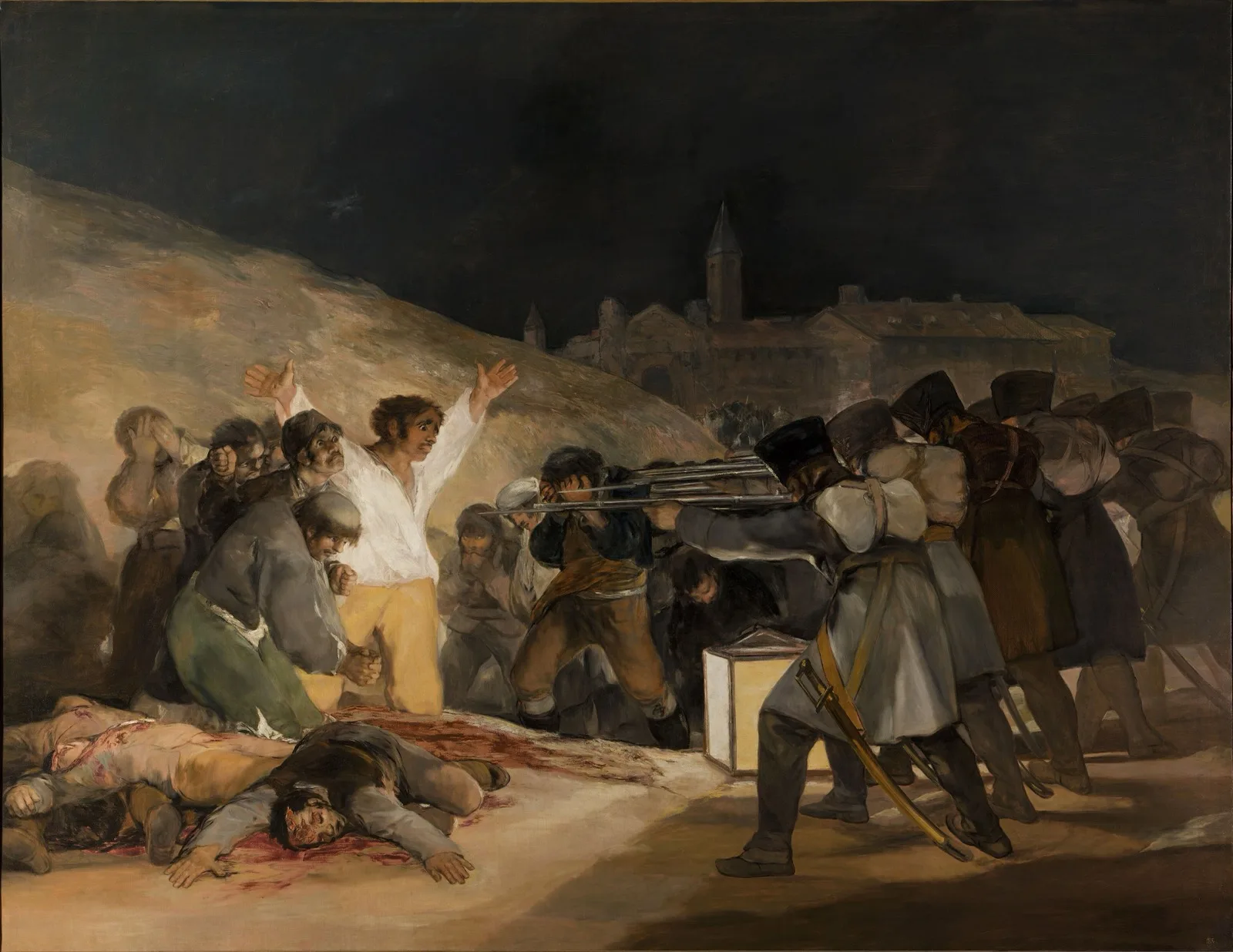
Madrid's Golden Triangle: what each museum actually holds
The three museums that face each other along the Paseo del Prado are known together as the Golden Triangle of Art, a stretch of avenue recognized by UNESCO as a World Heritage site in 2021. They are not three versions of the same collection -- each one exists to cover ground the other two don't.
The Museo del Prado is the deepest: Diego Velázquez's Las Meninas is in the collection, along with the largest holding anywhere of Francisco Goya, from his court portraits through the unsettling Black Paintings he made directly onto the walls of his own house. El Greco, Hieronymus Bosch's The Garden of Earthly Delights, and centuries of Spanish and Flemish painting fill out a museum that rewards a full day on its own -- the Prado's collection is covered in depth in our separate guide, linked below.
The Museo Thyssen-Bornemisza, a few minutes' walk away, was built to fill exactly what the Prado doesn't have: Italian primitives, German and Dutch painting, and a run of Impressionist, Expressionist and early modern work -- Monet, Degas, Kandinsky, Hopper -- that carries the story past where the Prado stops. Once the second-largest private art collection in the world, it now reads like the connective tissue between the other two.
The Museo Reina Sofía completes the triangle by covering the twentieth century almost entirely on its own: Salvador Dalí, Joan Miró and Juan Gris are all in the collection, alongside the single work most visitors come specifically to see -- which is its own story, covered next.
Guernica at the Reina Sofía
Pablo Picasso's Guernica is in the collection of the Museo Reina Sofía -- not the Prado, which is the single most common mix-up in Spanish art travel planning. Picasso painted the enormous canvas in 1937 for the Spanish Pavilion at that year's Paris World's Fair, responding within weeks to the German and Italian bombing of the Basque town of Guernica during the Spanish Civil War. It remains one of the most direct anti-war statements ever painted, built almost entirely in black, white and grey.
The confusion has a real history behind it. Picasso refused to let the painting return to Spain while Franco was alive, and it spent over four decades on extended loan to MoMA in New York. When it finally came back in 1981, it was installed first at the Casón del Buen Retiro -- an annex building of the Prado itself -- where it stayed for more than a decade before moving to the newly opened Reina Sofía in 1992. For anyone who visited Madrid before the 1990s, the painting really was, for a time, a Prado-adjacent work. It no longer is, and the Reina Sofía's current director has been public about having no intention of ever letting it move again.
Bilbao: when the building is the argument
The Museo Guggenheim Bilbao is the one museum on this list where the building, not the collection, is the reason to go. Frank Gehry's titanium-clad structure opened in 1997 and did something almost no single building has done before or since: it turned a declining industrial port city into a design pilgrimage, a shift urban planners still call the Bilbao effect three decades later. Architect Philip Johnson called it the greatest building of his time, and the curved, light-catching forms are the reason most visitors come.
Being honest about the collection matters here. Critics have noted that the museum's vast interior galleries can overwhelm smaller paintings, which can look modest against walls built for something else entirely. What the building does hold permanently is Richard Serra's The Matter of Time, a series of curved weathering-steel sculptures that occupies the full length of the museum's longest gallery -- one of the rare works made specifically for the space it's shown in. Jeff Koons's flowering Puppy stands outside the entrance. Go to Bilbao for the architecture first, and let the collection be what it is: a secondary reason.
Barcelona and the rest, including the museum most itineraries skip
Barcelona covers different ground than Madrid entirely. The Museu Picasso is built almost exclusively around the artist's formative years -- most of what's in the collection dates from 1890 to 1917, tracing his childhood work through the Blue Period, with the notable exception of his 1957 Las Meninas series, 58 paintings reinterpreting Velázquez's original that Picasso's close friend Jaume Sabartés left to the museum. It's a portrait of an artist becoming Picasso, not the Picasso most people already know.
A short ride up Montjuïc hill, the Fundació Joan Miró is the collection Miró built for his own city: he founded it in 1975 with his friend Joan Prats and architect Josep Lluís Sert, and it holds his Barcelona Series alongside sculpture by Alexander Calder. Nearby, in the domed Palau Nacional, the MNAC holds a Romanesque collection -- frescoes carefully removed from small Pyrenean churches in the early twentieth century -- that is, by most accounts, unmatched anywhere else in the world, alongside the Catalan modernisme movement that gave Barcelona its Gaudí-era identity.
The museum most itineraries skip entirely sits outside the Madrid-Barcelona axis: the Museo de Bellas Artes de Sevilla, housed in a former seventeenth-century convent, is often cited as the second-largest painting collection in Spain after the Prado, built around Bartolomé Esteban Murillo and Francisco de Zurbarán at the height of Seville's own Golden Age. And in Madrid itself, easy to miss between the Golden Triangle museums, the Museo Sorolla -- painter Joaquín Sorolla's own house and studio, left largely as he worked in it -- is a quieter, more intimate stop than anything else on this list.
From the studio
From the studio
I trained as an architect before painting became the discipline I practice full time, and Bilbao is the clearest case I know anywhere of a building doing what an architect hopes a building can do: change how an entire city gets read from the outside. Frank Gehry's titanium curves didn't just house a collection -- they gave a declining industrial port a reason to exist in other people's imagination, a shift real enough that urban planners still cite it by name three decades later. Standing in front of it, I think less about what's hanging inside than about the decision to build something that ambitious in a city nobody was visiting yet. That's an architect's kind of nerve, not a painter's, and it's the building in Spain I'd send another architect to see first.
The paintings I keep coming back to, though, are much older and much quieter: Goya's Black Paintings, made directly onto the plaster walls of his own house near the end of his life, with no commission and no audience in mind. Of everything in the Prado, they're the closest that old painting gets to what I do now with matter and gesture -- pigment applied for what it does to the surface, not only for what it depicts. Goya wasn't building an abstraction, but he was already past the point of painting for anyone else's approval, and that's a condition I recognize from my own studio, two centuries and an ocean away.
Frequently asked
Is Guernica at the Prado?
<p>No. Picasso's Guernica is in the collection of the Museo Reina Sofía, a separate museum a short walk from the Prado. The confusion is understandable -- the painting spent over a decade at the Casón del Buen Retiro, an annex building of the Prado, before the Reina Sofía opened and took it in permanently in 1992.</p>
How many days do I need for an art trip to Spain?
<p>A realistic minimum is five to six days: two for Madrid's Golden Triangle (the Prado alone deserves most of a day), one for the Guggenheim Bilbao if flying or taking the train out, and two to three for Barcelona's Museu Picasso, Fundació Joan Miró and MNAC. Adding Seville or the Museo Sorolla extends the trip by at least another day.</p>
What is the Golden Triangle of Art?
<p>It's the name given to three museums standing along Madrid's Paseo del Prado -- the Museo del Prado, the Museo Reina Sofía and the Museo Thyssen-Bornemisza -- recognized together by UNESCO as a World Heritage site in 2021. Each covers different ground: the Prado is Spanish Old Masters, the Thyssen-Bornemisza fills in Italian, Northern European and early modern work, and the Reina Sofía covers twentieth-century Spanish art.</p>
Prado or Reina Sofía, if I only have time for one?
<p>The Prado, for a first trip -- it holds the deepest concentration of Spanish painting across centuries, including Velázquez's Las Meninas and the bulk of Goya's work. Choose the Reina Sofía instead if Guernica and twentieth-century Spanish art (Dalí, Miró, Juan Gris) are the specific reason for the visit.</p>
Is the Guggenheim Bilbao worth visiting if I'm not especially interested in contemporary art?
<p>Yes -- the building is the argument, not the collection. Frank Gehry's titanium structure is one of the most significant works of architecture built anywhere in the last fifty years, and it can be appreciated fully from the exterior and the surrounding riverside alone, independent of what's on view inside on a given visit.</p>
Sources
- Museo del Prado (Wikipedia) -- Golden Triangle of Art, Velazquez and Goya — 2026-07-26
- Museo Reina Sofia (Wikipedia) -- Guernica — 2026-07-26
- Museo Thyssen-Bornemisza (Wikipedia) -- collection and Golden Triangle — 2026-07-26
- Museo Guggenheim Bilbao (Wikipedia) -- Gehry building and collection — 2026-07-26
- Museu Picasso, Barcelona (Wikipedia) -- collection focus — 2026-07-26
- Fundacio Joan Miro (Wikipedia) -- founding and collection — 2026-07-26
- National Art Museum of Catalonia / MNAC (Wikipedia) -- Romanesque collection — 2026-07-26
- Museo de Bellas Artes de Sevilla (Wikipedia) -- collection and building — 2026-07-26
- Museo Sorolla (Wikipedia) -- house and studio — 2026-07-26
- El Tres de Mayo, by Francisco de Goya -- Wikimedia Commons (public domain source file) — 2026-07-26
Ask the studio directly
Planning a museum-focused trip to Spain, or just comparing collections? Alyne answers her own messages, in English or Portuguese.
Talk to the studio on WhatsApp
Published on