Journal · Technique & materials
What is encaustic painting?
Encaustic painting is a technique in which pigment is mixed into molten beeswax and resin, applied hot, and fused between layers with heat. It is one of the oldest documented painting methods, practiced in ancient Greece and preserved in the Fayum mummy portraits of Roman Egypt, and revived in the twentieth century by artists such as Jasper Johns.
What encaustic paint is made of
Encaustic paint has three core ingredients: beeswax, damar resin, and pigment. The resin is not decorative — it raises the wax's melting point and hardens the finish once the paint cools, which is what keeps a finished encaustic surface from staying soft. The mixture is kept molten on a heated palette while the artist works, since wax that cools below its melting point stiffens and stops moving under the brush.
The paint is applied to an absorbent surface, most traditionally a wood panel — wax is heavy and prone to cracking on a support with too much flex, which is part of why panel, rather than canvas, has stayed the default ground for the technique.
Why every layer gets reheated
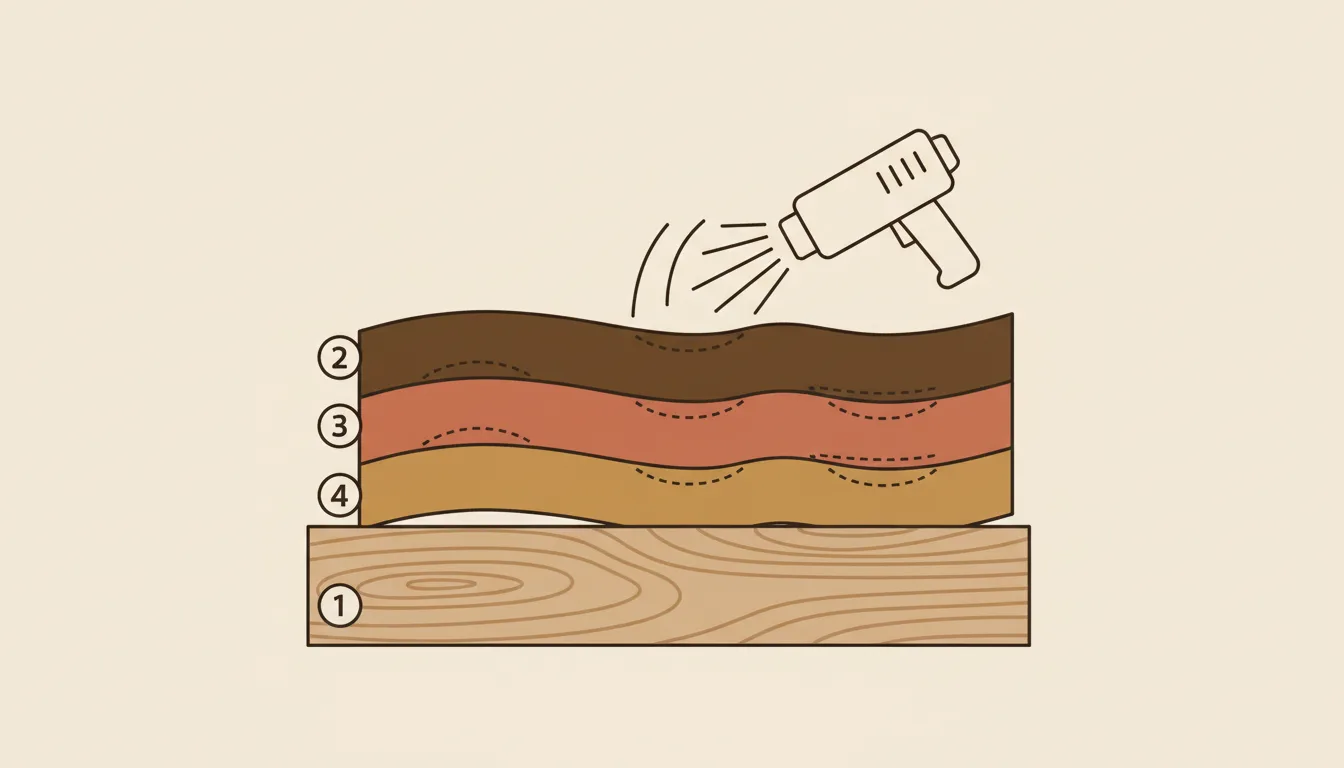
What distinguishes encaustic from almost every other painting medium is that each layer must be reheated after it is applied, to fuse it to the layer beneath it. Without that step, a new pass of wax simply sits on top of the one before it, unattached, and is prone to flaking off. Painters fuse with a torch, a heat gun, or a heated metal tool run just above or across the surface — enough heat to soften the top of the layer and bond it to what is already there, without melting the whole build-up back into a puddle.
It is this repeated heating and cooling that keeps each layer bonded to the one below, without melting the whole surface back into a single puddle of wax.
An ancient technique — older than oil paint
Encaustic is among the oldest documented painting techniques. The Roman writer Pliny the Elder recorded Greek artists working in encaustic as far back as the fifth century BC, describing its use for portraits and mythological scenes on wood panels, as well as for coloring marble, terracotta, and ivory.
The most complete surviving body of ancient encaustic work is the Fayum mummy portraits, painted in Roman Egypt from the late first century BC into the third century AD. Greek-trained artists working in Egypt painted these lifelike portraits on wood panels — encaustic alongside tempera — which were later fixed over the faces of the mummified dead. Their naturalism and the vividness of the wax medium are a large part of why they still read as startlingly alive today.
The twentieth-century revival
Encaustic largely disappeared as a working technique after antiquity and only became broadly practical again once electric heating tools made temperature control manageable outside a dedicated workshop. Its best-known modern reappearance is Jasper Johns's Flag (1954–55), now in the collection of the Museum of Modern Art, in which Johns combined melted wax with oil paint and collaged strips of newsprint over three canvas panels mounted on plywood.
Johns did not invent the medium, but Flag is one of the most visible modern demonstrations of what encaustic can do — the layered, slightly built-up surface that comes from applying melted wax and then working oil paint and paper over it while it holds.
From the studio
In the studio: layers without wax
I don't work in encaustic — the studio's surfaces are acrylic and mixed media on canvas, not wax on panel, and I want to be clear about that rather than let the comparison blur. But reading about how encaustic painters build a surface in separate, reheated passes describes something close to what happens with a piece like Silent Interval, from the Matter & Silence series: texture paste goes down, is left to set, and only then gets built on again, scored, or layered over. The tool is completely different — a palette knife and time, instead of a torch and a heated palette — but the discipline is the same. A layer that hasn't settled shows through the next one as a mistake, not a texture, whether the material underneath is wax or acrylic paste.
Frequently asked
What is encaustic painting and how does it differ from cold wax?
Encaustic painting uses heat throughout the process: pigment is mixed into melted beeswax and resin, applied while molten, and each layer is reheated to fuse it to the one beneath. Cold wax is a different medium built for oil painting — a paste of beeswax, resin, and solvent applied at room temperature with a palette knife or brush. It never touches heat; it cures as the solvent evaporates. The two techniques share an ingredient, beeswax, but nothing about the working process.
What materials are used in encaustic painting?
Encaustic paint is made from three core materials: beeswax, damar resin, and pigment. The resin raises the wax's melting point and adds a harder, glossier finish once cooled. The mixture is kept molten on a heated palette while the artist works, then applied to an absorbent surface — traditionally a wood panel, since encaustic is heavy and can crack on a surface with too much flex. Pigment can be dry powder mixed directly into the wax or pre-mixed encaustic paint bought by the block.
Is encaustic painting an ancient or modern technique?
Both. Its earliest documented use goes back to ancient Greece — the Roman writer Pliny the Elder recorded Greek painters working in encaustic as far back as the fifth century BC, for portraits, mythological scenes, and even coloring marble and ivory. The best-preserved ancient examples are the Fayum mummy portraits from Roman Egypt, painted between the late first century BC and the third century AD. The technique nearly disappeared afterward and only became practical again in the twentieth century, once portable electric heating tools made it manageable outside a specialized workshop.
Which artists are known for working in encaustic?
The most historically documented practitioners are the anonymous Greek panel painters working in Roman Egypt, whose encaustic funerary portraits — the Fayum portraits — survive in far greater number and condition than almost any other painting from antiquity. In contemporary art, the artist most associated with reviving encaustic is Jasper Johns, who used it for Flag (1954-55), now in the Museum of Modern Art's collection, combining melted wax with oil paint and collaged newsprint over canvas panels mounted on plywood.
Does encaustic painting require special equipment?
Yes. Because the medium has to stay molten to apply, encaustic painters work at a heated palette, and each layer needs to be reheated — with a torch, heat gun, or heated iron — to fuse it to the layer below rather than simply sitting on top of it unattached. That heat dependency, from mixing through fusing, is what separates encaustic most clearly from techniques that dry or cure at room temperature, including acrylic, oil, and cold wax.
Sources
- R&F Handmade Paints — 2026-08-08
- Wikipedia (citing museum and archaeological sources) — 2026-08-08
- Wikipedia (citing MoMA collection record) — 2026-08-08
- Gamblin Artists Colors — 2026-08-08
Curious how the studio builds texture in layers?
Encaustic isn't part of the atelier's practice, but layered, hand-built surface is. Ask about Silent Interval or any textured piece in the current archive.
Talk to the studio on WhatsApp
Published on