What is the real risk of buying work by an emerging artist?
The real risk is not that the work is bad — it's that an emerging artist's price has no established market to confirm it, and no reliable secondary market to test it against later. That risk is structural, not a judgment on any individual artist, and it can be reduced through direct provenance, full documentation, and honest expectations about resale.
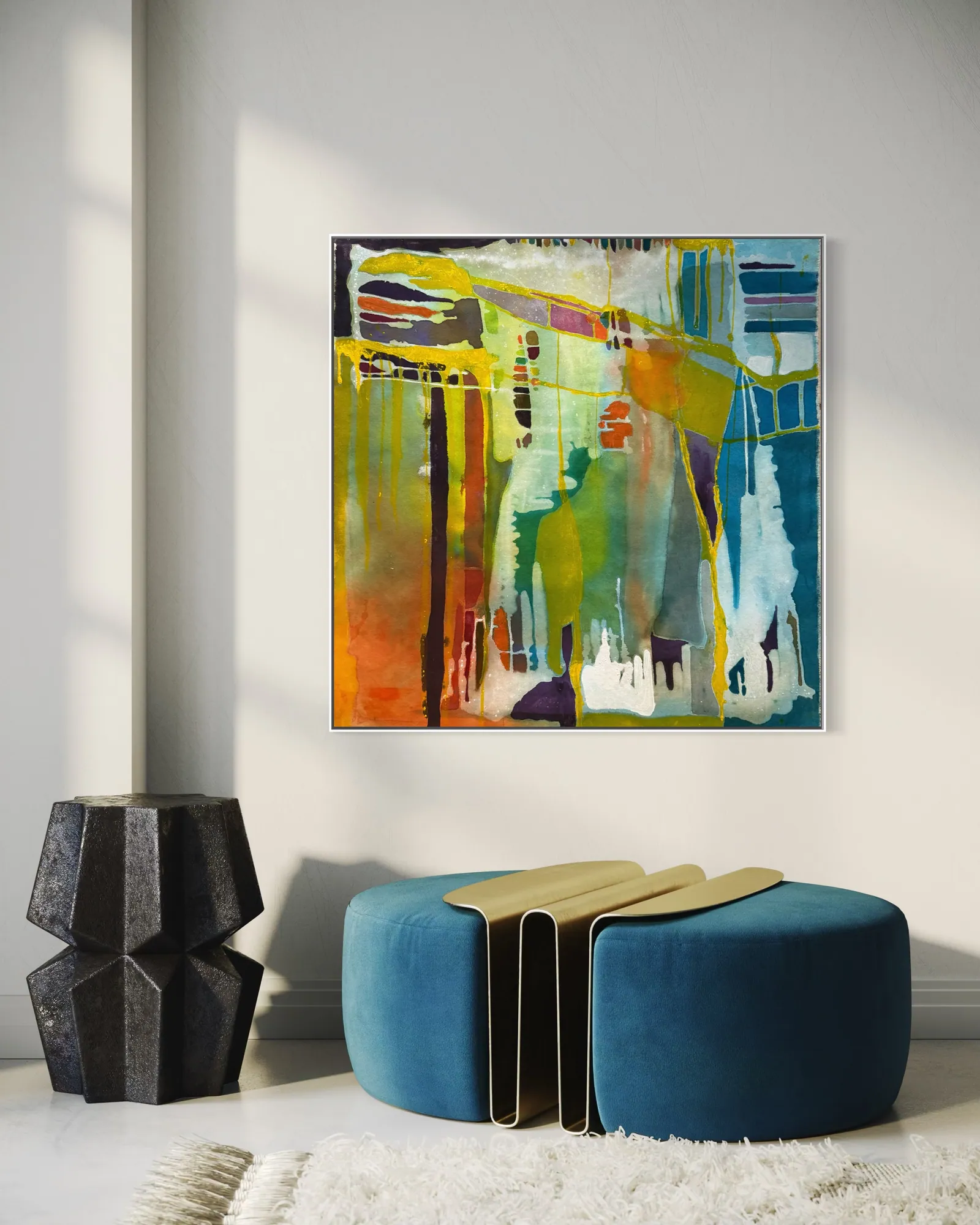
Why an emerging artist's price is hard to benchmark
A price for a frequently auctioned artist gets checked constantly against comparables: what a similar work by the same hand sold for last month, last year, at which house. A price for an artist early in her career has no such comparables to check it against, because there is no meaningful public sales history yet — the number is set by the artist or her studio based on scale, materials, and time invested, not confirmed by a track record of resales.
That asymmetry is structural, and its scale shows up in market-wide data. The Art Basel & UBS Art Market Report 2026, compiled by Arts Economics (Dr. Clare McAndrew), found that 11% of artists generate 58% of sales, even though the average gallery represents more than thirty artists. Almost all of the market's verifiable pricing history — the resales, the auction records, the comparables a buyer could use to sanity-check a number — concentrates around a small fraction of names. An artist outside that fraction, which describes most working artists, simply doesn't have that record yet.
The liquidity question: what resale actually looks like
Liquidity is the ability to sell an asset quickly, near its last price, when a seller wants to. Fine art is illiquid in general — there's no continuous market maker, no daily quote — but the illiquidity is not evenly distributed across price levels. The same Art Basel & UBS 2026 report recorded a bifurcated year: the value of fine art lots sold for over $1 million increased 21% year-on-year, while sales below $50,000 — the price band where nearly every emerging artist's work sits — declined, with both value and volume falling 2%.
That split matters for resale specifically because auction houses and secondary-market dealers concentrate their effort where the volume and the fees already are: proven names with an existing base of competing bidders. A work bought directly from an early-career artist's studio has a real, honest use — on a wall, as a piece a buyer chose to live with — but it does not currently sit inside the infrastructure that makes reselling a well-established name comparatively straightforward. Buying with the expectation of a quick, liquid resale is the wrong frame for this segment of the market; buying because the work itself is wanted is the honest one.
Authenticity and provenance: a different risk, not automatically a worse one
The 2023 Deloitte Private and ArtTactic Art & Finance Report states that “the biggest challenges facing collectors today are provenance and authenticity, especially those not concentrating on emerging or living artists.” That's a useful reframe: the works hardest to authenticate are usually the ones with the longest ownership chains — decades or centuries of past owners, dealers, and estates, any link of which can be missing or disputed. A living artist selling directly from her own studio is, by construction, close to the shortest possible chain: the person who made the work is the same person who can confirm when it was made and in what materials.
That doesn't mean documentation stops mattering — if anything, the opposite. The same report found that roughly 80% of the wealth managers it surveyed named authenticity, provenance, forgery, and attribution as a barrier to entering the art market at all. For a buyer weighing an early-career name, the practical response is to ask for exactly the paperwork a historic work's estate would eventually need to reconstruct after the fact — a signed certificate, a dated archive record, an invoice — while the person who can still personally confirm all of it is available to do so.
What actually lowers the risk
None of the structural facts above are unique to any one artist or studio — they describe how the market works at every early-career price point. A buyer can't manufacture an auction history that doesn't exist yet, but three things do measurably reduce the real risk:
- Buy directly from the artist or her studio, not through an unverified reseller — it keeps the chain of custody to one link and puts the person who made the work in a position to answer questions about it for years.
- Insist on paper — a signed Certificate of Authenticity, dated and describing materials and dimensions, plus an invoice or receipt. It's the same documentation an estate would need decades later; asking for it now costs nothing and closes the gap the Deloitte data points to.
- Price the work as an object, not a position — on what it costs to produce at that scale and in those materials, and on whether it belongs on your wall, rather than on a resale scenario the current data doesn't yet support.
Framed this way, the risk of buying an emerging artist's work is real but specific: it's a documentation and liquidity risk, not evidence that the work itself is a poor choice. It's manageable with the same paperwork any serious acquisition should carry.
From the studio
The studio's view
I trained as an architect before I painted for a living, and the discipline that stayed with me is documentation: a building doesn't exist for the record until it's drawn, dated, and filed. I treat each canvas the same way. Every piece that leaves this studio carries an Archive ID, a signed Certificate of Authenticity, and a dossier stating what it is, when it was made, and in what materials — not because I expect a market of resales to appear around my name, but because a collector buying work by an artist still building a track record deserves a paper trail as complete as the one a historic piece would need decades from now. That's the honest version of what buying directly from an early-career studio offers: not a promise that the work will be worth more later, but a work whose origin you can verify — acquired straight from the person who made it, with nothing lost along the way.
Frequently asked
Is buying an emerging artist's work a bad investment?
It isn't inherently bad, but it shouldn't be evaluated as an investment in the first place. Market data shows sales value concentrating heavily around a small number of established names, so an emerging artist's work carries little of the price history that makes resale calculable. Buy it because the piece belongs in your space, with full documentation in hand, and treat any future value as a possibility rather than an expectation — that's the honest way to frame the decision.
How can I check if the asking price for an unknown artist is fair?
There is rarely a public auction record to compare against, so a fair price is usually built from scale, materials, and time invested rather than resale comparables. Ask the artist or studio how the price was set, request the technical sheet (dimensions, medium, year), and compare it to other work of similar size and materials within the same body of work. A studio that explains its pricing logic openly is a good sign in itself.
What documentation should I expect when buying from an early-career artist?
At minimum: a signed Certificate of Authenticity listing the title, year, medium, and dimensions; a fiscal invoice or receipt; and, ideally, an internal archive number the studio maintains for its own records. This is the same paperwork a historic work needs decades later to prove its chain of ownership — asking for it at the point of sale, while the artist is available to confirm it, is the simplest way to close that gap early.
Will I be able to resell the work later?
Possibly, but current market data doesn't support planning around it. Industry reporting shows works priced under $50,000 — where most emerging-artist work sits — losing value and volume in a year when sales above $1 million grew sharply, and resale infrastructure concentrates around proven names with existing bidder bases. Buy for the work itself, and treat resale as an open question rather than a plan.
Is buying directly from an artist's studio safer than through a gallery or reseller?
In terms of authenticity, generally yes — it shortens the chain of custody to a single link, with the person who made the work available to confirm what it is. That doesn't replace documentation: ask for the same certificate, invoice, and archive record you'd expect from any legitimate seller, gallery or independent studio alike.
Does buying from an emerging artist carry more authenticity risk than buying an older, historic work?
Not necessarily. Research on the art market has found the opposite pattern: the sharpest provenance and authenticity problems tend to affect collectors buying outside the emerging and living-artist segment, because older work accumulates longer, harder-to-verify ownership chains. A living artist selling directly from her studio can personally confirm the work's origin in a way a work with decades of past owners cannot.
Ask the studio directly
Every work leaves Perfeito Studio with a signed Certificate of Authenticity, an Archive ID, and a dossier — documentation built while the person who made the work is still the one confirming it.
Sources
- MyArtBroker, citing the Art Basel & UBS Art Market Report 2026 (Arts Economics / Dr. Clare McAndrew) — 2026-09-02
- Art Basel and UBS Global Art Market Report 2026, Arts Economics (Dr. Clare McAndrew) — 2026-09-02
- Hephaestus Analytical, citing the 2023 Deloitte Private and ArtTactic Art & Finance Report — 2026-09-02
- Hephaestus Analytical, citing the 2023 Deloitte Private and ArtTactic Art & Finance Report — 2026-09-02
Published on