Does gifting art across a border trigger gift tax?
Sending or receiving art across a border does not, by itself, create a "cross-border" tax. US gift tax turns on the donor's citizenship and residency, not on where the artwork travels or where the recipient lives. A separate question — reporting, not tax — arises when a US person receives a gift from a foreign donor above a set threshold.
What actually decides whether US gift tax applies
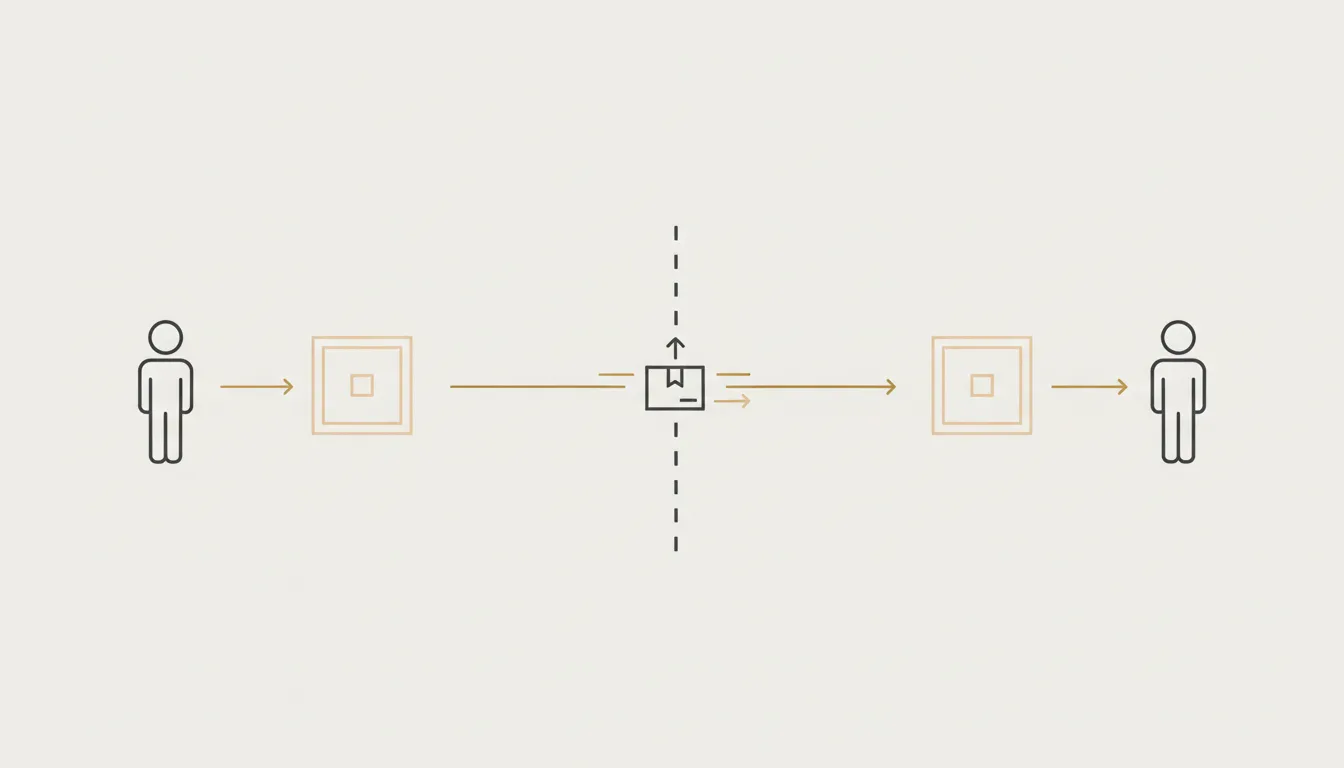
US gift tax is a tax on the donor, not on the artwork or on the recipient. Whether it applies depends on who the donor is for tax purposes — a US citizen or US-domiciled resident is subject to US gift tax on gifts of property wherever that property sits or travels, including artwork shipped to a recipient in another country. A donor who is a nonresident, non-citizen typically faces US gift tax only on certain US-situated tangible property, a narrower and more fact-specific rule.
The artwork physically crossing a border — being shipped, hand-carried, or handed over abroad — does not create a separate "border" tax event on its own. The IRS frames the gift tax as a tax on the transfer of property during the donor's life, and the annual exclusion that shields most personal gifts from tax is $19,000 per recipient for 2026, per the IRS's published inflation adjustment. A gift above that amount to one person in one year generally requires the donor to file Form 709, even if no tax ends up owed once lifetime exclusion amounts are applied.
The other side of the transaction: what the recipient may owe the IRS in paperwork
Receiving a gift is not itself taxable income to the recipient under US law, and that stays true when the gift is an artwork sent from abroad. But a US person (a US citizen or resident) who receives gifts or bequests from a foreign individual or foreign estate exceeding $100,000 in a single year has an information-reporting duty, not a tax bill: the receipt must be disclosed on Form 3520. A different, separately adjusted threshold applies to gifts treated as coming from foreign corporations or foreign partnerships.
Form 3520 is informational — filing it does not, by itself, create US tax on the gift. The consequence for skipping it when required is a penalty under Internal Revenue Code section 6039F: 5% of the gift's value per month it is late, capped at 25%, unless the taxpayer shows reasonable cause. This is the piece most often missed in cross-border art gifting, because the focus tends to stay on the donor's gift tax exposure and skip the recipient's separate reporting duty entirely.
Shipping and customs are a different conversation than tax
Customs declarations, import duties, and carrier paperwork when an artwork physically enters a country are governed by that country's customs authority, not by gift tax rules. A piece can be correctly declared for customs at import and still raise an open gift tax or Form 3520 question for the people on either end of the gift, because the two systems ask different questions: customs asks what is entering the country and its declared value for duty purposes; gift tax and Form 3520 ask who gave what to whom, and how much.
Documentation that answers both conversations at once — a signed acquisition record, an appraisal or invoice with the artwork's value, and a certificate of authenticity — is worth assembling before the piece ships, not after a question comes up.
This text is informational and is not tax advice; consult your accountant or tax adviser.
From the studio
The view from the studio
Most of the collectors who buy directly from the studio and later have a piece shipped abroad, or who plan to give a piece to family living in another country, are not asking about tax at all at first — they are asking how the shipment works. The studio's role in that conversation is limited and deliberate: it can hand over the acquisition term, the invoice, the certificate of authenticity, and the conservation guide that travel with every piece, and it can point to where the tax and reporting questions actually live. It cannot, and does not, advise on gift tax or on Form 3520 — that determination depends on the donor's and recipient's own residency, citizenship, and broader financial picture, which is exactly the kind of judgment that belongs to an accountant, not to an art studio.
Frequently asked
Does gifting art across a border trigger gift tax?
Not automatically. US gift tax depends on the donor's citizenship and residency, not on whether the artwork crosses a border. A US citizen or US-domiciled donor is generally subject to US gift tax rules on a gift of art regardless of where the recipient lives, while a gift that also involves a US person receiving property from a foreign donor above $100,000 raises a separate reporting duty on Form 3520, which is informational rather than a tax.
What should a foreign buyer know before acting on this?
A buyer or recipient outside the US should confirm, before the piece ships, which country's tax rules apply to them as either donor or recipient, and separately check that country's own gift, inheritance, or import rules — US gift tax rules described here apply to US donors and to US persons receiving foreign gifts, not to every cross-border transaction. Keeping the studio's invoice, certificate of authenticity, and acquisition term on file makes that conversation with an accountant faster on either side.
Does this differ for a US buyer vs a European buyer?
Yes, because the frameworks are separate systems. A US citizen or resident giving art follows the US gift tax rules described above, including the $19,000 annual exclusion for 2026 and the Form 709 filing trigger. A European buyer is generally outside the US gift tax system unless US-situated property or a US person on the other end of the gift is involved, and instead falls under their own country's gift, inheritance, or wealth-transfer tax regime, which this page does not cover — confirm with a local advisor.
Who handles this in practice — the artist, a shipper, or the buyer?
None of them files the tax paperwork for the other. The studio provides the documentation that travels with the piece — invoice, certificate of authenticity, acquisition term — and confirms with the studio's own shipping practice case by case; a shipper or courier handles customs declarations and import logistics; and the donor or recipient, working with their own accountant, is responsible for any gift tax filing or Form 3520 reporting that applies to them.
What could go wrong if this step is skipped?
For the donor, an unreported gift above the annual exclusion can complicate the accounting of lifetime exclusion amounts later, even when no tax is currently due. For a US person receiving a large gift from abroad, failing to file Form 3520 when required carries a penalty of 5% of the gift's value per month late, up to 25%, under section 6039F — a paperwork mistake with a real cost, separate from any tax owed.
Sending a piece abroad, or receiving one as a gift?
Ask the studio about documentation and international shipping for a specific piece — for tax questions, your own accountant is the right call.
Sources
- Internal Revenue Service (IRS) — 2026-09-27
- Internal Revenue Service (IRS) — 2026-09-27
Published on