What happens if the exchange rate moves between ordering art and paying for it?
Nothing about the studio's price changes: it stays fixed in Brazilian reais from reservation onward. What moves is the foreign-currency equivalent — the USD or EUR figure calculated at the moment of payment, not at reservation. Unless a rate is locked in advance, the buyer settles at whatever the market rate is on the day the transfer actually goes through.
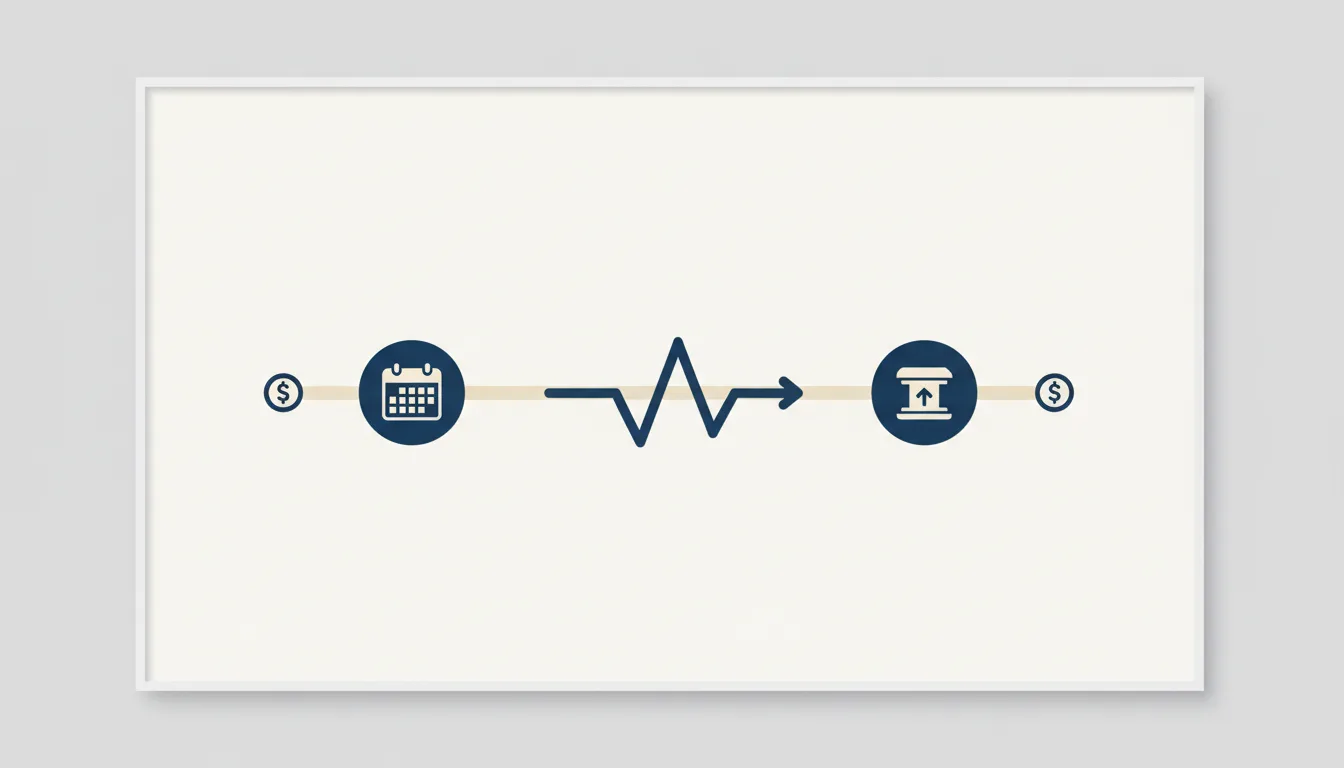
The reservation date and the payment date are rarely the same day
Buying an original painting from a studio is not an instant checkout. A piece is typically reserved during a conversation — while packing logistics, the acquisition agreement, and the payment method get worked out — and the actual wire transfer often lands days or weeks later. That gap is normal and expected in a direct, person-to-person sale; it is not a delay in the transaction, it is the transaction. But it is also the exact window in which a currency pair can move.
What actually moves: the foreign-currency figure, not the reais price
At Perfeito Studio, every piece is priced and quoted in Brazilian reais (R$) — that number is the reference, and it does not drift because a currency moved. What drifts is the equivalent a foreign buyer sees in USD or EUR: the same R$6,400 painting converts to a slightly different dollar figure depending on the day it is calculated. If a buyer was given an approximate USD reference at the time of reserving a piece, that figure was only ever an estimate for that moment — not a price the studio is quoting in dollars.
Who absorbs the difference if nothing is locked in advance
Absent a specific arrangement to fix a rate ahead of time — the kind of forward contract described in this studio's guide to currency hedging for a large international art purchase — a cross-border transfer converts at whatever the market rate is on the day it settles, not on the day the piece was reserved. In practice, that means the buyer is the one exposed to the move: if the reais weakens against the dollar between reservation and payment, the same painting costs the buyer slightly fewer dollars; if it strengthens, it costs slightly more. The studio's reais price is unaffected either way.
What to ask before wiring the payment
For a single painting, most individual buyers never set up a forward contract — the amounts involved rarely justify the cost and paperwork of locking a rate through a bank or FX broker. The practical alternative is simpler: ask, close to the actual payment date, what the current reais-to-foreign-currency figure looks like, rather than relying on a number mentioned earlier in the conversation. Payment terms, timing and the receiving details for a given country are worked out directly with the studio once a piece is confirmed — confirm the specifics with the studio rather than assuming a fixed policy.
This is general information, not financial advice; talk to your bank or a currency specialist about your own situation.
From the studio
The studio's view
In practice, the studio keeps the number anchored in reais and treats any dollar or euro figure as a live reference rather than a fixed quote — it is the only honest way to talk about price with someone paying from another currency, since the number on the day a piece is reserved is not the number on the day it actually gets paid for. Collectors who ask about this early, before wiring anything, are doing the conversation correctly; it is a logistics question, not a negotiation.
Frequently asked
What happens if the exchange rate moves between ordering art and paying for it?
The studio's price stays fixed in Brazilian reais. Only the foreign-currency equivalent moves, and it is calculated using the exchange rate on the day the payment actually settles, not the day the piece was reserved.
What should a foreign buyer know before acting on this?
Any USD or EUR figure mentioned when a piece is reserved is an approximation for that moment, not a locked price. Ask for an updated figure close to the actual payment date rather than relying on an earlier estimate, and confirm current payment terms directly with the studio.
Does this differ for a US buyer vs a European buyer?
The mechanism is the same for any foreign currency: the reais price is fixed, and the buyer's own currency equivalent floats with whatever pair is relevant — USD/BRL for a US buyer, EUR/BRL for a European one. Only the specific numbers differ, not the underlying logic.
Who handles this in practice — the artist, a shipper, or the buyer?
Payment terms and receiving details are worked out directly between the buyer and the studio during the acquisition conversation, not through a shipper or a third party. A shipping company handles logistics for the artwork itself, not the currency side of the payment.
What could go wrong if this step is skipped?
A buyer who assumes an early USD or EUR estimate is a locked price can be surprised by a slightly different final figure at the time of payment. It is not an error or a hidden fee — it is simply the exchange rate on the payment date rather than the reservation date — but confirming the current figure beforehand avoids that surprise.
Ask about current payment terms before you wire anything
Every acquisition is confirmed directly with the studio — currency, timing and receiving details included.
Sources
- OFX — 2026-09-27
Published on