What import VAT and duty apply to art entering the European Union?
Original paintings entering the European Union under customs code 9701 are generally exempt from customs duty, but import VAT still applies at clearance. The rate is not uniform: Directive 2006/112/EC leaves the choice to each member state under Article 103, so a painting can face 5.5% in France, 7% in Germany, or a different rate elsewhere.
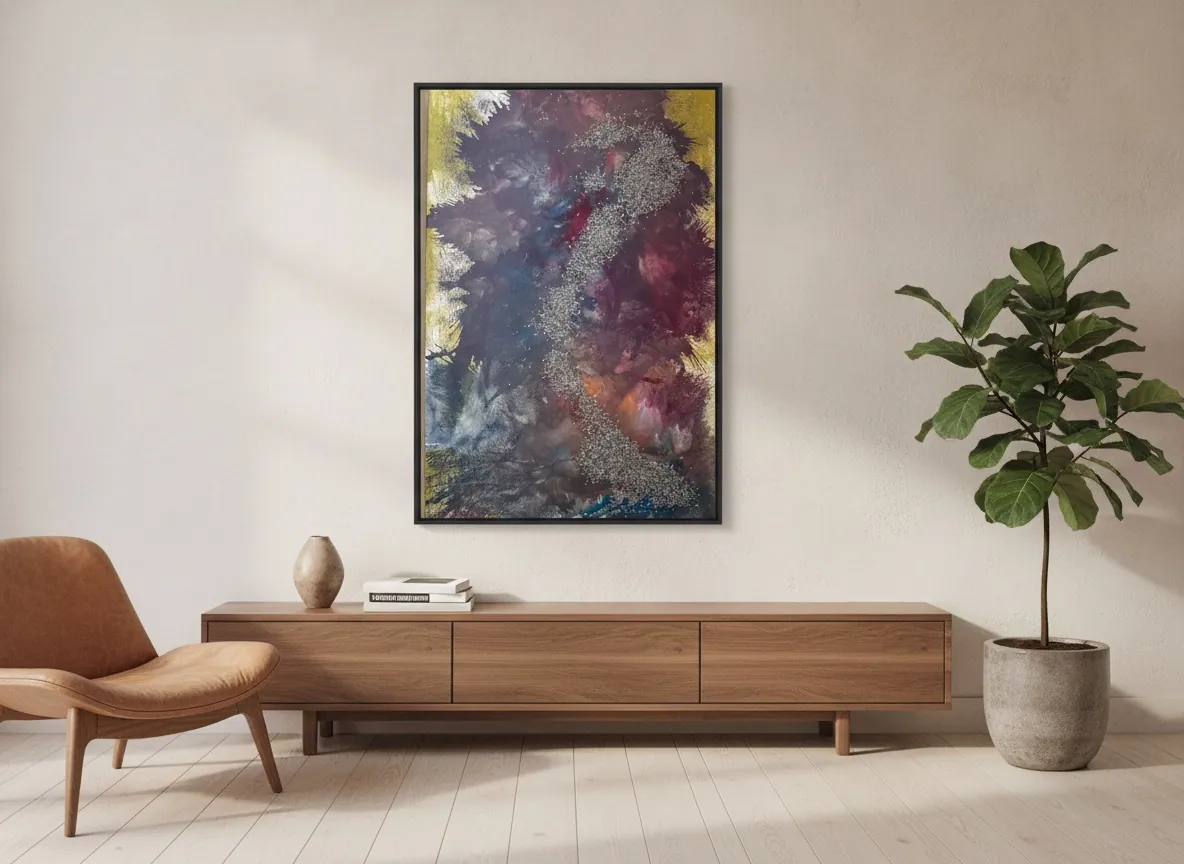
Is there customs duty on original paintings entering the EU?
Under the EU's tariff nomenclature, an original painting made entirely by hand by the artist is classified under customs code 9701 — the heading the VAT Directive (2006/112/EC) uses to define "works of art" in Annex IX, Part A, alongside original engravings (9702) and original sculptures (9703). Goods in this chapter — Chapter 97, "Works of art, collectors' pieces and antiques" — carry duty-free tariff treatment under the EU's common customs regime; a 2023 European Commission proposal on customs reform for distance sales lists Chapter 97 under the "0% ad valorem" bucket, reflecting the existing tariff schedule rather than proposing a change to it.
Duty-free is not the same as tax-free, though. Whatever value is assigned to a shipment for customs purposes is calculated under Regulation (EU) No 952/2013, the Union Customs Code. Its Article 70 sets the transaction value — "the price actually paid or payable for the goods when sold for export to the customs territory of the Union" — as the primary basis, adjusted for costs such as packing or delivery to the point of entry. That customs value is the figure the destination country's import VAT is then calculated on, even though no customs duty is charged on top of it.
How import VAT on art works — and why the rate varies by country
Article 103 of the VAT Directive gives every EU member state an option, not an obligation: it may apply one of its existing reduced VAT rates to the import of works of art, collectors' items and antiques as defined in Article 311(1) — the same definition that covers hand-painted works under code 9701. A state that never opts in simply charges its standard VAT rate on art imports instead.
Because the choice is optional and set nationally, the actual percentage differs from one EU country to the next. France applies a reduced rate of 5.5% to imports of works of art, collectors' items and antiques, regardless of who is importing them — dealer, intermediary or private individual — under Article 278-0 bis of the French tax code, as confirmed by the French tax authority. Germany reinstated a 7% reduced rate on the delivery, import and intra-Community acquisition of works of art — including CN 9701 paintings — from 1 January 2025, after a 2024 tax law amended §12 of its VAT Act to remove an exclusion that had applied since 2014; the Bavarian tax authority's own administrative guidance on the change ties it directly back to Article 103 of the VAT Directive. Other member states may apply a different reduced rate, or none at all — this is genuinely not harmonised across the EU, and the two examples above should not be read as the rate everywhere.
The margin scheme, briefly
Articles 311 to 325 of the VAT Directive set out a separate regime — the margin scheme — for "taxable dealers": businesses that buy second-hand goods, works of art, collectors' items or antiques with a view to resale. Under this scheme, a dealer is taxed only on their profit margin, not on the full resale price, which avoids taxing the same value twice as a work changes hands through the trade.
This matters mainly for galleries and resellers, not for someone importing a painting bought directly from the artist. A private collector acquiring a piece straight from an artist's studio is not a "taxable dealer" under Article 311(1)(5), so the margin scheme has no bearing on that import; ordinary import VAT, calculated on the full customs value described above, is what applies instead. One detail worth flagging for anyone reselling later: as of 1 January 2025, at least one member state (France) restricted the option to combine the reduced import rate with the margin scheme on a subsequent resale of the same piece — a change relevant to dealers, not to a collector who buys to keep.
What documentation does a buyer or shipper need at EU customs?
A shipment clears faster when the paperwork answers the customs officer's question before it is asked. In practice, that means a commercial invoice that states plainly what the object is — an original, hand-executed painting, not a print or reproduction — along with its materials, dimensions and declared value; the recommended customs code, 9701; and supporting documentation, such as a certificate of authenticity, that backs up the description if it is queried.
Misclassifying a hand-painted work as "decor," "printed art" or a generic manufactured good is one of the more common ways a shipment ends up reassessed, delayed, or taxed under the wrong rate. None of this replaces professional advice. This page is general information, not customs or tax advice — a licensed customs broker or tax advisor in the destination country is who can confirm, before a piece ships, exactly what classification and VAT rate will actually apply to it.
From the studio
From the studio
When a collector in Europe reaches out about a piece, one of the first things we prepare — well before any shipping date — is the paperwork the painting will need at the border. We can't tell a buyer what their own country will charge; that's outside what the studio controls or should be advising on. What we can control is that the invoice describes the piece accurately: an original, hand-painted mixed-media work on canvas, not a print, with the customs code we recommend, 9701, stated plainly rather than left for a courier to guess at.
Every work also carries its Archive ID — the number tied to its certificate of authenticity — and that reference travels with the shipment, so a customs official, or the collector themselves months later, can trace exactly what the piece is and where it came from. It's a small amount of extra preparation on our side, and it tends to be the difference between a shipment that clears without drama and one that sits waiting for someone to answer a question we could have answered up front.
Frequently asked
Do I have to pay customs duty when importing a painting into the EU?
Generally no. Original paintings, drawings and pastels made entirely by hand fall under customs code 9701, and the EU's common customs tariff treats this category — Chapter 97, works of art — as duty-free. What is not waived is import VAT, which is a separate charge applied at clearance regardless of the duty-free tariff classification, so a shipment can owe VAT even though no customs duty applies to it.
What VAT rate will I actually pay when a painting arrives at EU customs?
It depends entirely on which EU country the painting enters. Article 103 of the VAT Directive lets each member state choose whether to apply one of its reduced VAT rates to imports of works of art, and if so, which rate. France applies 5.5%; Germany has applied 7% since January 2025. Other countries may apply a different reduced rate or the standard rate instead, so the destination country, not a single EU-wide figure, decides the number.
Does the margin scheme apply if I buy a painting directly from the artist?
Not usually. The margin scheme in Articles 311 to 325 of the VAT Directive is built for taxable dealers — galleries and resellers who buy work with a view to reselling it and are taxed only on their profit margin. A private collector importing a piece bought directly from the artist's own studio is not a taxable dealer, so ordinary import VAT rules apply to that shipment instead of the margin scheme.
What paperwork does a painting need to clear EU customs without delay?
A commercial invoice that accurately describes the work — that it is an original, hand-executed painting rather than a print, its materials, dimensions and declared value — plus the recommended customs code, 9701, and supporting documents such as a certificate of authenticity. Vague or inaccurate paperwork, more than the tax itself, is the most common reason a shipment gets held up or reassessed at the border.
Does buying directly from a studio in Brazil avoid EU import VAT?
No. Brazil is outside the European Union, so any painting shipped from a Brazilian studio to a buyer in the EU is an import from a third country like any other, and import VAT applies at whatever rate the destination member state has set. Buying directly from the artist removes a gallery's resale margin from the price, but it has no effect on the customs duty or VAT treatment applied at the border.
Who is responsible for paying the import VAT and any customs fees — the buyer or the seller?
Unless a seller has specifically agreed to a delivered-duty-paid arrangement and prepaid the charges, it is standard practice for the buyer, as the importer of record, to pay import VAT and any clearance fees directly to customs or to the courier when the shipment arrives. This is worth confirming as part of the shipping quotation before a piece ships, so there is no surprise at delivery.
Ask the studio about shipping to your country
Every work ships with the invoice, customs code and certificate documentation a shipment needs — message the studio on WhatsApp to talk through your specific destination before you commit.
Sources
- EUR-Lex — Council Directive 2006/112/EC on the common system of value added tax (Publications Office of the European Union) — 2026-09-20
- EUR-Lex — Council Directive 2006/112/EC on the common system of value added tax (Publications Office of the European Union) — 2026-09-20
- EUR-Lex — Council Directive 2006/112/EC on the common system of value added tax (Publications Office of the European Union) — 2026-09-20
- EUR-Lex — Regulation (EU) No 952/2013 laying down the Union Customs Code (Publications Office of the European Union) — 2026-09-20
- BOFiP-Impôts — Direction générale des Finances publiques (French tax authority) — 2026-09-20
- Bayerisches Landesamt für Steuern (Bavarian State Tax Office) — 2026-09-20
- EUR-Lex — European Commission proposal COM(2023) 259 final — 2026-09-20
Published on