Do you pay import duty on art entering the United States?
In most cases, no — the US does not charge import duty on an original painting. Hand-made paintings, drawings and pastels fall under Harmonized Tariff Schedule heading 9701, at a general duty rate of "Free." You still file a customs entry, and your state may separately charge a use tax — zero federal duty is not the whole story.
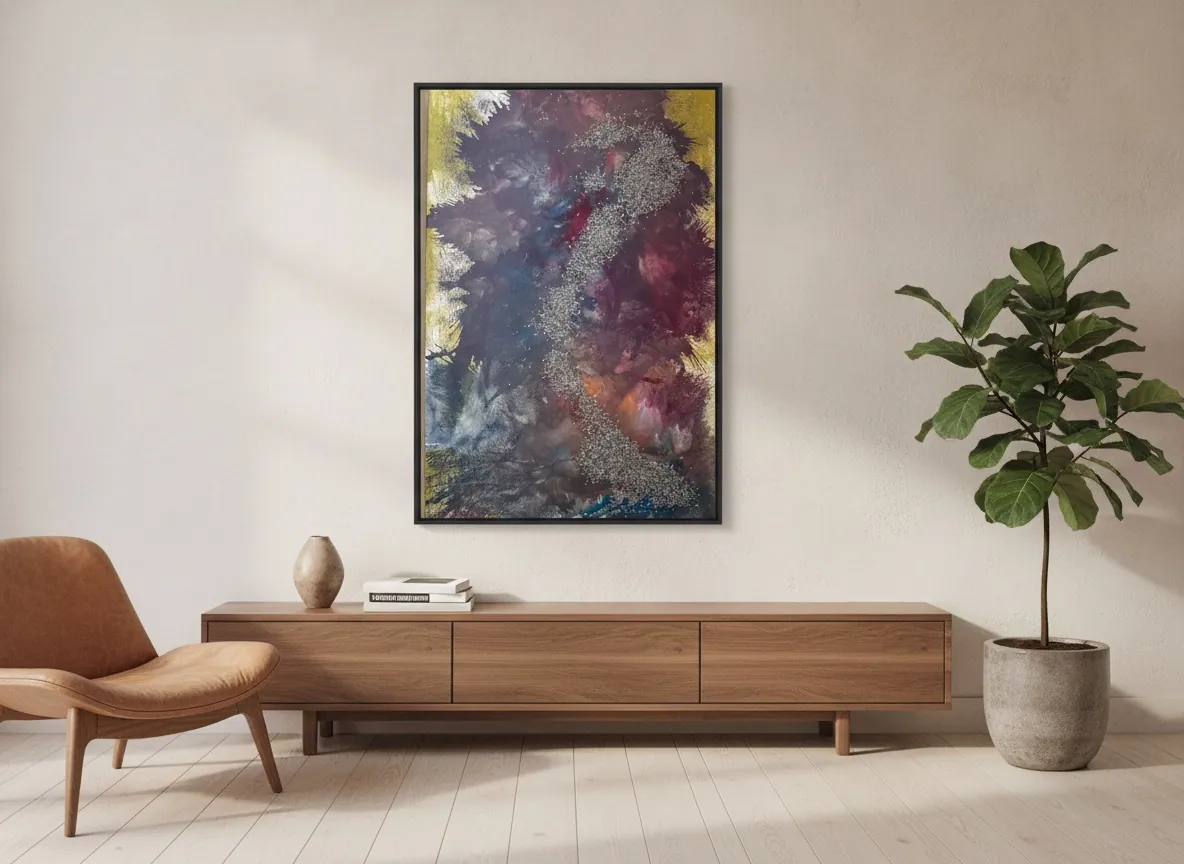
Does the United States charge import duty on original paintings?
Yes, in the sense that every piece crossing the border needs a customs entry. No, in the sense that matters most to a buyer's budget: original paintings, drawings and pastels executed entirely by hand are classified under Harmonized Tariff Schedule (HTS) heading 9701, and every subheading under it — 9701.21, 9701.22, 9701.29, 9701.91, 9701.92 and 9701.99 — carries a general duty rate of Free. Original engravings, prints and lithographs (heading 9702) and original sculpture in any material, including up to the first twelve castings from a sculptor's model (heading 9703), are duty-free on the same basis. This is not a loophole or a temporary policy; it is the ordinary tariff treatment U.S. Customs and Border Protection (CBP) has applied to fine art for decades, and it holds whether the work is a $400 study or a museum-grade canvas.
What has moved, repeatedly, over 2025 and 2026 is the layer of tariffs sitting on top of the ordinary tariff schedule — the trade-policy surcharges applied under emergency and national-security authorities rather than under Chapter 97 itself. The White House's IEEPA-based "reciprocal" tariffs were struck down by the U.S. Supreme Court in February 2026, on the finding that the statute does not authorize the President to impose tariffs at all. A replacement 10% Section 122 duty ran from February 24 to July 24, 2026. Since July 24, 2026, a new set of Section 301 tariffs of 10–12.5% applies to imports from roughly sixty trading partners. In every one of these programs, CBP carved out an "informational materials" exemption that names artworks explicitly and covers HTS headings 9701 through 9705 — so a painting has stayed duty-free through all three regimes. Given how fast this area has moved in the last eighteen months, confirm the exemption is still in force at the moment your piece ships, rather than assuming today's rule will still be today's rule next year.
What HTS heading 9701 actually requires
Heading 9701 is narrower than "art" in the everyday sense. To qualify, a painting, drawing or pastel — ancient or modern — must be executed entirely by hand. Hand-drawn architectural, engineering, industrial, commercial or topographical plans fall under a different heading (4906) and do not get the same treatment. Frames travel with the artwork's classification only if they are of a kind and value normal to the piece; an unusually elaborate or valuable frame can be classified — and taxed — separately.
Documentation matters more than most buyers expect. Under 19 CFR 10.48, an invoice for artwork claimed duty-free under headings 9702 or 9703 must state whether the piece is an original, a replica, a reproduction or a copy, and must name the artist who produced it, unless the CBP officer at the port is satisfied this isn't necessary to decide the classification. A vague invoice line like "decorative painting" invites exactly the scrutiny a correct one avoids — a customs officer who cannot tell an original from a print from the paperwork has no reason to extend the duty-free treatment automatically.
Formal entry, informal entry, and when you actually need a customs broker
Below a shipment value of $2,500, U.S. imports generally qualify for informal entry — a simplified process under 19 CFR 143.21 that the owner, purchaser, or their designated agent can file without a formal customs bond. Above that threshold, a formal entry is the norm, and it comes with more paperwork: a bond, a more detailed declaration, and — in practice, even if not in every case as a strict legal requirement — a licensed customs broker doing the filing. Most of Perfeito Studio's works fall in the R$ 2,400–8,800 range — roughly US$470–1,700 at current exchange rates, on the piece price alone. That sits below the informal-entry line by itself, but international freight, crating, and insurance for a large canvas can add several hundred dollars, which is enough to push a larger piece close to the $2,500 threshold — worth confirming with the studio and the shipper before booking freight.
One detail that surprises first-time buyers: CBP can require a formal entry even below $2,500, under 19 CFR 143.22, whenever it decides formal entry is needed for import admissibility enforcement, revenue protection, or the efficient conduct of customs business. In practice this is uncommon for a straightforward original painting with a clear invoice, but it means the $2,500 line is a general rule, not a guarantee. For a formal entry, or for any shipment where the classification isn't obviously a fine-art heading, working with a licensed customs broker who has handled artwork before is the practical safeguard — general parcel carriers without fine-art experience are the most common source of misclassification.
What the studio needs from you to ship a piece to the US
Whatever carrier or freight forwarder handles the shipment, the paperwork it needs to make the duty-free classification stick is the same paperwork any responsible studio should already be producing: a commercial invoice that names the artist, states plainly that the work is an original (not a print, reproduction or copy), gives the medium, dimensions and declared value, and — where the studio maintains one — cites an internal archive number. Perfeito Studio's certificate of authenticity and Archive ID (in the format AP-<SERIES>-<YEAR>-<NNN>, for example AP-TAE-2025-001) exist for curatorial and provenance reasons first, but they double as exactly the kind of documentation that answers a customs officer's question about originality in one glance instead of several.
Freight cost, packing and any import fees or duties in the destination country are the buyer's responsibility, not the studio's, and are quoted case by case once a specific piece and destination are confirmed — there is no fixed international shipping fee published, because heavily textured, large-format mixed-media works are packed differently case by case.
The exception: state use tax, and other costs that aren't federal duty
Zero federal customs duty is not the same as zero cost, and not the same as zero tax. A number of U.S. states apply their own use tax to property bought abroad and brought or shipped into the state for use — regardless of what CBP charged at the border. California's tax authority, the CDTFA, states this plainly and names artwork specifically: use tax applies to purchases of tangible personal property made outside the United States and shipped into California for use, and gives artwork, antiques, furniture, jewelry and clothing as its own examples. California carves out a narrow exemption — the first $800 of goods hand-carried into the state by an individual within a 30-day period — but is explicit that this exemption does not apply to anything sent or shipped rather than hand-carried, which is how a painting normally travels. Other states run similar use-tax regimes with their own thresholds and rules, so which one (if any) applies to you depends on where the piece is delivered, not on where it was made.
Add to that any brokerage or entry-processing fee your carrier or broker charges for handling the customs filing itself — a service fee, separate from any government duty — and the honest total cost of bringing a painting into the country is: federal duty, most likely zero; state use tax, possibly not zero, depending on your state; and a brokerage or handling fee, which is close to certain on a formal entry. This is general information, not customs or tax advice — confirm your specific situation, including whether your state assesses use tax on art, with a licensed customs broker or your own tax advisor before you commit to a purchase.
From the studio
The olhar do ateliê
Every piece that leaves this studio for a buyer outside Brazil travels with the same three documents, because the collector on the other end is usually the one dealing with customs, not us: a commercial invoice that states plainly this is an original work and names me as the artist, the signed Certificate of Authenticity with the piece's Archive ID, and the technical sheet with medium and dimensions. I write the invoice description myself rather than leaving it to whoever packs the crate, because I have seen how much smoother an entry goes when the paperwork already answers the obvious question before a customs officer has to ask it. I am not a customs broker and don't pretend to be one — for anything past the description on my own invoice, I tell international buyers to check with a broker in their own country before the piece ships, not after.
Frequently asked
Do I have to pay customs duty to bring an original painting into the United States?
In almost all cases, no. Original paintings, drawings and pastels made entirely by hand fall under HTS heading 9701, which carries a general duty rate of Free, and this has been the standard tariff treatment for decades. You still have to file a customs entry and declare the shipment; "duty-free" describes the tax rate, not an exemption from the paperwork itself.
Does it matter if my order is worth more than $2,500?
It can change the type of entry, not the duty rate. Shipments valued at $2,500 or less generally qualify for a simplified informal entry under 19 CFR 143.21. Above that, U.S. Customs and Border Protection normally expects a formal entry, which involves more documentation and, in practice, usually a customs broker. The painting is still duty-free either way under HTS heading 9701 — the difference is in the process, not the tax.
Will I need to hire a customs broker?
Not always as a strict legal requirement for a lower-value shipment, but in practice, yes, for most formal entries and for anything where the classification isn't obviously fine art. A broker experienced with artwork is worth the fee because misclassification by a general parcel carrier is the most common reason a duty-free painting ends up delayed or incorrectly taxed at the border.
Do the US tariffs from the news in 2025 and 2026 apply to my painting?
So far, no — but check before you ship, because this area has changed more than once in the last two years. The IEEPA "reciprocal" tariffs, the Section 122 tariff that followed, and the Section 301 tariffs now in effect all carved out an "informational materials" exemption that explicitly names artworks and covers HTS headings 9701 through 9705. A painting has stayed duty-free through all three programs, but this is not customs advice for your specific shipment — confirm current status with a broker at the time you ship.
If the federal duty is zero, is the import completely free of tax?
Not necessarily. Several U.S. states charge their own use tax on property bought abroad and brought or shipped into the state, independent of what CBP charges at the border. California, for example, applies use tax to artwork shipped in from a foreign purchase, with only a narrow exemption for goods hand-carried (not shipped) by an individual. Whether this applies to you depends on your state, not on the federal duty rate.
What paperwork does Perfeito Studio provide to make the import go smoothly?
Every acquisition includes a commercial invoice describing the piece as an original work and naming the artist, a signed Certificate of Authenticity with the work's internal Archive ID, and a technical sheet with medium and dimensions. This is the documentation customs regulations (19 CFR 10.48) point to when deciding whether a piece qualifies for duty-free treatment, and it travels with every shipment regardless of destination.
Shipping to the United States and want the details in writing first?
Tell us the piece and your destination city — we'll confirm the invoice description, documentation and shipping quote before you commit.
Sources
- U.S. Customs and Border Protection — Informed Compliance Publication, "Works of Art, Collector's Pieces, Antiques, and Other Cultural Property" — 2026-09-20
- U.S. International Trade Commission — Harmonized Tariff Schedule of the United States — 2026-09-20
- U.S. Customs and Border Protection — Informed Compliance Publication, "Works of Art, Collector's Pieces, Antiques, and Other Cultural Property" — 2026-09-20
- Cornell Law School, Legal Information Institute — 19 CFR § 143.21 — 2026-09-20
- Cornell Law School, Legal Information Institute — 19 CFR § 143.22 — 2026-09-20
- California Department of Tax and Fee Administration — Use Tax for Foreign Purchases — 2026-09-20
- U.S. Customs and Border Protection — IEEPA Tariffs Frequently Asked Questions — 2026-09-20
- U.S. Customs and Border Protection — CSMS #67844987 — 2026-09-20
- Office of the United States Trade Representative — Fact Sheet, July 2026 — 2026-09-20
- Skadden, Arps, Slate, Meagher & Flom LLP — client alert — 2026-09-20
Published on