Art for a hair transplant or hair restoration clinic
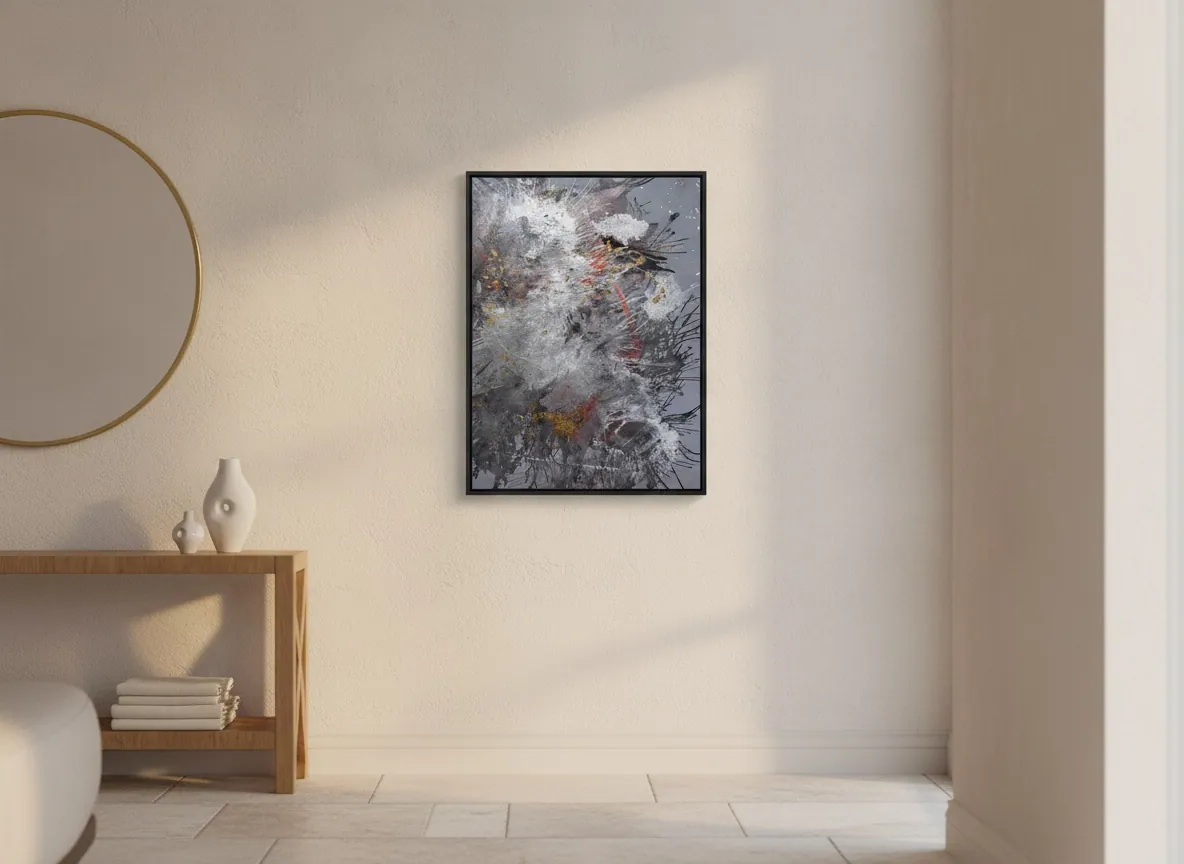
In a hair transplant or hair restoration clinic, the art should feel confident, not busy — a controlled abstract piece in a warm, neutral palette that a patient can look at for hours from a single reclined position, hung where it reads calmly under bright procedure-room lighting without competing with the clinical work happening nearby.
Why the art has to hold up for hours, not minutes
A hair transplant or hair restoration procedure is one of the longer single sessions in aesthetic medicine. According to the International Society of Hair Restoration Surgery, the patient is usually fully awake during graft placement, under local anesthesia, and a full session commonly runs 4 to 8 hours depending on the number of grafts. Some of that time is also spent in the reception or consultation area, before and after the procedure itself.
That timeframe changes the brief for the art in the room. A piece built to make a strong first impression from across a lobby and then fade into the background is the wrong choice here — the same person may be looking at it, on and off, for most of a day. A composition with a calm overall structure but real surface detail — sculpted texture, layered paint, fragments of gold leaf that catch the light differently as the day goes on — tends to reward that kind of return attention better than something flat, or, at the other extreme, busy enough to feel tiring past the first ten minutes.
Palette: confidence without clinical coldness
Procedure rooms run on bright, even, clinical light, and a reception area usually borrows some of that same lighting. In the studio's experience, a palette built from warm neutrals, low-key gold, and controlled earth tones reads as considered and reassuring in that setting, where a high-saturation, high-contrast piece can start to feel aggressive next to a scalp procedure, and a strictly black-and-white piece can read as colder than the practice likely wants a patient to feel.
This is also where the idea of "confidence" is best expressed through scale and material rather than subject: a controlled abstract composition, in a series built around metallic fragments over a dark or neutral ground, projects assurance without literal imagery of transformation, before-and-after contrast, or hair itself — none of which belong on a clinic wall.
Where it goes: reception, consultation room, or a recovery corner
In many hair restoration practices, reception is only one of several rooms where the art matters. A clinic running long sessions often has a private consultation room, a procedure suite, and sometimes a small area where a patient rests before leaving — and a patient may spend far more time in one of those rooms than in the waiting area itself. Placing the strongest piece where someone actually settles for the length of a session, and a calmer, smaller piece in reception, tends to serve the practice better than putting the largest canvas at the front desk and leaving the rooms behind it bare.
Discretion also matters on the way in and out. Many patients arriving for or leaving a hair restoration appointment would rather not be on display to the street, so the same logic that applies to other aesthetic-medicine specialties applies here: keep the art — and the seating around it — in the interior waiting area rather than a street-facing window, and let the piece communicate quality on its own rather than through any imagery that signals what kind of visit it is.
Size and placement for a patient who isn't walking past it
Reception seating in most hair restoration practices faces a single direction for a wait that tends to run longer than an average medical appointment, since consultation and scheduling both take time before a patient is called in. That fixed sightline argues for hanging the piece directly across from the seating, close to seated eye level, rather than off to the side where a patient has to turn to see it.
A piece between roughly 60 x 80 cm and 100 x 100 cm (23.6 x 31.5 in to 39.4 x 39.4 in) generally fills a single reception wall without crowding a front desk or signage, which tends to suit the compact layout of a specialty practice better than a hospital-style lobby. A larger format, from about 100 x 150 cm (39.4 x 59.1 in) up, only reads well where the wall is genuinely open and uninterrupted — less common in this kind of practice than a single well-placed mid-size piece.
From the studio
From the studio
Most of the rooms my paintings go into are rooms people pass through — a hallway, a living room glanced at on the way to the kitchen. A hair restoration suite is different: the person looking at the piece is often in the same chair, at roughly the same angle, for several hours at a stretch. That changes what I think a painting needs to do. It can't rely on a strong first impression and then recede; it has to keep giving something back on the fourth or fifth look, well into a long session — the way texture and gold leaf fragments catch overhead light differently as the hours pass, even while the room's lighting itself barely changes.
I trained as an architect before I trained as a painter, and I still think about a room's fixed viewpoints as much as its floor plan. A chair that doesn't move for hours is as real a design constraint as a doorway or a window. A piece with a calm overall structure and a texture that rewards sustained, close looking — rather than one built for a single glance from across a lobby — tends to hold up better in that kind of room.
Frequently asked
What art works in a hair transplant clinic?
A controlled abstract piece in a warm, neutral or low-key gold palette tends to work best — something with enough surface texture to reward a long look without turning busy or high-contrast. Because hair restoration sessions often run several hours with the patient awake under local anesthesia, the art gets looked at far longer than in a typical waiting room, so a piece built for a single glance from across a lobby tends to wear thin well before the session ends.
Should the art reflect confidence and transformation?
It can, without stating it literally. A piece built around a passage from a darker, denser ground toward light or gold, rather than one that stays flat and uniform throughout, can echo a sense of transformation without text, a slogan, or before-and-after imagery, none of which belong in a clinical reception. The read should stay abstract — confident in scale and palette, not literal in subject.
What palette fits a premium medical clinic?
Warm neutrals, muted golds, and controlled earth tones generally sit better next to bright procedure-room lighting than high-saturation color or stark black-and-white, which can read as cold rather than reassuring. In the studio's experience, a palette with some warmth keeps a clinical room from feeling sterile while still reading as considered and upscale rather than merely decorative.
What size for a reception wall?
Most hair restoration reception areas are compact rather than open-plan, so a piece between 60 x 80 cm and 100 x 100 cm (23.6 x 31.5 in to 39.4 x 39.4 in) usually fills the main wall without crowding the seating or the front desk. A larger piece, from around 100 x 150 cm (39.4 x 59.1 in), only makes sense where there is a genuinely open wall with no competing furniture or signage.
Original art or print for a specialty clinic?
An original carries texture — sculpted paste, gold leaf fragments, visible brushwork — that a print flattens into a single plane, and that texture is part of what holds attention over a multi-hour session. A print can still work as a placeholder, but it reads differently under the kind of close, repeated looking a hair restoration reception gets, more than in a space people only pass through.
Choosing the right piece for your hair clinic
Send photos and measurements of the reception, consultation room, or recovery area, and we'll help you find a piece that holds up over long sessions.
Sources
- International Society of Hair Restoration Surgery (ISHRS) — 2026-09-28
- Shapiro Medical Group — 2026-09-28
Published on