What does "delivered duty paid" mean, and does it apply to buying art?
Delivered Duty Paid (DDP) is an Incoterms® 2020 rule under which the seller pays the shipping, the import duties, and the destination-country taxes, delivering the goods ready for unloading with nothing left for the buyer to clear. It applies to any goods crossing a border, including art. Most independent studios, including Perfeito Studio, do not sell on DDP by default — the buyer arranges or pays for shipping and any import duties or taxes at destination. Confirm with the studio before assuming a quote includes duty.
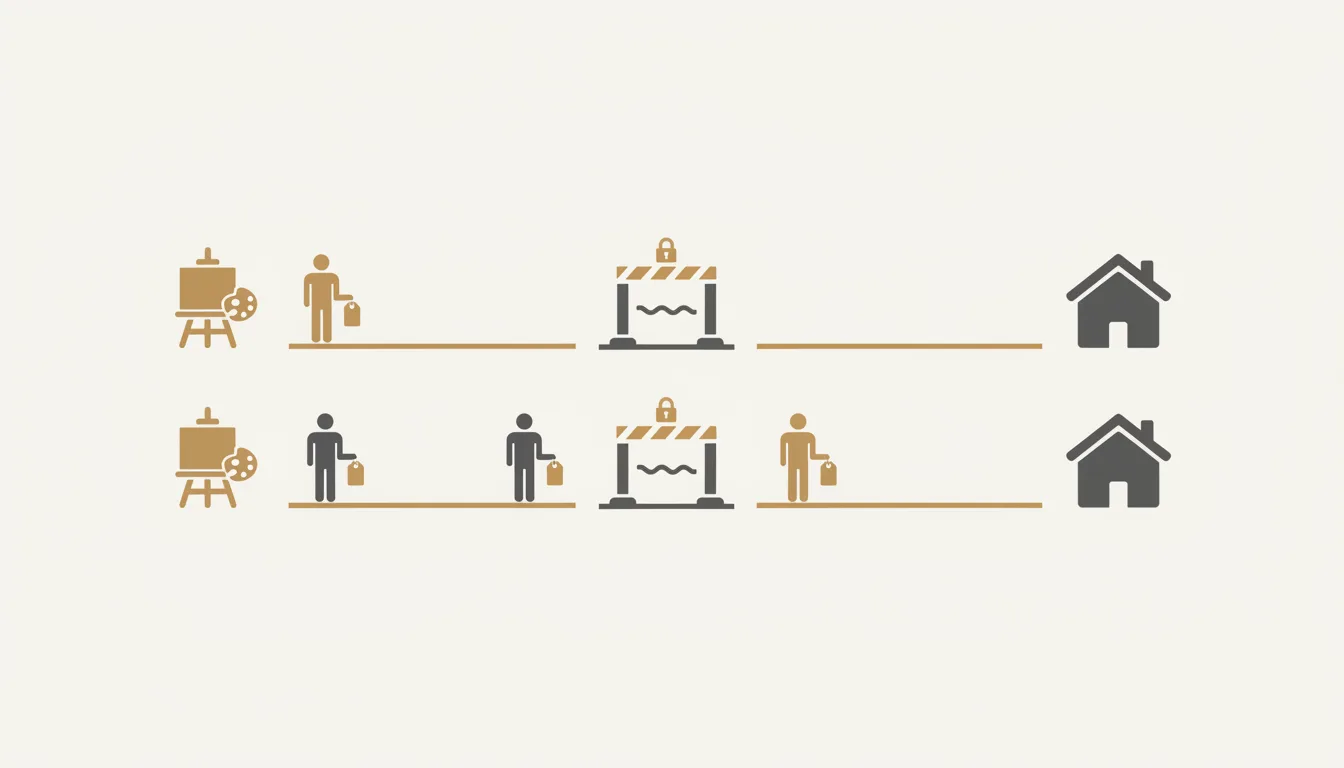
What DDP actually means under Incoterms 2020
Delivered Duty Paid is one of the eleven Incoterms® 2020 delivery rules published by the International Chamber of Commerce. Under DDP, the seller is responsible for the full chain: export clearance, freight, insurance if arranged, import clearance, and the destination country's duties and taxes. The ICC Academy's own explainer states that under DDP the seller handles "all customs formalities, including export, import – which may be difficult for a foreign seller –, and, if applicable, transit procedures." Risk transfers only at the very end: "the seller delivers the goods and transfers the risk of loss or damage to the buyer when the goods are at the buyer's disposal at the agreed point in the designated destination, ready for unloading from the arriving vehicle." In practice, DDP is the rule that puts the most work and the most risk on the seller's side of the transaction.
DAP, the rule most independent art sellers use instead
Delivered at Place (DAP) is the other Incoterms® 2020 rule that comes up constantly in the same conversation, because it looks similar on the surface but splits the responsibility at a different point. Under DAP, the seller still delivers the goods to the agreed destination and covers the transport and risk up to that point — the ICC Academy describes it as "the seller delivers the goods and transfers the risks to the buyer once the goods are at the agreed place of destination, ready for unloading." The difference is customs: "the buyer is responsible for carrying out and paying for import clearance." That single line is the practical distinction most buyers of independent art need — under DAP, the studio ships and the collector clears customs and pays duty at the border.
Why an independent studio rarely offers DDP
DDP asks a small, independent seller to register for tax purposes in the buyer's country, front the import duty before ever being reimbursed, and navigate a customs regime it does not operate in day to day. The ICC Academy's own guidance flags this directly, noting it "is not always straightforward for the seller to handle import clearance under DDP," and that some countries' customs authorities require the local importer — the buyer — to carry out clearance themselves, in which case "DDP cannot be used" at all. That is why most studios selling one-off, made-to-order or limited-run work default to the buyer-pays-duty arrangement (closer to DAP or a variant of it) rather than DDP. Perfeito Studio follows the same pattern: shipping and any destination-country duties or taxes on an international purchase are the buyer's responsibility, quoted per destination on request. If a specific order needs a DDP-style arrangement, confirm with the studio before assuming it is available — it is not the standing policy.
What a foreign buyer should check before the purchase, not after
The Incoterm named on an invoice or shipping quote determines who gets a customs bill after the courier arrives, so it is worth confirming before payment rather than discovering it at the door. Three things to ask: which rule the quote uses (DDP, DAP, or an informal buyer-pays-duty arrangement without a formal Incoterm), whether the quoted shipping price already includes destination duty or excludes it, and who is named as the importer of record on the paperwork — because that is the party the customs authority will bill. None of this changes the artwork itself; it changes who receives an invoice from customs weeks after the piece has shipped.
From the studio
How the studio actually handles shipping and duty
Every international inquiry eventually reaches the same question: who pays the customs bill. The studio's answer has been consistent since the first cross-border sale — shipping is quoted per destination, and any import duty or tax the buyer's own country charges on arrival is the buyer's cost, not folded into the sale price. That is not a lack of service; it is the same reason most independent ateliers avoid Delivered Duty Paid — registering for tax purposes in a dozen countries to guarantee a duty-inclusive price is not realistic for a small, made-to-order practice. What the studio does control is the paperwork that makes the buyer's side of that calculation predictable: professional packaging, a clear invoice, and, on request, the documentation a customs broker or bank asks for before releasing a shipment.
Frequently asked
What does "delivered duty paid" mean, and does it apply to buying art?
Delivered Duty Paid (DDP) is an Incoterms 2020 rule in which the seller pays shipping and the destination country's import duties and taxes, delivering the goods with nothing left for the buyer to clear. It applies to any good crossing a border, including art, but most independent studios do not sell on this basis — confirm with the studio before assuming a quote includes duty.
What should a foreign buyer know before acting on this?
Confirm which arrangement a shipping quote actually uses before paying: DDP (seller covers duty), DAP (buyer clears customs and pays duty at the border), or an informal buyer-pays-duty arrangement. The quote should say explicitly whether destination duty is included, because that determines whether a customs bill arrives separately after the artwork does.
Does this differ for a US buyer vs a European buyer?
The Incoterms rule itself does not change by buyer location, but the duty rate, import paperwork, and customs process are set by each destination country's own authority, not by the seller. A US buyer and an EU buyer under the same DAP shipment would each clear customs under their own country's rules and pay whatever duty and tax their own customs authority assesses — confirm the specific figure with a local customs broker or the destination country's customs authority rather than assuming it matches another country.
Who handles this in practice — the artist, a shipper, or the buyer?
Under the buyer-pays-duty model most independent studios use, the studio (or its shipper) handles packaging and the transport itself, while the buyer — sometimes through a customs broker — handles import clearance and pays any duty or tax at the destination. Under a full DDP arrangement, which is uncommon for independent sellers, the seller or its agent would also handle import clearance and duty payment.
What could go wrong if this step is skipped?
If the shipping term is never clarified, a buyer can be surprised by a customs bill, or a shipment can be held at the border while duty is sorted out, weeks after the sale was agreed. Asking which term applies — and getting it stated on the invoice — before payment is what avoids both outcomes. This explainer describes how the mechanism works in general; it is not legal or customs advice for a specific shipment.
Buying from outside Brazil and want the shipping terms in writing?
Tell Alyne your destination country, and she'll confirm the shipping quote and who is responsible for import duty before you order.
Sources
- ICC Academy (International Chamber of Commerce) — 2026-09-27
- ICC Academy (International Chamber of Commerce) — 2026-09-27
- ICC Academy (International Chamber of Commerce) — 2026-09-27
- Perfeito Studio (site.json, internal source of record) — 2026-09-27
Published on