Journal · Exhibitions & museums
The best art museums in France beyond the Louvre
Beyond the Louvre, four museums define French art beyond antiquity: the Musée d'Orsay holds the world's largest Impressionist collection, in a former Belle Époque train station; the Centre Pompidou anchors modern and contemporary work; the Musée de l'Orangerie houses Monet's water lily cycle; and the Musée Rodin shows sculpture at human scale.
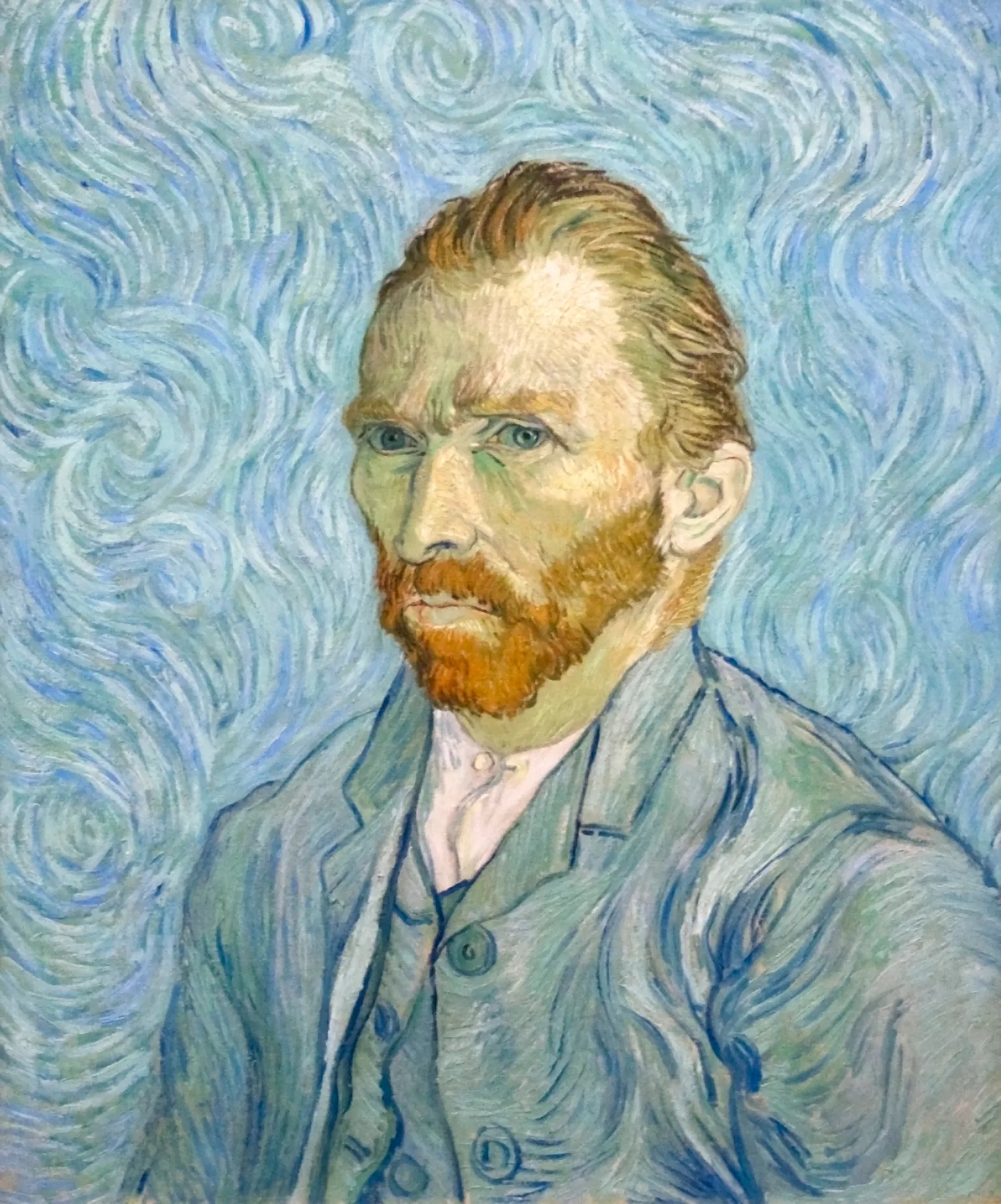
Musée d'Orsay — the reference collection for Impressionism
The Musée d'Orsay occupies the former Gare d'Orsay, a railway station built between 1898 and 1900 for the Exposition Universelle. The building reopened as a museum in December 1986, its central nave — where train platforms once stood — now holding the collection under a restored glass roof.
It is described as home to the world's largest collection of Impressionist and post-Impressionist masterworks, with roughly 2,000 paintings and 600 sculptures installed when the museum opened. Vincent van Gogh's Self-Portrait, painted in September 1889 and held by the museum under accession number RF 1949 17, is one of its most recognized paintings.
Centre Pompidou — modern and contemporary art, currently in transition
For twentieth- and twenty-first-century work, the Centre Pompidou is the usual counterpart to the Musée d'Orsay's nineteenth century — but its Paris building closed on 22 September 2025 for a multi-year renovation and will not reopen there until 2030. Its holdings, some 140,000 works, have not gone into storage: selected pieces are touring partner venues through the museum's Constellation program in the meantime. A full guide to what the collection contains and where to see it now is linked below.
Musée de l'Orangerie — Monet's water lilies, built as a room to stand inside
Claude Monet finalized the donation of his water lily cycle to the French state in 1922. The Musée de l'Orangerie was inaugurated as the Musée Claude Monet on 17 May 1927, a few months after the artist's death, in two oval rooms built specifically to hold it. The cycle comprises eight panels, each about two meters high and totaling roughly 91 meters in length, so a visitor stands inside the work rather than facing it from a fixed point.
It is a different kind of encounter than a gallery wall: no single canvas is the destination, the room itself is.
Musée Rodin — sculpture at the scale of a room, not a plaza
Auguste Rodin worked from the Hôtel Biron from 1908, first renting a few ground-floor rooms and then taking over the entire building from 1911. His donation to the French state was accepted in 1916, and the Musée Rodin opened in the same mansion on 4 August 1919 — under two years after Rodin's death on 17 November 1917. The building is a private eighteenth-century hôtel rather than a purpose-built museum, which keeps the sculpture readable at close range instead of spread across an open plaza.
From the studio
From the studio
I trained as an architect before I trained as a painter, and each of these four buildings makes the same argument in a different accent: the container decides how the work is read. The Orsay keeps its train-station bones — the nave still reads as a nave — and lets nineteenth-century painting sit inside an industrial-age structure instead of a neutral white box. The Orangerie went further and built the room around the paintings, to Monet's own specification, before a single visitor walked in. That is architecture doing curatorial work, and it is close to how I think about scale on a canvas: a piece 150 or 200 centimeters wide is not just a big painting, it is a decision about how a wall, and the room around it, gets used.
What stays with me most is the Rodin — not the plaza-scale bronze most people picture when they hear his name, but sculpture returned to a domestic room, at a size a body can actually stand next to. It is the same instinct behind keeping Perfeito Studio a direct relationship rather than a gallery transaction: a collector who acquires a piece from the ateliê gets the work at the scale it was made for, with a signed Certificate of Authenticity and an internal Archive ID — the same kind of paper trail these museums still keep for works acquired a century ago.
Frequently asked
What is the best Paris art museum after the Louvre?
There is no single answer — it depends on what you want to see. For nineteenth-century painting, especially Impressionism, the Musée d'Orsay is the reference collection. For twentieth- and twenty-first-century art, it would normally be the Centre Pompidou, though its Paris building is closed for renovation until 2030. For a smaller, more contained visit, the Musée de l'Orangerie and the Musée Rodin are both a fraction of the Louvre's size and easier to see well in a few hours.
Where do you see Impressionist paintings in Paris if not the Louvre?
The Musée d'Orsay. It is described as home to the world's largest collection of Impressionist and post-Impressionist masterworks, in a former railway station that opened as a museum in December 1986. The Louvre's own holdings stop at art made before roughly the mid-nineteenth century, before Impressionism existed as a movement, so it was never the right address for this period.
Is the Centre Pompidou worth it if you already saw modern art elsewhere?
Right now the question does not quite apply: the Centre Pompidou closed its Paris building on 22 September 2025 for renovation and will not reopen there until 2030. Its collection of roughly 140,000 works has not gone into storage — selected pieces are touring partner venues through the museum's Constellation program. If modern and contemporary art is the draw, it is worth checking which of those venues currently holds Pompidou-owned work rather than assuming the trip has to wait.
What does the Musée de l'Orangerie have that no other Paris museum does?
A room built around one artwork rather than the other way around. Claude Monet's Water Lilies cycle — eight panels installed in two oval rooms he specified himself — was placed there permanently starting in 1927, so the architecture and the painting were conceived together from the outset. Nowhere else in Paris puts a visitor inside a single artist's late work at that scale.
Is the Rodin Museum worth a visit on a short Paris trip?
Yes, and its size works in favor of a short trip — it is compact enough to see well without the half-day the Louvre or the Orsay can take. The museum occupies the Hôtel Biron, the eighteenth-century mansion where Rodin lived and worked from 1908 until his death in 1917, and it opened as a museum in 1919. Seeing sculpture inside a domestic-scale building, rather than spread across an outdoor plaza, changes how the work reads.
Sources
- Centre Pompidou (official site) — 2026-08-23
- Centre Pompidou (official site) — 2026-08-23
- Wikipedia — 2026-08-23
- Wikimedia Commons — 2026-08-23
- Musée de l'Orangerie (official site) — 2026-08-23
- Wikipedia — 2026-08-23
- Musée Rodin (official site) — 2026-08-23
- Wikipedia — 2026-08-23
Building a collection beyond the museum circuit?
If these four museums are on your list, the Perfeito Studio collection is worth a look too — original mixed-media works conceived at architectural scale, sold directly from the ateliê, shipped internationally, each with a signed Certificate of Authenticity.
Talk to the studio on WhatsApp
Published on